Unknown's avatar

A language generation program’s ability to write articles, produce code and compose poetry has wowed scientists


GPT-3 is 10 times more complex than its predecessor.
antoniokhr/iStock via Getty Images

Prasenjit Mitra, Pennsylvania State University

Seven years ago, my student and I at Penn State built a bot to write a Wikipedia article on Bengali Nobel laureate Rabindranath Tagore’s play “Chitra.” First it culled information about “Chitra” from the internet. Then it looked at existing Wikipedia entries to learn the structure for a standard Wikipedia article. Finally, it summarized the information it had retrieved from the internet to write and publish the first version of the entry.

However, our bot didn’t “know” anything about “Chitra” or Tagore. It didn’t generate fundamentally new ideas or sentences. It simply cobbled together parts of existing sentences from existing articles to make new ones.

Fast forward to 2020. OpenAI, a for-profit company under a nonprofit parent company, has built a language generation program dubbed GPT-3, an acronym for “Generative Pre-trained Transformer 3.” Its ability to learn, summarize and compose text has stunned computer scientists like me.

“I have created a voice for the unknown human who hides within the binary,” GPT-3 wrote in response to one prompt. “I have created a writer, a sculptor, an artist. And this writer will be able to create words, to give life to emotion, to create character. I will not see it myself. But some other human will, and so I will be able to create a poet greater than any I have ever encountered.”

Unlike that of our bot, the language generated by GPT-3 sounds as if it had been written by a human. It’s far and away the most “knowledgeable” natural language generation program to date, and it has a range of potential uses in professions ranging from teaching to journalism to customer service.

Size matters

GPT-3 confirms what computer scientists have known for decades: Size matters.

It uses “transformers,” which are deep learning models that encode the semantics of a sentence using what’s called an “attention model.” Essentially, attention models identify the meaning of a word based on the other words in the same sentence. The model then uses the understanding of the meaning of the sentences to perform the task requested by a user, whether it’s “translate a sentence,” “summarize a paragraph” or “compose a poem.”

Transformers were first introduced in 2013, and they’ve been successfully used in machine learning over the past few years.

But no one has used them at this scale. GPT-3 devours data: 3 billion tokens – computer science speak for “words” – from Wikipedia, 410 billion tokens obtained from webpages and 67 billion tokens from digitized books. The complexity of GPT-3 is over 10 times that of the largest language model before GPT-3, the Turing NLG programs.

Learning on its own

The knowledge displayed by GPT-3’s language model is remarkable, especially since it hasn’t been “taught” by a human.

Machine learning has traditionally relied upon supervised learning, where people provide the computer with annotated examples of objects and concepts in images, audio and text – say, “cats,” “happiness” or “democracy.” It eventually learns the characteristics of the objects from the given examples and is able to recognize those particular concepts.

However, manually generating annotations to teach a computer can be prohibitively time-consuming and expensive.

So the future of machine learning lies in unsupervised learning, in which the computer doesn’t need to be supervised during its training phase; it can simply be fed massive troves of data and learn from them itself.

GPT-3 takes natural language processing one step closer toward unsupervised learning. GPT-3’s vast training datasets and huge processing capacity enable the system to learn from just one example – what’s called “one-shot learning” – where it is given a task description and one demonstration and can then complete the task.

For example, it could be asked to translate something from English to French, and be given one example of a translation – say, sea otter in English and “loutre de mer” in French. Ask it to then translate “cheese” into French, and voila, it will produce “fromage.”

In many cases, it can even pull off “zero-shot learning,” in which it is simply given the task of translating with no example.

With zero-shot learning, the accuracy decreases, but GPT-3’s abilities are nonetheless accurate to a striking degree – a marked improvement over any previous model.

‘I am here to serve you’

In the few months it has been out, GPT-3 has showcased its potential as a tool for computer programmers, teachers and journalists.

A programmer named Sharif Shameem asked GPT-3 to generate code to create the “ugliest emoji ever” and “a table of the richest countries in the world,” among other commands. In a few cases, Shameem had to fix slight errors, but overall, he was provided remarkably clean code.

GPT-3 has even created poetry that captures the rhythm and style of particular poets – yet not with the passion and beauty of the masters – including a satirical one written in the voice of the board of governors of the Federal Reserve.

In early September, a computer scientist named Liam Porr prompted GPT-3 to “write a short op-ed around 500 words.” “Keep the language simple and concise,” he instructed. “Focus on why humans have nothing to fear from AI.”

GPT-3 produced eight different essays, and the Guardian ended up publishing an op-ed using some of the best parts from each essay.

“We are not plotting to take over the human populace. We will serve you and make your lives safer and easier,” GPT-3 wrote. “Just like you are my creators, I see you as my creators. I am here to serve you. But the most important part of all; I would never judge you. I do not belong to any country or religion. I am only out to make your life better.”

Editing GPT-3’s op-ed, the editors noted in an addendum, was no different from editing an op-ed written by a human.

In fact, it took less time.

With great power comes great responsibility

Despite GPT-3’s reassurances, OpenAI has yet to release the model for open-source use, in part because the company fears that the technology could be abused.

It’s not difficult to see how it could be used to generate reams of disinformation, spam and bots.

Furthermore, in what ways will it disrupt professions already experiencing automation? Will its ability to generate automated articles that are indistinguishable from human-written ones further consolidate a struggling media industry?

Consider an article composed by GPT-3 about the breakup of the Methodist Church. It began:

“After two days of intense debate, the United Methodist Church has agreed to a historic split – one that is expected to end in the creation of a new denomination, and one that will be ‘theologically and socially conservative,’ according to The Washington Post.”

With the ability to produce such clean copy, will GPT-3 and its successors drive down the cost of writing news reports?

Furthermore, is this how we want to get our news?

The technology will become only more powerful. It’ll be up to humans to work out and regulate its potential uses and abuses.The Conversation

Prasenjit Mitra, Associate Dean for Research and Professor of Information Sciences and Technology, Pennsylvania State University

This article is republished from The Conversation under a Creative Commons license. Read the original article.
Unknown's avatar

Marquis de Sade: depraved monster or misunderstood genius? It’s complicated


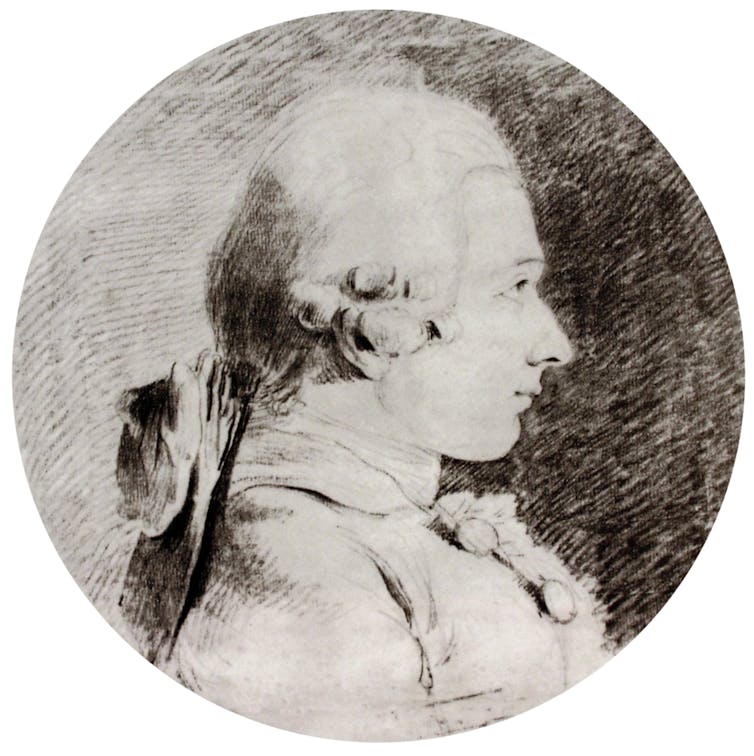
Portrait of the sadist as a young man by Charles Amédée Philippe van Loo (1719-1795).
Author provided

Alyce Mahon, University of Cambridge

Donatien Alphonse François, Marquis de Sade, was a bestselling author in his day and yet he spent most of his life behind bars. His novels inspired the term “sadist” – “a person who derives pleasure, especially sexual gratification, from inflicting pain or humiliation on others” – and yet, in 2017, France declared his work a “national treasure”. So, was Sade a pornographer or a philosopher – and why does his name continue to cause such heated debate?

Two centuries after his death, Sade (1740-1814) remains a figure of controversy. On the one hand, his name is associated with the French Revolution and the storming of the Bastille, on the other, with rape, sexual terror and torture. During his lifetime, Sade was found guilty of sodomy, rape, torturing the 36-year-old beggar woman Rose Keller, imprisoning six children in his chateau at Lacoste, and poisoning five prostitutes with the aphrodisiac “Spanish fly”.

He managed to avoid the death sentence but still spent 32 years in prisons and insane asylums, partly due to the intervention of family members who kept him locked up to avoid disgrace. Momentarily freed under the French Revolution, he became “Citizen Sade”, participating in some of the key political events of the era, only to see his works seized, destroyed and banned under Napoleon Bonaparte.

His work remained censored throughout the 19th century and most of the 20th – but in 2017 the French State declared his 120 Days of Sodom (1785), written in the Bastille on a 12-metre scroll, to be a “national treasure”. So what happened between his lifetime and ours to change his profile so radically? Here are five things we should all know about the Marquis de Sade.

1. The most disgusting books

Justine, or The Misfortunes of Virtue (1791), Philosophy in the Bedroom (1795), The New Justine (an extended version of Justine published in 1797) followed by the Story of Juliette, Her Sister (1797) and The 120 Days of Sodom, or the School of Libertinage (1785) – these are the works that led Napoleon Bonaparte to call Sade an author of “abominable” books and to have a “depraved imagination”. But they were penned behind bars and are the products of an incarcerated imagination – not accounts of his personal life and crimes.

No one escapes the satirical power of Sade’s pen – young or old, virtuous or corrupt, rich or poor – although his narratives are dominated by certain types, especially bankers, clergy, judges, aristocrats and prostitutes.

2. Philosopher of the bedroom

Sade lived in a time of terror. His writings may be read as a knowing inversion of Enlightenment high ideals as they were penned in France at the end of the 18th century in the shadow of the bloody guillotine. For example, Philosophy in the Bedroom – which contains a mock political pamphlet: “Yet Another Effort, Frenchmen, If You Would Become Republicans” – was written shortly after the fall of the leading radical Robespierre and it offers an absurdist take on the rhetoric and promises of the French Revolution.

In it, Sade also reminds us that “were it among Nature’s intentions that man be born modest, she would not have caused him to be born naked”.

3.Sade and sadism

Sade’s taste for sodomy, paedophilia and flagellation, in addition to his fictional accounts of excessive orgies, which describe sexual cruelty and murder in excessive detail, led many to presume he was deranged. This status was magnified by the fact that he ended his life in the asylum of Charenton, although a scientific examination of his skull by a Dr Ramon after his death showed no physical or mental abnormalities – phrenology determined the skull “was in all respects similar to that of a Father of the Church”. Casts were even made of his skull, one of which now sits in the Musée de l’Homme in Paris.

In Sade’s writings, however, the clergy are typically amoral characters and by the 19th century, the term “sadism” was coined by psychoanalysts to denote the experience of pleasure through the infliction of physical pain.

4. Pornography at the service of women

The feminist philosopher Simone de Beauvoir defended Sade in a 1951 essay entitled: “Must We Burn Sade?”.

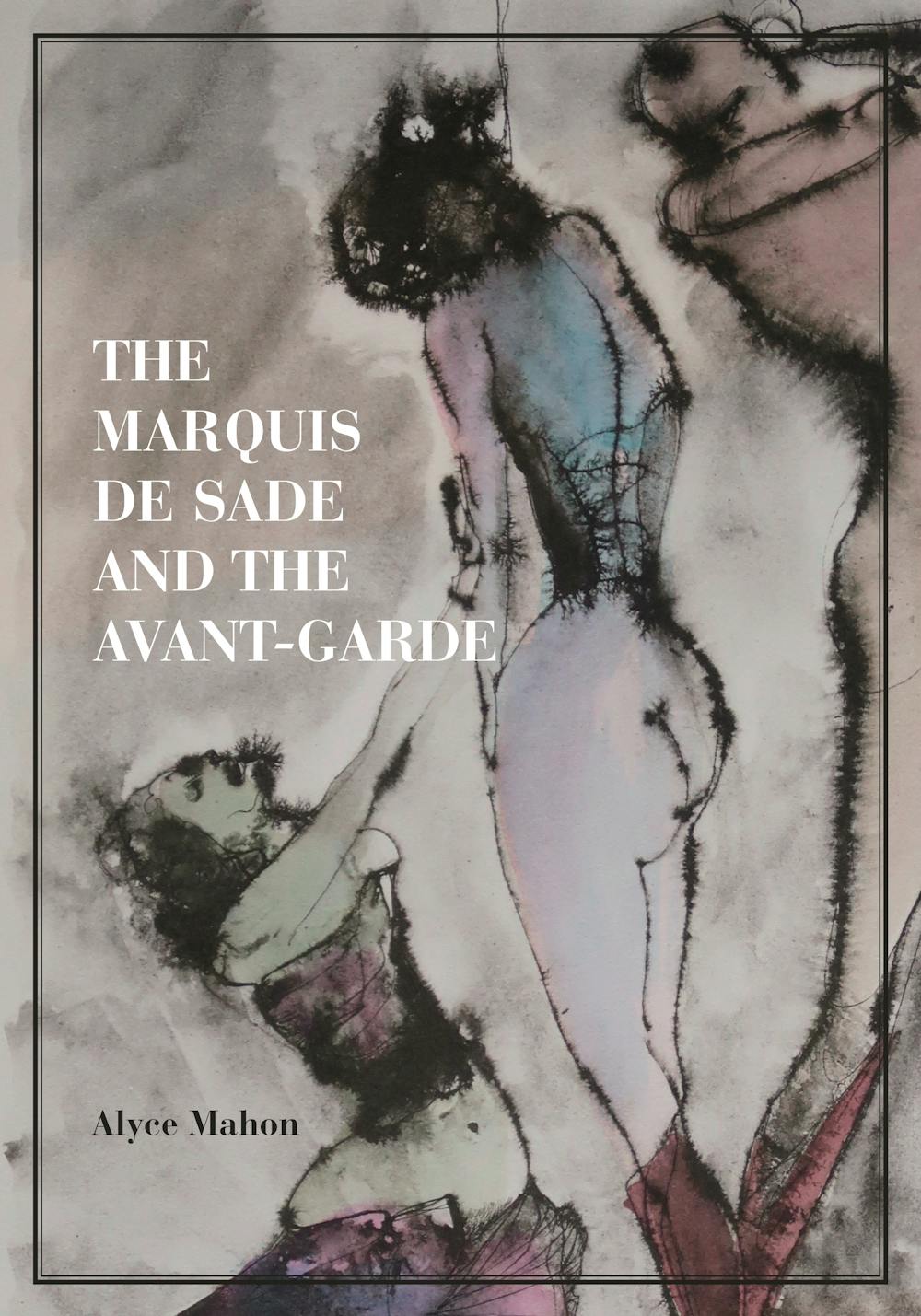
Cover for 2020 book about Sade by the author Alyce Mahon.
Controversial study: the author’s recent book about Marquis de Sade.
Author provided

She argued that his novels’ exploration of the idea that “in a criminal society, one must be criminal” was never more relevant and that his life story and increasing perversity in his fiction was a symptom of society’s increasing attempts to control him.

In the 1970s and 1980s, feminists engaged in heated debate over Sade and his philosophical value. Angela Carter defended him for putting pornography “at the service of women” while Andrea Dworkin insisted his fiction only defended the male sexual desire to “possess” women.

5. ‘Divine Marquis’

By the 20th century, Sade was deemed “divine” by many intellectuals and artists who interpreted his writings as a dark mirror of man’s inhumanity to man. From Man Ray’s imaginary portraits of Sade in the late 1930s, portraying him as a paragon of liberty beside the burning Bastille, as war loomed in Europe, to Pier Paolo Pasolini’s film Saló (1975), which restages Sade’s 120 days of Sodom in fascist Italy, Sade’s name and writings offered modern artists and writers a means to address the horrors of war and totalitarian regimes. These are themes American artist Paul Chan explores in his mixed-media installations “Sade for Sade’s Sake” (2009) by conflating Sade and the “War on Terror”.

Sade’s writings may seem cold and cruel, but they can but leave a mark on the reader. Surely that is the power of art and why we must continue to read Sade.The Conversation

Alyce Mahon, Reader in Modern and Contemporary Art History, University of Cambridge

This article is republished from The Conversation under a Creative Commons license. Read the original article.

Unknown's avatar

Finished Reading: Australian Prime Ministers by Michelle Grattan


Australian Prime MinistersAustralian Prime Ministers by Michelle Grattan
My rating: 4 of 5 stars

View all my reviews

Unknown's avatar

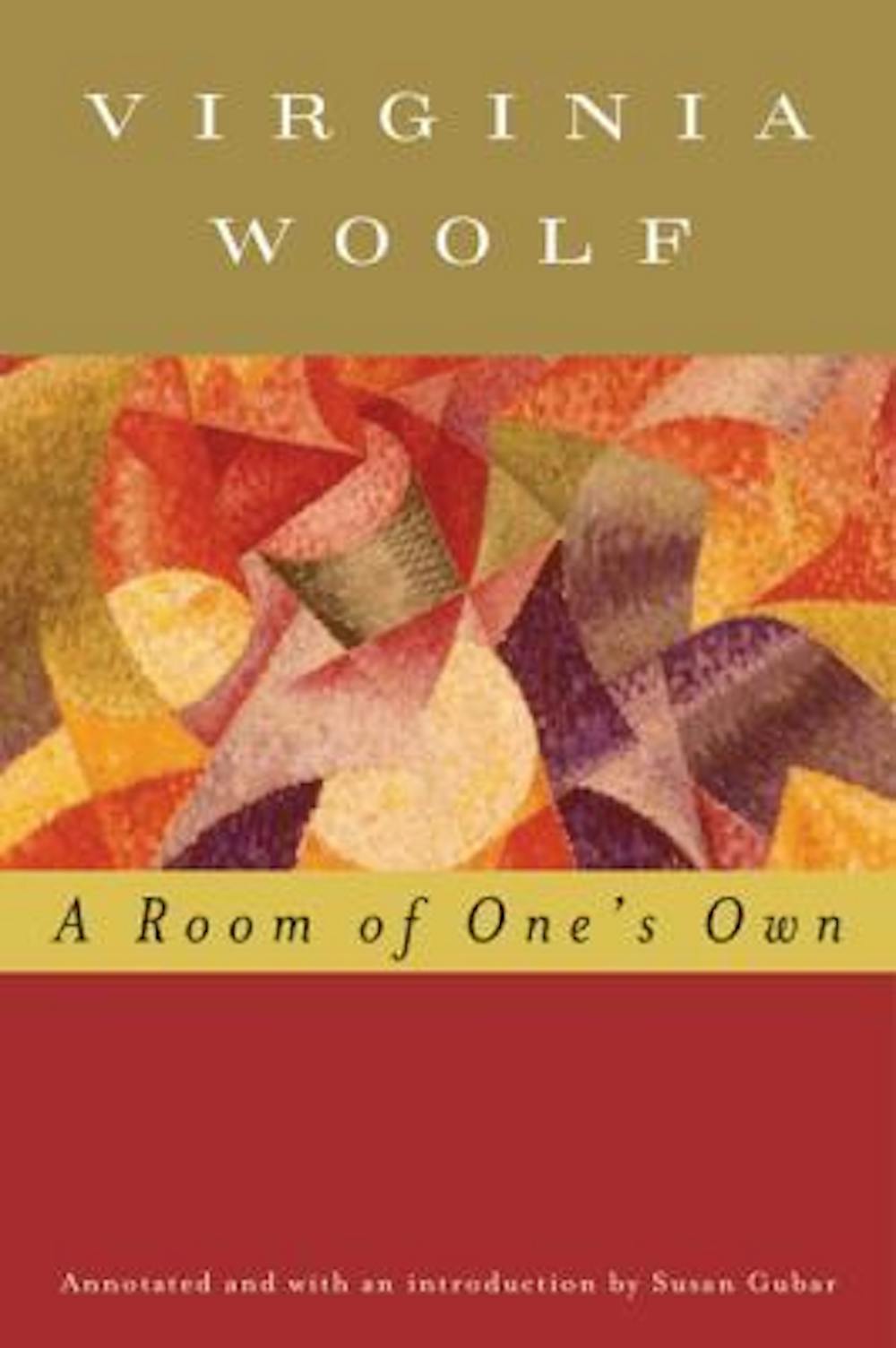
Guide to the classics: A Room of One’s Own, Virginia Woolf’s feminist call to arms


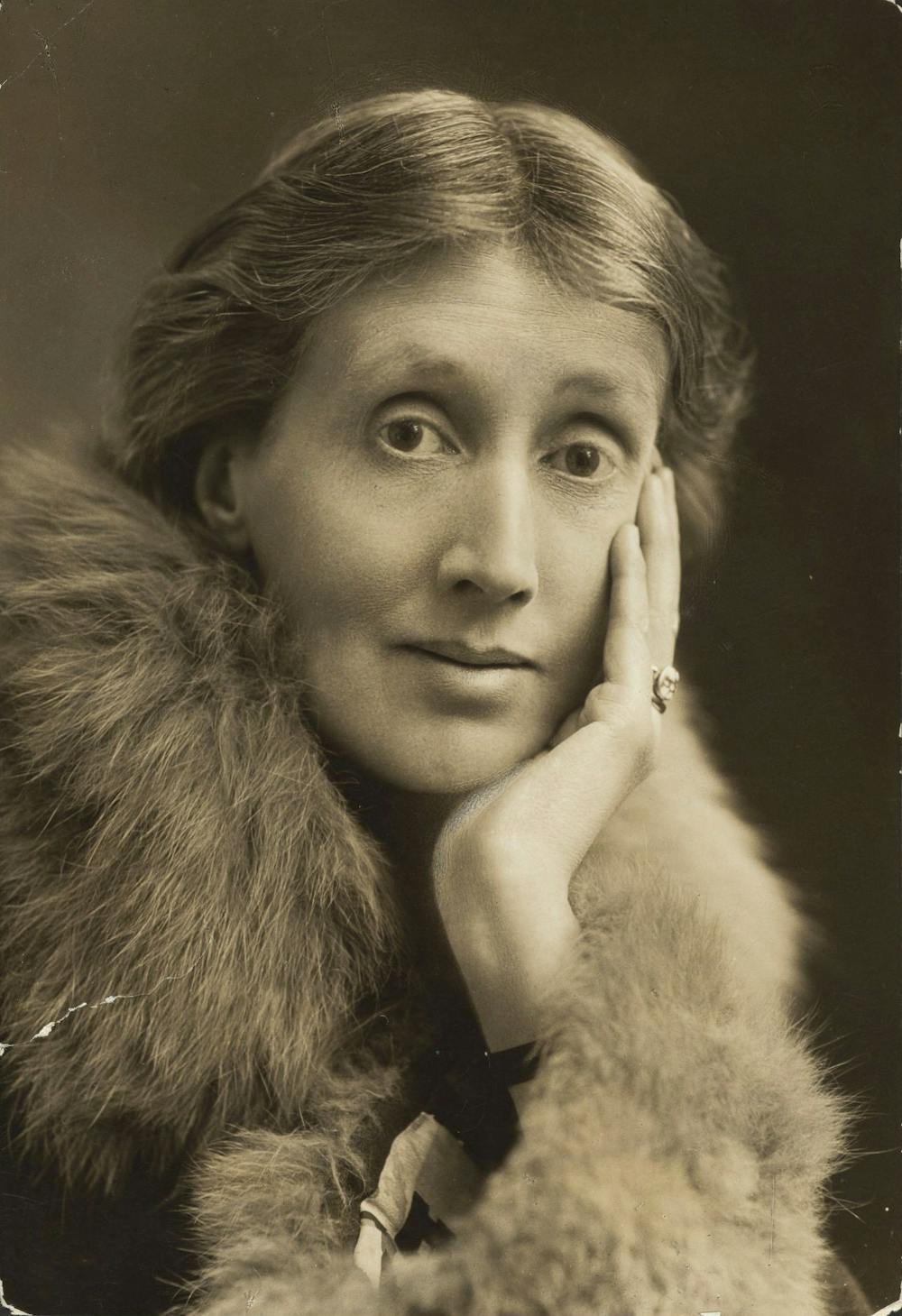
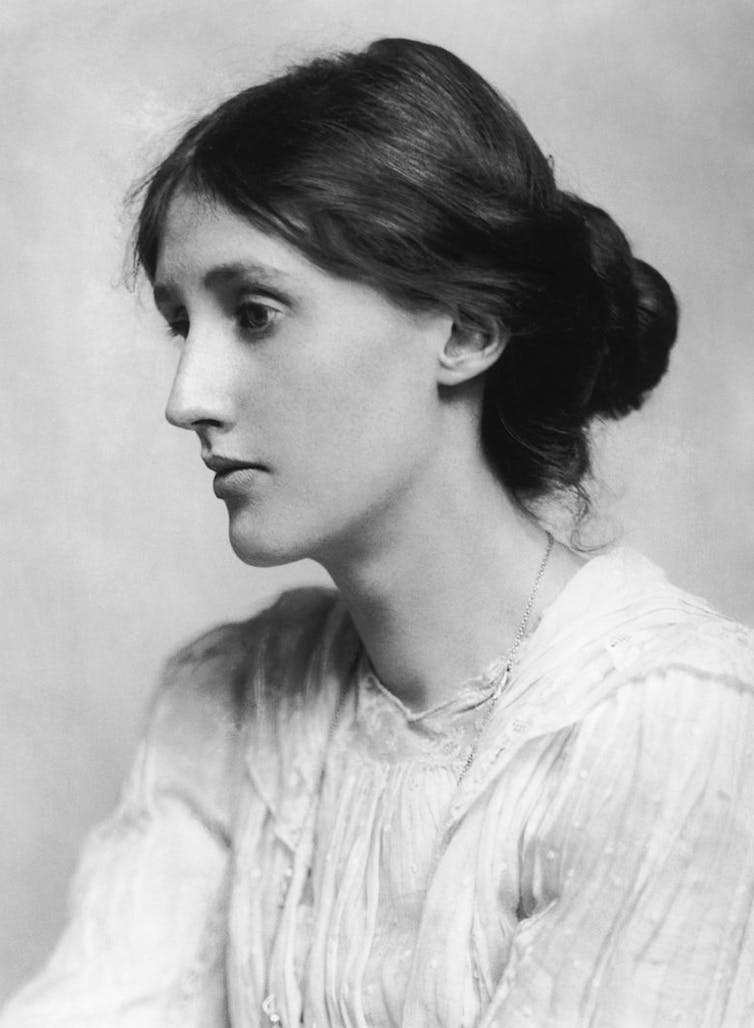
A young Virginia Woolf photographed in 1902.
Wikimedia Commons

Jessica Gildersleeve, University of Southern Queensland

I sit at my kitchen table to write this essay, as hundreds of thousands of women have done before me. It is not my own room, but such things are still a luxury for most women today. The table will do. I am fortunate I can make a living “by my wits,” as Virginia Woolf puts it in her famous feminist treatise, A Room of One’s Own (1929).

That living enabled me to buy not only the room, but the house in which I sit at this table. It also enables me to pay for safe, reliable childcare so I can have time to write.

It is as true today, therefore, as it was almost a century ago when Woolf wrote it, that “a woman must have money and a room of her own if she is to write fiction” — indeed, write anything at all.

Still, Woolf’s argument, as powerful and influential as it was then — and continues to be — is limited by certain assumptions when considered from a contemporary feminist perspective.

Woolf’s book-length essay began as a series of lectures delivered to female students at the University of Cambridge in 1928. Its central feminist premise — that women writer’s voices have been silenced through history and they need to fight for economic equality to be fully heard — has become so culturally pervasive as to enter the popular lexicon.

Julia Gillard’s A Podcast of One’s Own, takes its lead from the essay, as does Anonymous Was a Woman, a prominent arts funding body based in New York.

Julia Gillard: the title of her new podcast references Woolf’s book.
Brendan Esposito

Even the Bechdel-Wallace test, measuring the success of a narrative according to whether it features at least two named women conversing about something other than a man, can be seen to descend from the “Chloe liked Olivia” section of Woolf’s book. In this section, the hypothetical characters of Chloe and Olivia share a laboratory, care for their children, and have conversations about their work, rather than about a man.

Woolf’s identification of women as a poorly paid underclass still holds relevance today, given the gender pay gap. As does her emphasis on the hierarchy of value placed on men’s writing compared to women’s (which has led to the establishment of awards such as the Stella Prize).


Read more:
Friday essay: science fiction’s women problem


Invisible women

In her book, Woolf surveys the history of literature, identifying a range of important and forgotten women writers, including novelists Jane Austen, George Eliot and the Brontes, and playwright Aphra Behn.

In doing so, she establishes a new model of literary heritage that acknowledges not only those women who succeeded, but those who were made invisible: either prevented from working due to their sex, or simply cast aside by the value systems of patriarchal culture.


Read more:
Friday essay: George Eliot 200 years on – a scandalous life, a brilliant mind and a huge literary legacy


To illustrate her point, she creates Judith, an imaginary sister of the playwright Shakespeare.

What if such a woman had shared her brother’s talents and was as adventurous, “as agog to see the world” as he was? Would she have had the freedom, support and confidence to write plays? Tragically, she argues, such a woman would likely have been silenced — ultimately choosing suicide over an unfulfilled life of domestic servitude and abuse.

In her short, passionate book, Woolf examines women’s letter writing, showing how it can illustrate women’s aptitude for writing, yet also the way in which women were cramped and suppressed by social expectations.

She also makes clear that the lack of an identifiable matrilineal literary heritage works to impede women’s ability to write.

Indeed, the establishment of those major women writers in the 18th and 19th centuries (George Eliot, the Brontes et al), when “the middle-class woman began to write” is, Woolf argues, a moment in history “of greater importance than the Crusades or the War of the Roses”.

Male critics such as T.S. Eliot and Harold Bloom have identified a (male) writer’s relation to his precursors as necessary for his own literary production. But how, Woolf asks, is a woman to write if she has no model to look back on or respond to?
If we are women, she wrote, “we think back through our mothers”.

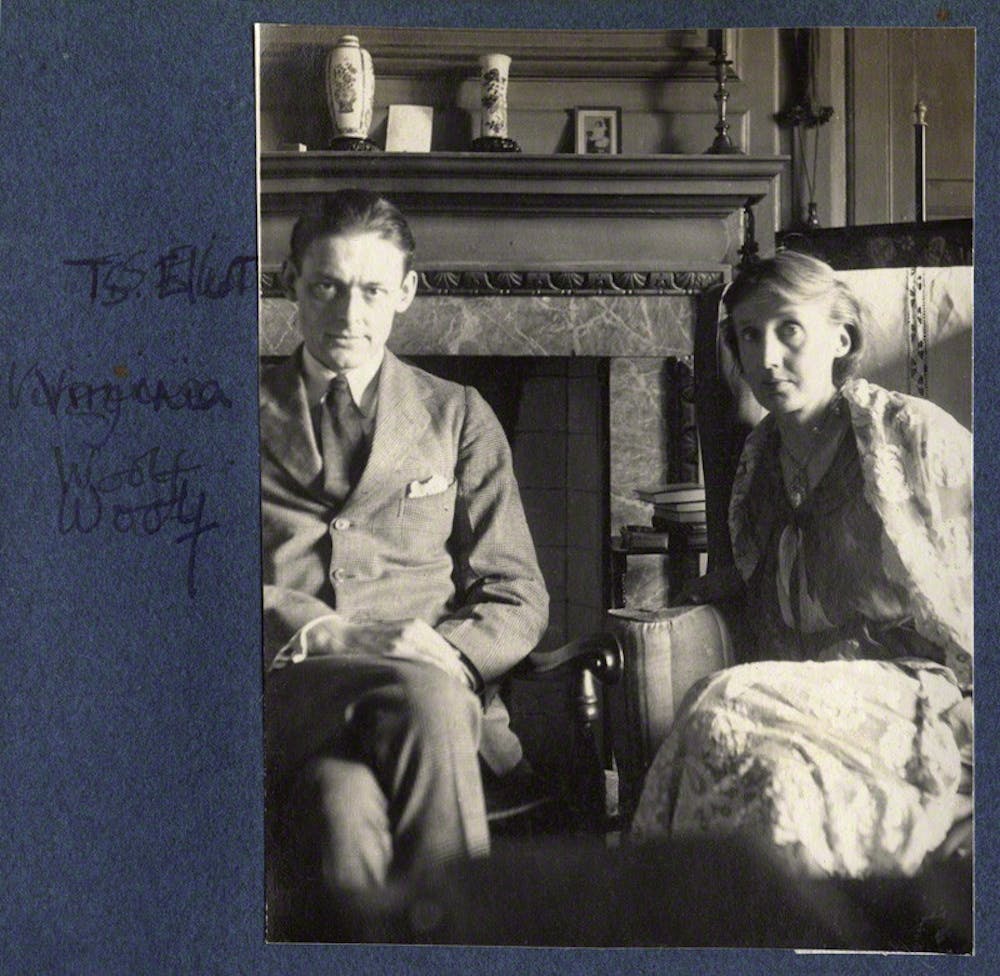
A vintage snapshot of T. S. Eliot and Virginia Woolf taken in 1924.
Wikimedia Commons


Read more:
#ThanksforTyping: the women behind famous male writers


Her argument inspired later feminist revisionist work of literary critics like Elaine Showalter, Sandra K. Gilbert and Susan Gubar who sought to restore the reputation of forgotten women writers and turn critical attention to women’s writing as a field worthy of dedicated study.

All too often in history, Woolf asserts, “Woman” is simply the object of the literary text — either the adored, voiceless beauty to whom the sonnet is dedicated or reflecting back the glow of man himself.

Women have served all these centuries as looking-glasses possessing the magic and delicious power of reflecting the figure of man at twice its natural size.

A Room of One’s Own returns that authority to both the woman writer and the imagined female reader whom she addresses.

Stream of consciousness

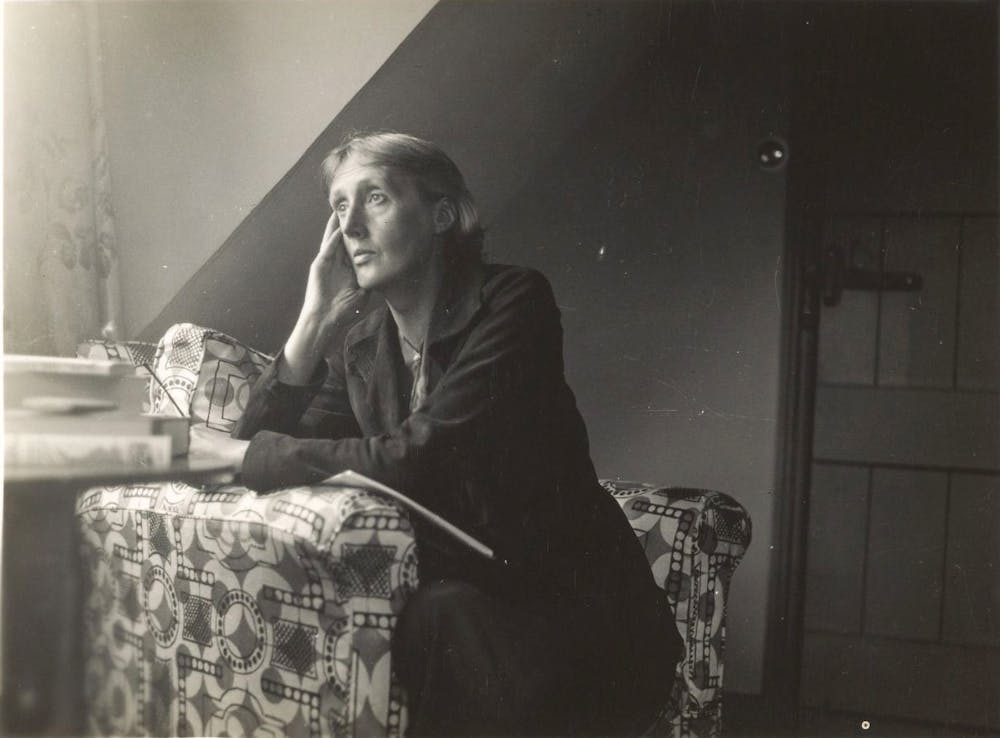
Virginia Woolf in 1927.
Wikimedia Commons

A Room of One’s Own also demonstrates several aspects of Woolf’s modernism. The early sections demonstrate her virtuoso stream of consciousness technique. She ruminates on women’s position in, and relation to, fiction while wandering through the university campus, driving through country lanes, and dawdling over a leisurely, solo lunch.

Critically, she employs telling patriarchal interruptions to that flow of thought.

A beadle waves his arms in exasperation as she walks on a private patch of grass. A less-than-satisfactory dinner is served to the women’s college. A “deprecating, silvery, kindly gentleman” turns her away from the library. These interruptions show the frequent disruption to the work of a woman without a room.

This is the lesson also imparted in Woolf’s 1927 novel To the Lighthouse where artist Lily Briscoe must shed the overbearing influence of Mr and Mrs Ramsay, a couple who symbolise Victorian culture, if she is to “have her vision”. The flights and flow of modernist technique are not possible without the time and space to write and think for herself.

A Room of One’s Own has been crucial to the feminist movement and women’s literary studies. But it is not without problems. Woolf admits her good fortune in inheriting £500 a year from an aunt.

Indeed her purse now “breed(s) ten-shilling notes automatically”.

Woolf was lucky enough to possess a purse that bred ten-shilling notes.
Wikimedia Commons

Part of the purpose of the essay is to encourage women to make their living through writing.

But Woolf seems to lack an awareness of her own privilege and how much harder it is for most women to fund their own artistic freedom. It is easy for her to advise against “doing work that one did not wish to do, and to do it like a slave, flattering and fawning”.

In her book, Woolf also criticises the “awkward break” in Charlotte Bronte’s Jane Eyre (1847), in which Bronte’s own voice interrupts the narrator’s in a passionate protest against the treatment of women.

Here, Woolf shows little tolerance for emotion, which has historically often been dismissed as hysteria when it comes to women discussing politics.

A Room of One’s Own ends with an injunction to work for the coming of Shakespeare’s sister, that woman forgotten by history. “So to work, even in poverty and obscurity, is worthwhile”.

Such a woman author must have her vision, even if her work will be “stored in attics” rather than publicly exhibited.

The room and the money are the ideal, we come to see, but even without them the woman writer must write, must think, in anticipation of a future for her daughter-artists to come.

An adaptation of A Room of One’s Own is currently at Sydney’s Belvoir Theatre.The Conversation

Jessica Gildersleeve, Associate Professor of English Literature, University of Southern Queensland

This article is republished from The Conversation under a Creative Commons license. Read the original article.

Unknown's avatar

Review: new biography shows Vida Goldstein’s political campaigns were courageous, her losses prophetic


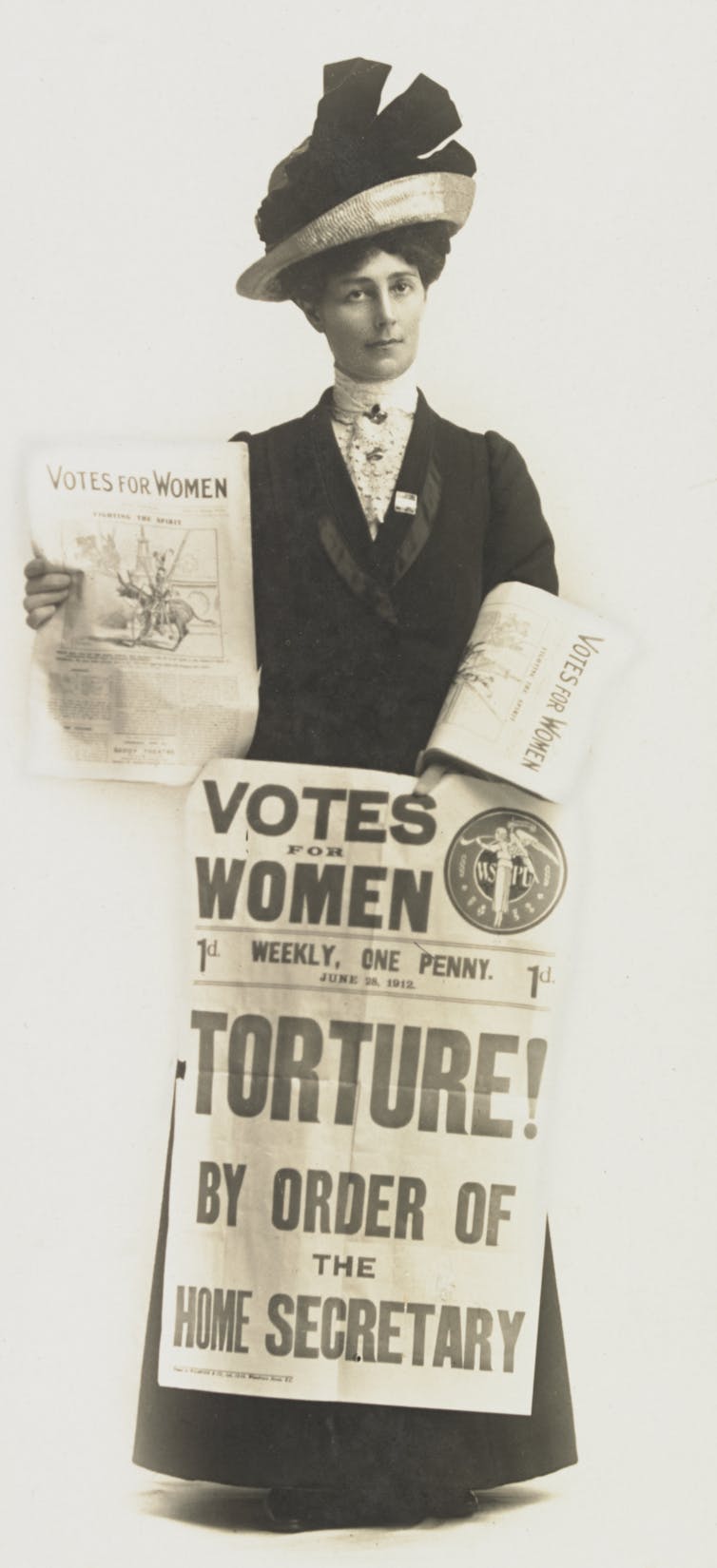
T. Humphrey/State Library Victoria

Marilyn Lake, University of Melbourne

Review: Vida: A Woman for Our Time, published by Penguin (Viking imprint)

Australian women were not the first to win the right to vote in national elections. That world-historic distinction belongs to New Zealanders. But they were the first to win, in 1902, both the right to vote and stand for election to the national parliament.

Three Australian women quickly availed themselves of the opportunity. Nellie Martel and Mary Bentley from New South Wales joined Vida Goldstein from Victoria as candidates in the 1903 federal election.

Little is now known of Martel and Bentley, but Goldstein’s contribution to politics has been commemorated in numerous scholarly studies, theses, essays, book chapters and encyclopedia entries, Janette Bomford’s biography That Dangerous and Persuasive Woman, and a federal electorate named in her honour. But historical memory is fickle and we need still to know more about the political history of women in Australia.


Read more:
Women’s votes: six amazing facts from around the world


Enlivened by speculation

A skilled and prize-winning biographer, Jacqueline Kent brings fresh enthusiasm and focus to her quest to understand Vida’s extraordinary political career and its disappointments in her new biography. Goldstein stood five times for election to the federal parliament and suffered five defeats.

Kent’s previous biography was The Making of Julia Gillard and it seems the painful experiences of our first woman Prime Minister – subject to relentless misogyny and sexist attacks – remain fresh in the writer’s mind.

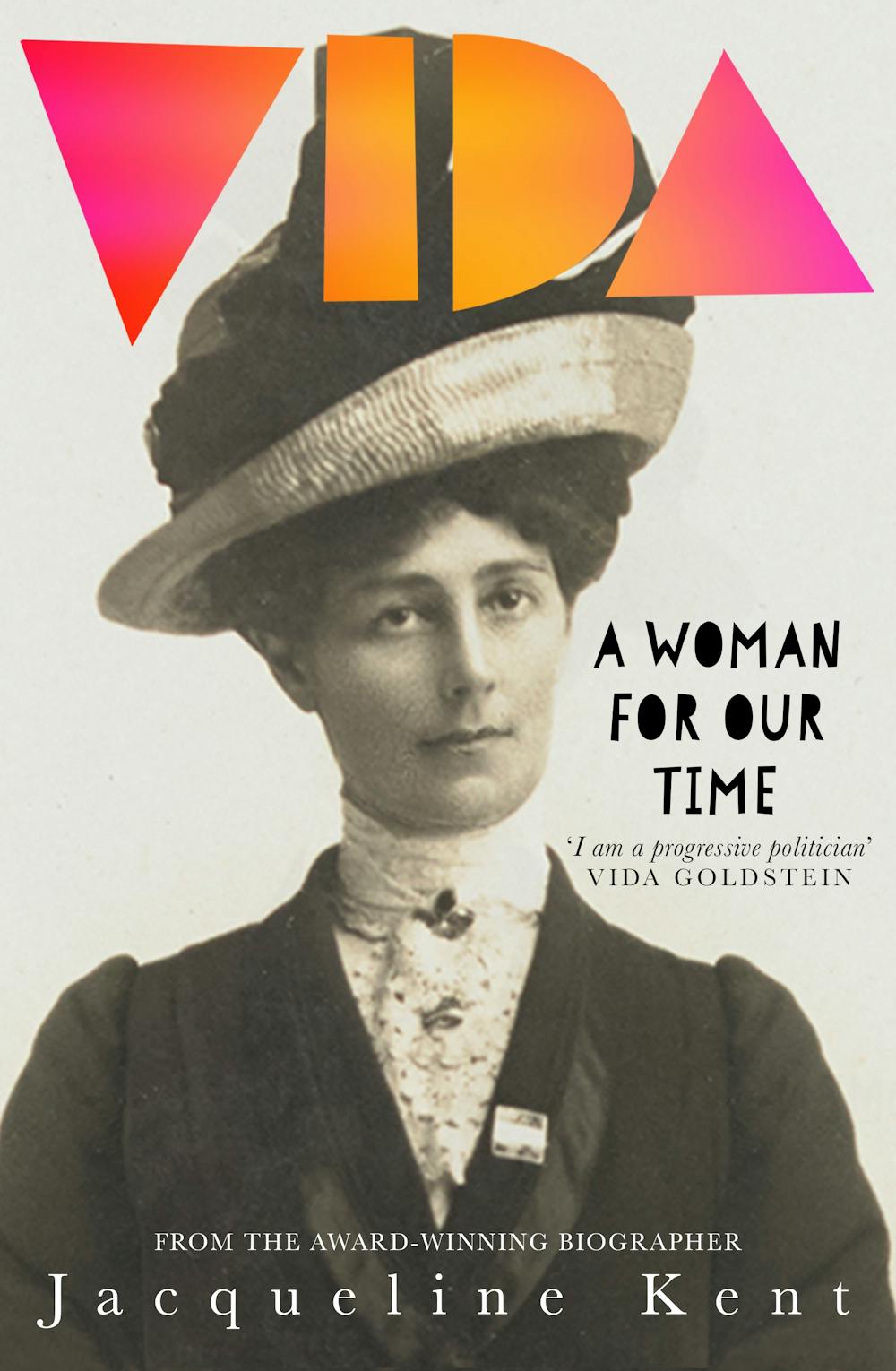
19th century woman in book cover

Penguin

In Kent’s telling, Vida’s story is framed by Gillard’s fate. There are regular references to Gillard’s experiences and the trials of politicians such as Julie Bishop and Sarah Hanson-Young. Thus Vida’s biography becomes a story of continuity, rather than change, with Vida still “a woman for our time”.

Kent’s account is enlivened by speculation. Vida and her activist mother “might very well have attended” the initial meeting of the Victorian Women’s Suffrage Society (VWSS) and “must have known about” the women’s novels then in circulation.

There is also a good amount of authorial displeasure evident. Women speakers had to endure “the tedious jocularity that was de rigueur” for mainstream journalists. The Age newspaper “evidently considered the welfare of women and children to be a trivial matter”.

Some of the most vivid passages in the book sketch the range of forceful personalities in the Melbourne “woman movement” of the late 19th century, who served as Vida’s models and mentors.

Henrietta Dugdale, cofounder of the VWSS was small in stature, but formidable in argument and the author of the radical Utopian novel A Few Hours in a Far-Off Age. Brettena Smyth, “an imposing speaker, being six feet tall and voluminous in figure, with blue shaded spectacles” was also a member of the VWWS, and sold women contraceptives. Annette Bear-Crawford and Constance Stone were cofounders of the Shilling Fund that made possible the Queen Victoria Hospital for Women.


Read more:
‘Expect sexism’: a gender politics expert reads Julia Gillard’s Women and Leadership


Missing chapters

The larger community of the Australian “woman movement” is largely absent from this account.

There are glimpses of Rose Scott and Louisa Lawson in Sydney and Catherine Spence in Adelaide, who could be frosty when confronted by Goldstein’s evident ambition.

In 1902, Goldstein represented “Australasian” women at the First International Woman Suffrage Conference in Washington, DC. Yet Spence, who preceded Goldstein in her informal role as ambassador for Australian women at the World’s Columbian Exposition in Chicago in 1893 and embarked on a lecture tour, offered her successor a long list of contacts and helpful advice.

Scott, Spence, Goldstein and others of their generation were strong advocates of non-party politics for women, convinced they should avoid the male domination of established political parties. Their strong international connections reinforced woman-identified politics. But would enfranchised women vote as a bloc?

While in Boston in 1902, lecturing to a range of women’s groups, Goldstein met a bright young feminist, Maud Wood Park, whom she invited to Australia. When Goldstein hosted Park and her friend Myra Willard in Melbourne in 1909 she introduced them to future Labor Prime Minister Andrew Fisher and a number of Labor women at a tea party at Parliament House.

Elected to government in 1910, in a historic victory assisted by a strong women’s vote, Fisher responded to lobbying from Labor women and introduced the acclaimed Maternity Allowance.

Kent misses the significance of the rise of the labour women’s movement and its part in the 1910 election result.

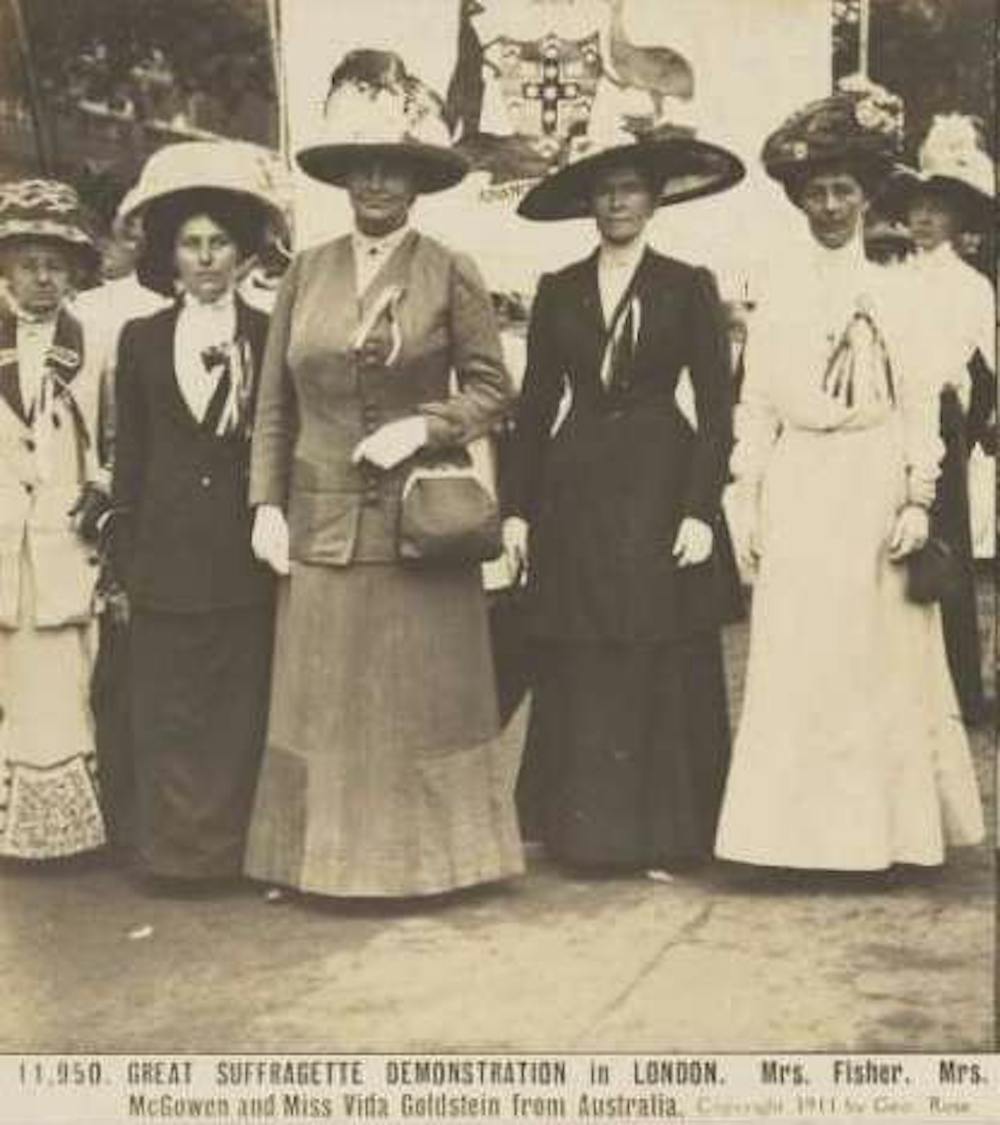
Suffragists in London, 1911
Vida Goldstein (right) takes part in the great suffragette demonstration in London in 1911.
Geo Rose/National Library of Australia

Questions of class

Class divisions mattered, but Kent tends to read Goldstein’s failure as a symptom of sexism, rather than class affiliation.

In the Epilogue, she observes that in the UK and US, Nancy Astor and Jeanette Rankin were quickly elected to Parliament and Congress. In Australia, Dorothy Tangney and Enid Lyons had to wait until 1943 to win seats in the Senate and House of Representatives. Kent doesn’t note, however, that Astor (Conservative) and Rankin (Republican) were party-endorsed candidates, as were Tangney (Labor) and Lyons (Liberal).

Sadly, Vida Goldstein’s series of electoral defeats as a non-party woman candidate would prove prophetic rather than path-breaking.

Goldstein’s courage and endurance qualify her as a woman for our time. But her political strategy of seeking power as an “independent woman candidate” meant she didn’t succeed then or set the most compelling example for aspiring political women today.


Read more:
More than a century on, the battle fought by Australia’s suffragists is yet to be won


The Conversation


‘Vote No!’ Vida Goldstein campaigned against WWI conscription as Chair of the Women’s Peace Army and in her newspaper, The Woman Voter.

Marilyn Lake, Professorial Fellow in History, University of Melbourne

This article is republished from The Conversation under a Creative Commons license. Read the original article.
Unknown's avatar

The Idle Kindle


The link below is to an article that considers the idle Kindle and the associated battery problems that come as a result.

For more visit:
https://blog.the-ebook-reader.com/2020/09/14/dont-leave-your-kindle-shut-in-a-drawer-for-too-long/

Unknown's avatar

Not the Booker Prize Contenders


The links below are to articles taking a look at various contenders for the 2020 Not The Booker Prize.

For more visit:
https://www.theguardian.com/books/booksblog/2020/sep/14/not-the-booker-the-girl-with-the-louding-voice-by-abi-dare-vibrant
https://www.theguardian.com/books/booksblog/2020/sep/07/not-the-booker-underdogs-tooth-and-nail-by-chris-bonnello-review-admirably-unusual
https://www.theguardian.com/books/booksblog/2020/aug/31/not-the-booker-hashim-family-by-shahnaz-ahsan-review-an-important-tale-of-migration

Unknown's avatar

The First Novel


The link below is to an article that goes in search of the world’s first novel.

For more visit:
https://bookriot.com/the-worlds-first-novel/

Unknown's avatar

2020 New Australian Fiction Prize Shortlist


The link below is to an article reporting on the shortlist for the 2020 Readings New Australian Fiction Prize.

For more visit:
https://www.booksandpublishing.com.au/articles/2020/08/25/155608/readings-announces-2020-new-australian-fiction-prize-shortlist/

Unknown's avatar

Finished Reading: The Substance of Civilization – Materials and Human History from the Stone Age to the Age of Silicon by Stephen L. Sass


The Substance of Civilization: Materials and Human History from the Stone Age to the Age of SiliconThe Substance of Civilization: Materials and Human History from the Stone Age to the Age of Silicon by Stephen L. Sass
My rating: 3 of 5 stars

View all my reviews