

Unknown's avatar

‘The essential is invisible to the eye’: the wisdom of The Little Prince in lockdown


Chris Pietsch/AP

Julia Kindt, University of Sydney

In our series Art for Trying Times, authors nominate a work they turn to for solace or perspective during this pandemic.

During the lockdown in Sydney, I turned to my shelf of well-loved books and found Antoine de Saint-Exupéry’s The Little Prince. Browsing through it again, I realised that the situation in which the book’s narrator finds himself uncannily resembled my own: crash-landed in the middle of a desert, his plane’s motor broken, he had nowhere to go.

He was stuck – stuck in a place that seemingly provided little hope of surprise or wonder.

The first night, then, I went to sleep on the sand, a thousand miles from any human habitation. I was more isolated than a shipwrecked sailor on a raft in the middle of the ocean.

But little did he know! The next morning, a boy appears seemingly out of nowhere who claims to be a prince from a faraway planet.

His account of intergalactic travels takes the desert castaway to a number of places as strange as they are familiar: one planet inhabited by a king and nobody else, another by a conceited man, a third by a lamplighter, a fourth by a businessman, a fifth by a tippler and so on.
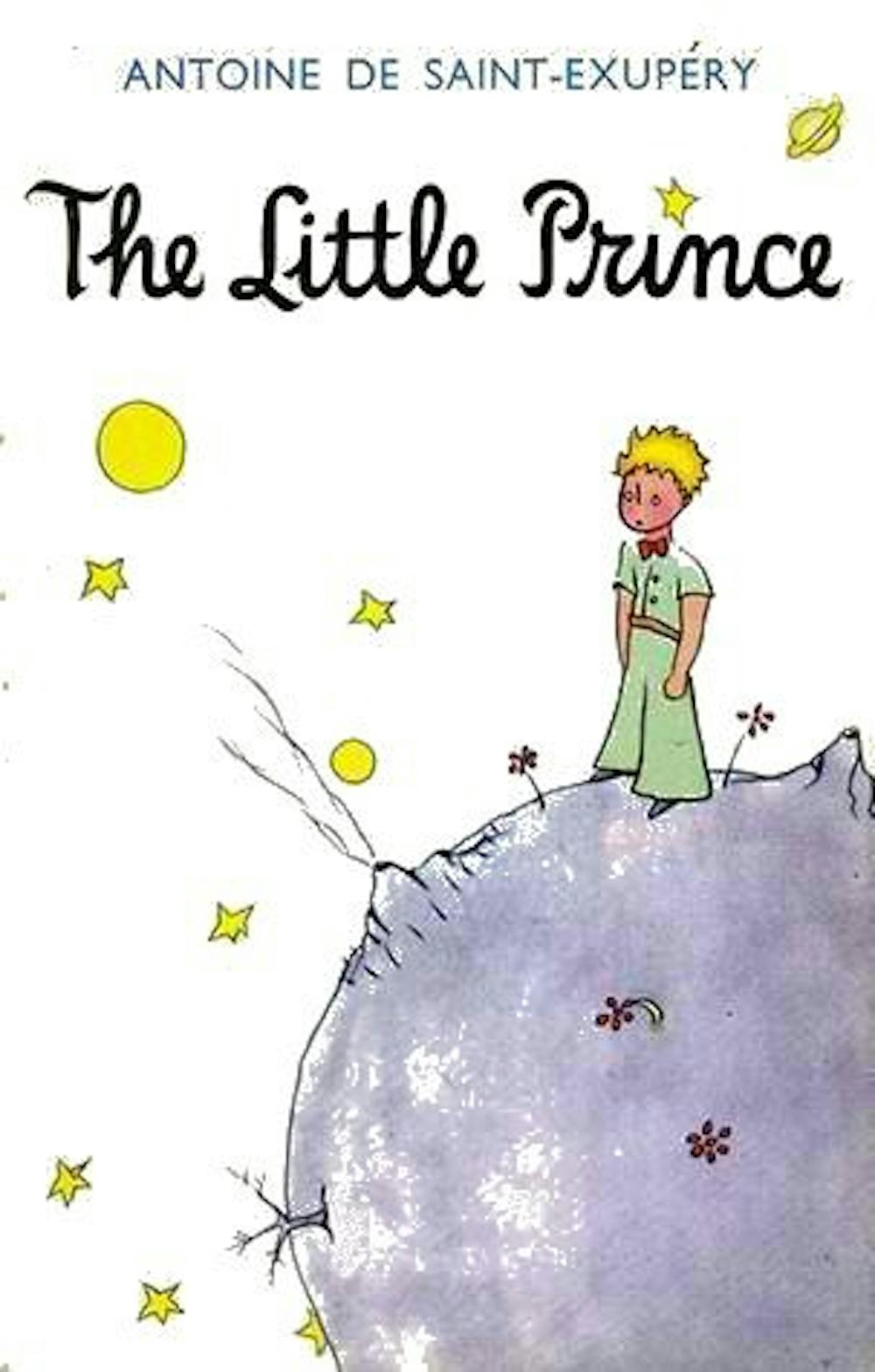
In Saint-Exupéry’s book, first published in French in 1941, the point is that all these individuals live in their own little worlds.

The king believes everybody arriving on his planet to be a subject. The conceited man considers each comer a potential admirer. The lamplighter turns the single streetlight on his little planet on and off, on and off, multiple times a day. The businessman counts all the stars he can see in the belief this will make them his own. The tippler drinks to forget that he feels guilty for drinking.

Even though they pursue different ends, there is a certain uniformity to these characters: in the uncompromising resoluteness with which they apply themselves to their tasks, they reduce and diminish their lives and worlds.


Read more:
P.G. Wodehouse in a pandemic: wit and perfect prose to restore the soul


The lockdown cuts back the radius of our actions. Even though some of the frantic activity that defines our days continues online, it deprives us of many of our usual interactions. No more twice-daily commutes, no more school runs, no more rushing to social engagements, no more travel.

Rather than looking for adventure outside, in public and faraway places, lockdown involves taking a fresh look at things close to home. And this long hard look in the mirror can bring the realisation that our pre-pandemic lives resembled those of the king, the conceited man, the lamplighter, the businessman, and perhaps even the tippler in more ways than we are prepared to admit.

‘People where you live,’ the little prince said, ‘grow five thousand roses in one garden, … yet they don’t find what they are looking for.’

In some sense, and in addition to other central themes such as love, friendship and loss, The Little Prince is a story about looking: about how we see only what we are prepared to see; about the narrowness that can come with our perspectives, professional and otherwise; about the way grownups and children look at the world differently.


Read more:
It’s Always Sunny in Philadelphia, the funniest, filthiest comfort TV around


Reassessing in moments of rupture

Moments of rupture, of crisis, and distress, when everything we took for granted suddenly seems up in the air, always also harbour an opportunity to take stock and to reassess. To look at our life and the lives of those around us from the point of view of an intergalactic traveller, or, indeed, a child.

‘Men,’ said the little prince, ‘set out on their way in express trains, but they do not know what they are looking for. Then they rush about, and get excited, and turn round and round…’

Back home in lockdown with my little daughter (aged seven), I was fortunate to have my own guide who took me to once familiar but long-forgotten places: listening to the sounds of the sea in an empty seashell; throwing paper planes down a cliff; blowing dandelion seeds; gazing at the stars at night. Our radius had shrunk considerably. And yet the world seemed rich and marvellous and full of wonder.

At one point in the book, the little prince explains to the castaway that real seeing is not even a physical activity but a matter of the heart.

And now here is my secret, a very simple secret: It is only with the heart that one can see rightly; what is essential is invisible to the eye.
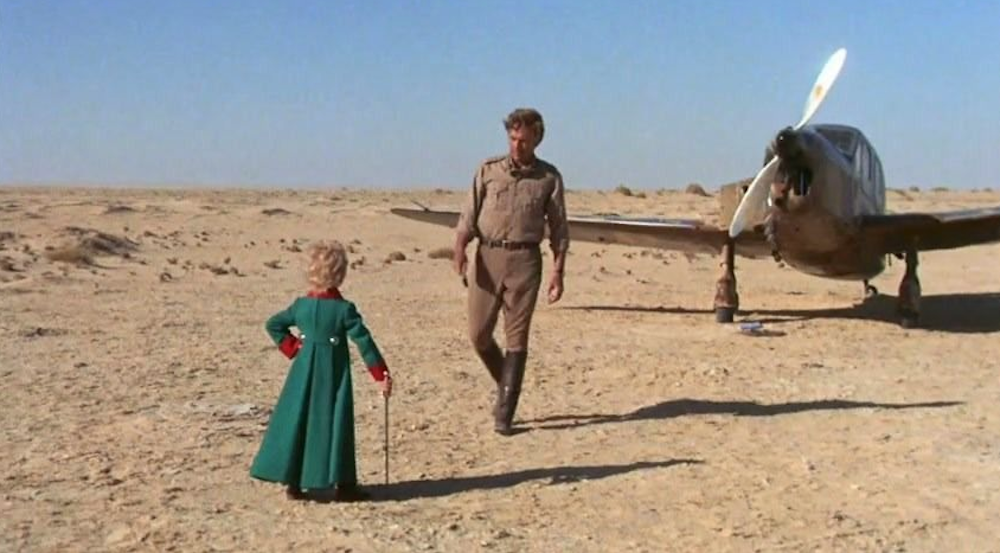
Richard Kiley and Steven Warner in a 1974 film version of The Little Prince.
Paramount Pictures

What changes our world and our being in the world is that there are things, activities, and people we care for deeply; and we make them as special (for us) as they are. In Saint-Exupéry’s book it is a flower with four thorns back on his home planet, that the little prince misses and holds dear. But it could be anything, really …

Saint-Exupéry’s book ends with the little prince returning home and the narrator repairing his plane and returning to civilisation. And yet, he never looks at the world again with the same eyes.

The knowledge that somewhere up there among the myriad little planets there was one with a prince and his beloved flower, a sheep, and three volcanoes (one extinct) made all the difference.

And what about us? Will we too look at the world differently once this has passed? Or will we return to the routines and habits that defined our worlds before?

Ask yourselves: Is it yes or no? Has the sheep eaten the flower? And you will see how everything changes …The Conversation

Julia Kindt, Professor, Department of Classics and Ancient History, University of Sydney

This article is republished from The Conversation under a Creative Commons license. Read the original article.
Unknown's avatar

Getting Over a Reading Slump


The link below is to an article that looks at 15 ways to get over a reading slump.

For more visit:
https://www.epicreads.com/blog/get-over-reading-slump/

Unknown's avatar

2020 Not the Booker Prize Longlist


The link below is to an article reporting on the very long longlist for the 2020 Not the Booker Prize.

For more visit:
https://www.theguardian.com/books/booksblog/2020/aug/03/not-the-booker-prize-longlist-vote-now-to-decide-the-2020-shortlist

Unknown's avatar

Not My Review: An American Uprising in Second World War England – Mutiny in the Duchy by Kate Werran


The link below is to a book review of ‘An American Uprising in Second World War England – Mutiny in the Duchy,’ by Kate Werran.

For more visit:
https://www.theguardian.com/books/2020/aug/05/an-american-uprising-in-second-world-war-england-by-kate-werran-review

Unknown's avatar

2020 Elizabeth Jolley Short Story Prize Shortlist


The link below is to an article reporting on the shortlist for the 2020 Elizabeth Jolley Short Story Prize.

For more visit:
https://www.booksandpublishing.com.au/articles/2020/07/15/153607/abr-announces-elizabeth-jolley-short-story-prize-2020-shortlist/

Unknown's avatar

Chaucer’s great poem Troilus and Criseyde: perfect reading while under siege from a virus


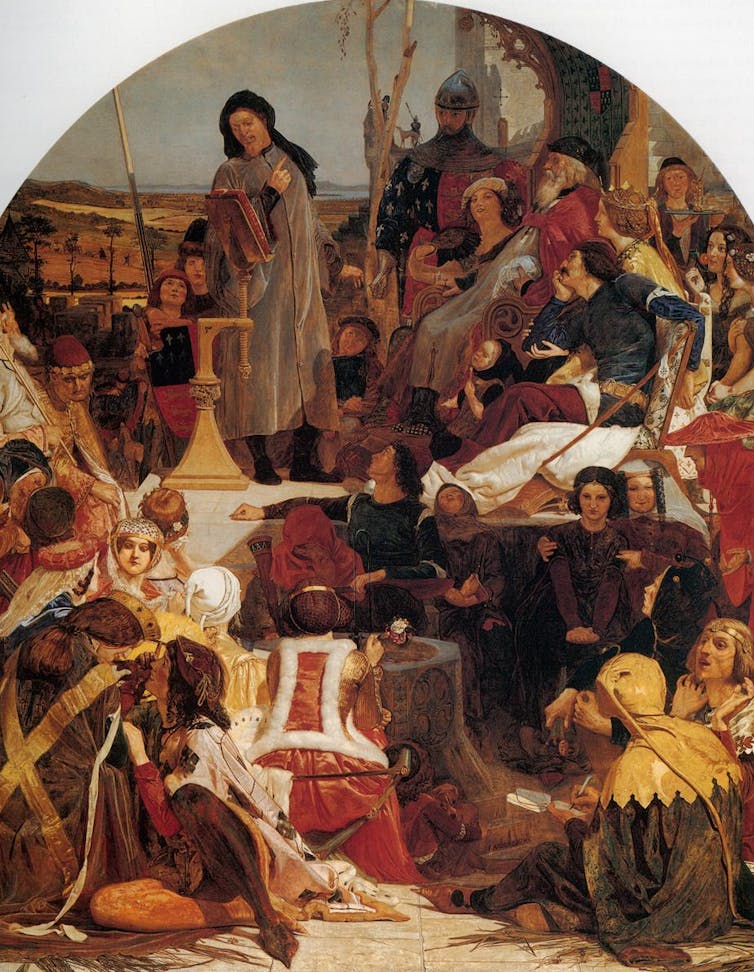
Chaucer at the Court of Edward III by Ford Madox Brown (1821-1893)
Wikiart

Stephanie Trigg, University of Melbourne

In our series Art for Trying Times, authors nominate a work they turn to for solace or perspective during this pandemic.

The Greeks are at the gates, and the city of Troy is under siege.

Every day, the Trojans ride out to do battle with Agamemnon, Odysseus, Ajax and the aggrieved husband Menelaus, whose wife Helen has been abducted by the Trojan prince Paris. But despite this crisis, the Trojan leisured classes carry on with their lives.


Read more:
Fall of Troy: the legend and the facts


One joyful spring morning, when the sun is shining and the meadows are filled with flowers, a beautiful young widow, Criseyde, sits in her palace, in a paved parlour with two other ladies, while a young maiden reads to them the story of another siege, that of the Greek city of Thebes.

This pleasant scene is interrupted by Criseyde’s uncle Pandarus, who is bringing the astonishing news that Paris’s younger brother Troilus has fallen in love with her.

Geoffrey Chaucer wrote his great romance Troilus and Criseyde around 1386. I teach this text every year in my honours class. It is long and difficult, and we normally spend half the semester working through the poem. Even then we don’t read it all in detail.

This year, the global pandemic brings a new context for reading this poem about a passionate but doomed love affair between two Trojans, conducted under siege conditions, in addition to all the constraints Chaucer’s very medieval lovers place around themselves.

A secret affair

Chaucer’s language in this text is rich and ornate, and the poem is written in a rhyming stanza whose syntax ranges from elegant to knotty. The narrative is both leisurely and intense.

It offers philosophical digressions about the nature of free will and predestination; but it is also full of intricate private meditations, and absorbing, intense conversations between the three main characters.

Book cover: medieval painting of couple

Penguin

Nothing in the brutal rough and tumble of Shakespeare’s later play Troilus and Cressida can prepare you for the lyric drama of this poem.

Criseyde’s father has abandoned Troy and gone over to the Greek camp. She has been allowed to remain in Troy, but she is very vulnerable and fearful. The love affair must remain secret to protect her honour; Troilus and Criseyde cannot marry because he is a prince and she is the daughter of a traitor; and nor can they leave Troy and abandon their city.

They are also both overcome by shyness, dread, and reluctance to speak to each other. Indeed, the lovers do not exchange a single word until the beginning of the third book, and by the beginning of the fifth and final book they have parted, never to meet again.

Every year my students bring fresh insights to this poem’s emotional and cultural drama. Although I am on long service leave this semester, I am still conducting my annual reading of the poem on Zoom with a group of friends and colleagues.

Our Middle English Reading Group is made up of staff, present and former students, and members of a thriving community of scholars and lovers of medieval and early modern culture.

This year, reading together through Zoom offers a powerful contrast with Chaucer’s scene of medieval women’s communal reading.

Leisurely yet intense language fills rhyming stanza – all seven hours of them.


Read more:
Say what? How to improve virtual catch-ups, book groups and wine nights


Reading aloud

When Pandarus enters Criseyde’s paved parlour, where the maiden is reading from the book about the siege of Thebes, she greets him warmly and brings him to sit next to her. Hoping to turn her mood to thoughts of love, he asks what they are reading: is it a book about love? Is there anything he can learn?

Criseyde teases her uncle and when they have finished laughing she tells him where they are up to. She points to “thise lettres rede,” the rubricated or decoratively coloured chapter heading that introduces the next section.

Pandarus replies that he knows all about that sorrowful story but insists they should turn their thoughts to spring, as a prelude to introducing his news about Troilus. He invites her to dance but Criseyde recoils in horror. As a widow, she says, it would be better for her to live in a cave, to pray, and read the lives of the saints.

In typical Chaucerian fashion, this passage shows a female character’s awareness of what she might do, and perhaps should do, but does not.


Read more:
Guide to the classics: Homer’s Iliad


Unhappy endings

The domestic charms of this safe interior space, Pandarus’ fearful invitation, and the pleasures of reading and talking about familiar books distract us from the dreadful history lesson in the book they are reading. For just as Thebes was destroyed under siege, so too will Troy be.

Chaucer’s readers knew this; we know it; and even Criseyde’s father, a soothsayer, knows it: he has already abandoned Troy and gone over to the Greek camp, leaving her unprotected except for her uncle who is about to embroil her in the complexities of Trojan court politics.

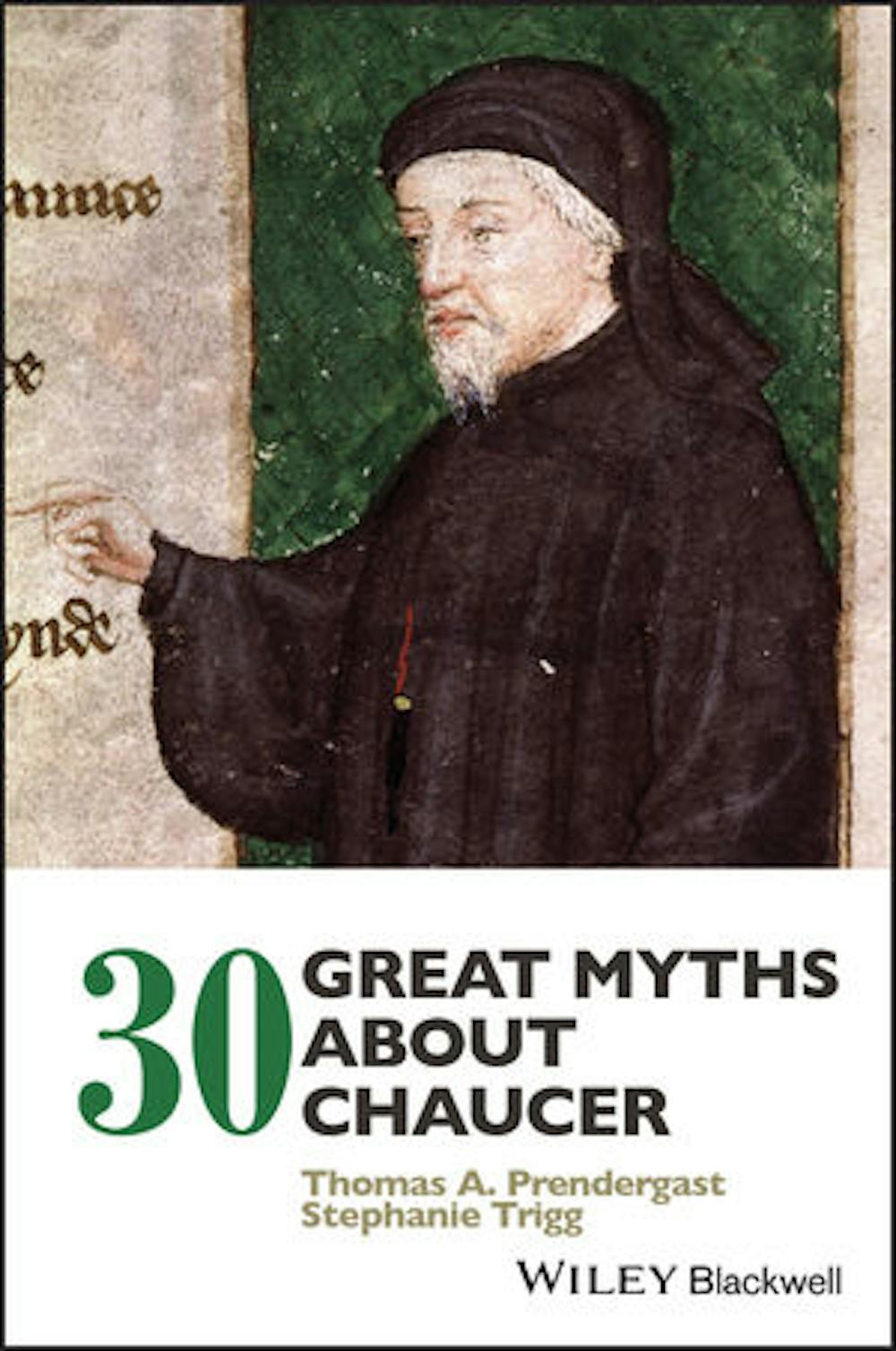
Book cover: writer Chaucer

Wiley

We know that this love story will turn out badly. In the very first stanza, Chaucer has told us the ending of the story: that Troilus will win Criseyde, but that she will forsake him.

Knowing the ending doesn’t affect our pleasure in this text. And so we read on, absorbed by Chaucer’s capacity to conjure the lives of others as they balance distress with hope, and external disaster with private joy.

Like the Trojans, we may not be able to learn from the past so as to avoid disaster. But Chaucer is forgiving, and offers us the seductive pleasures of reading and rereading, and the comfort of repetition.


Read more:
Missing your friends? Rereading Harry Potter might be the next best thing


The Conversation


Stephanie Trigg, Redmond Barry Distinguished Professor of English Literature, University of Melbourne

This article is republished from The Conversation under a Creative Commons license. Read the original article.
Unknown's avatar

2020 International Thriller Writers’ Thriller Awards


The links below are to articles reporting on the International Thriller Writers’ Thriller Awards for 2020.

For more visit:
https://thrillerwriters.org/thriller-awards/
https://www.booksandpublishing.com.au/articles/2020/07/14/153546/mckinty-mctiernan-win-2020-thriller-awards/

Unknown's avatar

On Book Organisation


The link below is to an article that explores why people care about how people organise their books.

For more visit:
https://lithub.com/why-do-people-on-the-internet-care-so-much-about-how-other-people-on-the-internet-organize-their-books/

Unknown's avatar

On Kindle Manage Your Content and Devices


The link below is to an article that looks at new features for Kindle’s Manage Your Content and Devices.

For more visit:
https://goodereader.com/blog/kindle/kindle-manage-your-content-and-devices-page-has-new-features

Unknown's avatar

Kindle Paperwhite is the Best Ebook Reader


The link below is to an article that reports on the Kindle Paperwhite as the best ebook reader available.

For more visit:
https://www.nytimes.com/wirecutter/reviews/amazon-kindle-is-the-best-ebook-reader/