The link below is to an article that looks at how independent bookshops are surviving the coronavirus pandemic in the United Kingdom – including book deliveries by skateboard.
In these days of tedious boredom thanks to coronavirus and the necessary isolation associated with it, there seems very little to do and the various household chores can only be stomached for short periods of time. However, with an audiobook playing while doing these chores, the time can become a welcome opportunity for catching up on some ‘reading.’ There are of course plenty of other reasons and ways to listen to audiobooks. The link below is to an article that lists some 22 sites from which you can obtain free audiobooks – that’s right, for free!
These are unprecedented times – but, even so, comparisons are being made to the second world war in terms of the magnitude of the crisis that coronavirus represents. Some of this rhetoric is unhelpful but, as we bunker down into our homes and the government gets on a war footing, there is little doubt that the challenge to our liberty, leisure time and sense of wellbeing is real.
With early reports that book sales are soaring while bookshops and warehouses close down and publishers reassess their lists, what can the reading patterns of an earlier generation tell us about getting through a crisis and staying at home?
The restrictions at the beginning of the second world war affected all aspects of day-to-day life. But it was the blackout that topped most people’s list of grievances – above shortages of food and fuel, the evacuation, and lack of news and public services. Households were reprimanded and fined for showing chinks of light through windows, car lights were dimmed, and walking around, even along familiar streets, late at night became treacherous.
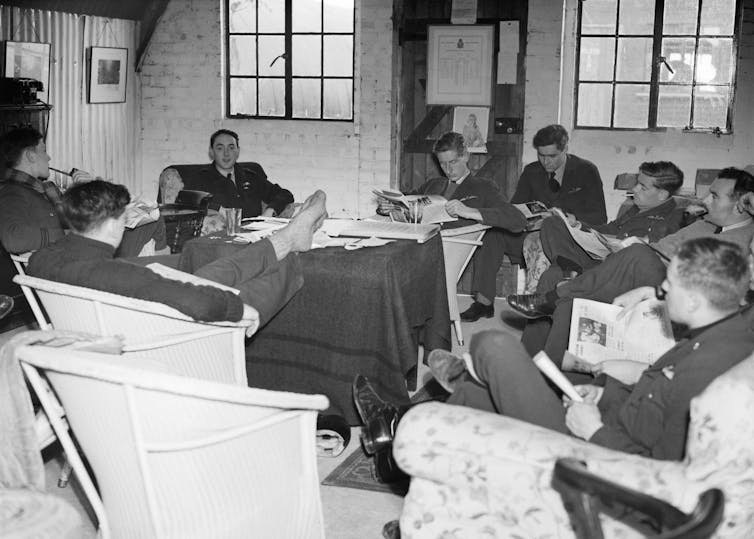
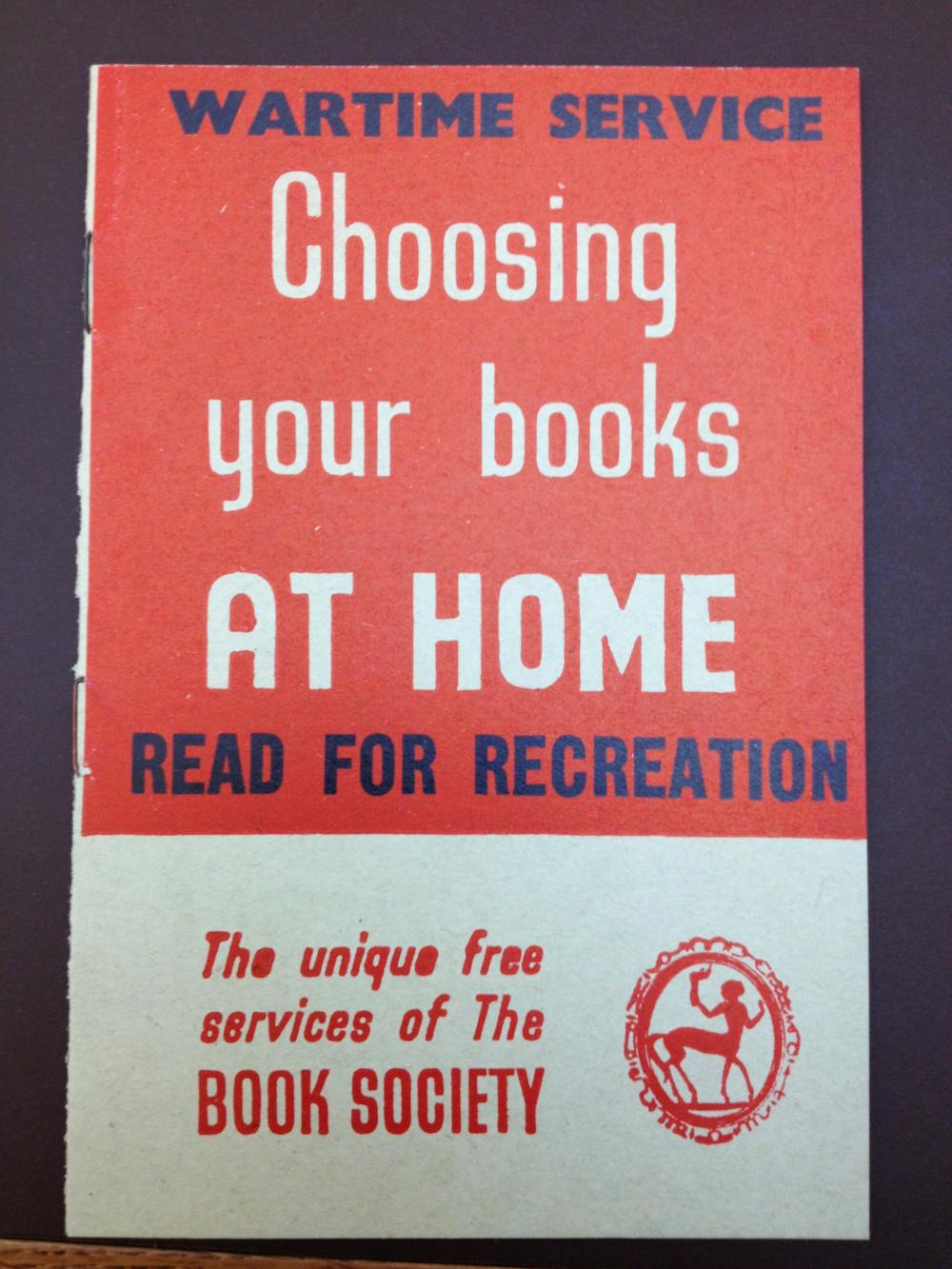
With the widespread limitations to free movement, the book trade was quick off the mark. Books were promoted by libraries and book clubs as the very thing to fight boredom and fill blacked-out evenings at home or in shelters with pleasure and forgetfulness. “Books may become more necessary than gas-masks,” the Book Society, Britain’s first celebrity book club, advised.
Selling tales
I’ve been researching the choices and recommendations of the Book Society for the past few years. The club was set up in 1929 and ran until the 1960s, shipping “carefully” selected books out to thousands of readers each month. It was modelled on the success of the American Book-of-the-Month club (which launched in 1926) and aimed to boost book sales at a time when buying books wasn’t common. It irritated some critics and booksellers who accused it of “dumbing down” and giving an unfair advantage to some books over others – but was hugely popular with readers.
Boots Book-lovers’ Library flyer, c. 1939. Boots Company archives, Nottingham
The Book Society was run by a selection committee of literary celebrities – the likes of JB Priestley, Sylvia Lynd, George Gordon, Edmund Blunden and Cecil Day-Lewis – chaired by bestselling novelist Hugh Walpole. Selections were not meant to be the “best” of anything, but had to be worthwhile and deserving of people’s time and hard-earned cash.
Guaranteeing tens of thousands of extra sales, the club had a huge impact on the mid-20th-century book trade, with publishers desperate to get the increased sales and global reach of what publisher Harold Raymond called “the Book Society bun”.
Books will go on
The Book Society guided readers through the confusion of appeasement and the run-up to the second world war with a marked increase in recommendations of political non-fiction examining contemporary geo-politics. The classic novel of appeasement was Elizabeth Bowen’s The Death of the Heart (Book Society Choice in October 1938) in which a sense of malaise and inevitability of future war haunts the characters’ desperate actions.
When Britain finally declared war against Germany in September 1939, the Book Society judges were divided. Some were relieved that, as George Gordon put it, “an intolerable situation has at last acquired the awful explicitness of war”. But others were devastated, especially Edmund Blunden who was still traumatised from fighting in the first world war.
Book Society flyer, c. 1939. John Johnson Collection of Printed Ephemera, Bodleian Library, University of Oxford
The judges advised members that when they became weary of news, people “will turn to books as the best comfort”, as had happened in the first world war with the increase in reading and library membership. Publishers and booksellers faced huge challenges during the second world war, including paper shortages, problems in distribution, a vanishing workforce, and bomb damage to offices and warehouses. But there were more readers – and from a wider social class – at the end of it. Demand consistently outstripped supply as consumer expenditure on books more than doubled between 1938 and 1945.
What people were reading
Throughout the second world war, the Book Society varied its lists between books that offered some insight on the strangeness of contemporary life and works of fiction – especially historical fiction – that took readers’ minds off it.
Titles in the first group include comic novels by the likes of E M Delafield and Evelyn Waugh, as well as forgotten bestsellers like Ethel Vance’s Escape (1939) (an unlikely thriller set in a concentration camp) and Reaching for the Stars (1939), American journalist Nora Waln’s inside account of life in Nazi Germany.
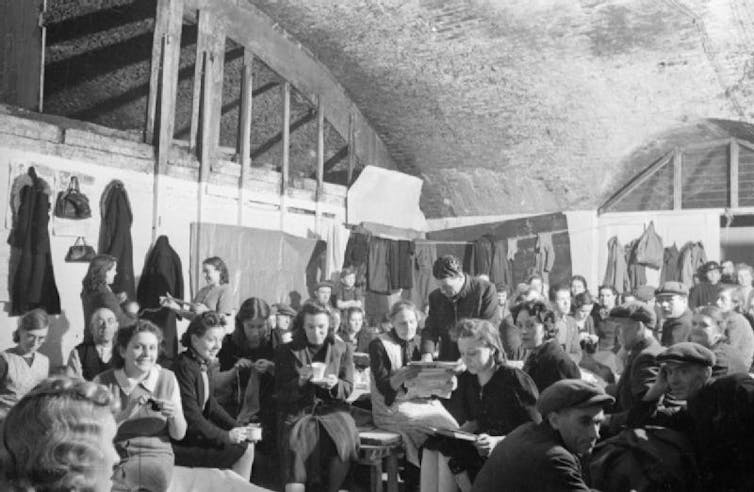
Settling down with something to read underneath the arches during an air raid. Imperial War Museum, CC BY
Historical fiction was consistently in demand. Half the club’s choices in 1941 were long novels with historical settings. As today’s readers prepare to batten down the hatches with Hilary Mantel’s 900-page latest book, it is sobering to reflect on how an imaginative connection with the past has long helped readers find relief from the madness of the present.
The other fail-safes in the second world war were the classics. As books already in print became scarce, the Book Society reissued new editions of Jane Austen’s Pride and Prejudice, and Tolstoy’s War and Peace and Anna Karenina. These were books that Walpole said he believed he could sit down with even through an air raid.
Indeed, Neilsen BookScan has reported a rise in sales of classic fiction as the coronavirus crisis deepens – including War and Peace – as readers use this unfamiliar time to knuckle down to the heavyweights.
You can also join a War and Peace reading group online if you want a bit of company. After the homeschooling, working from home, and everything else. Here goes.
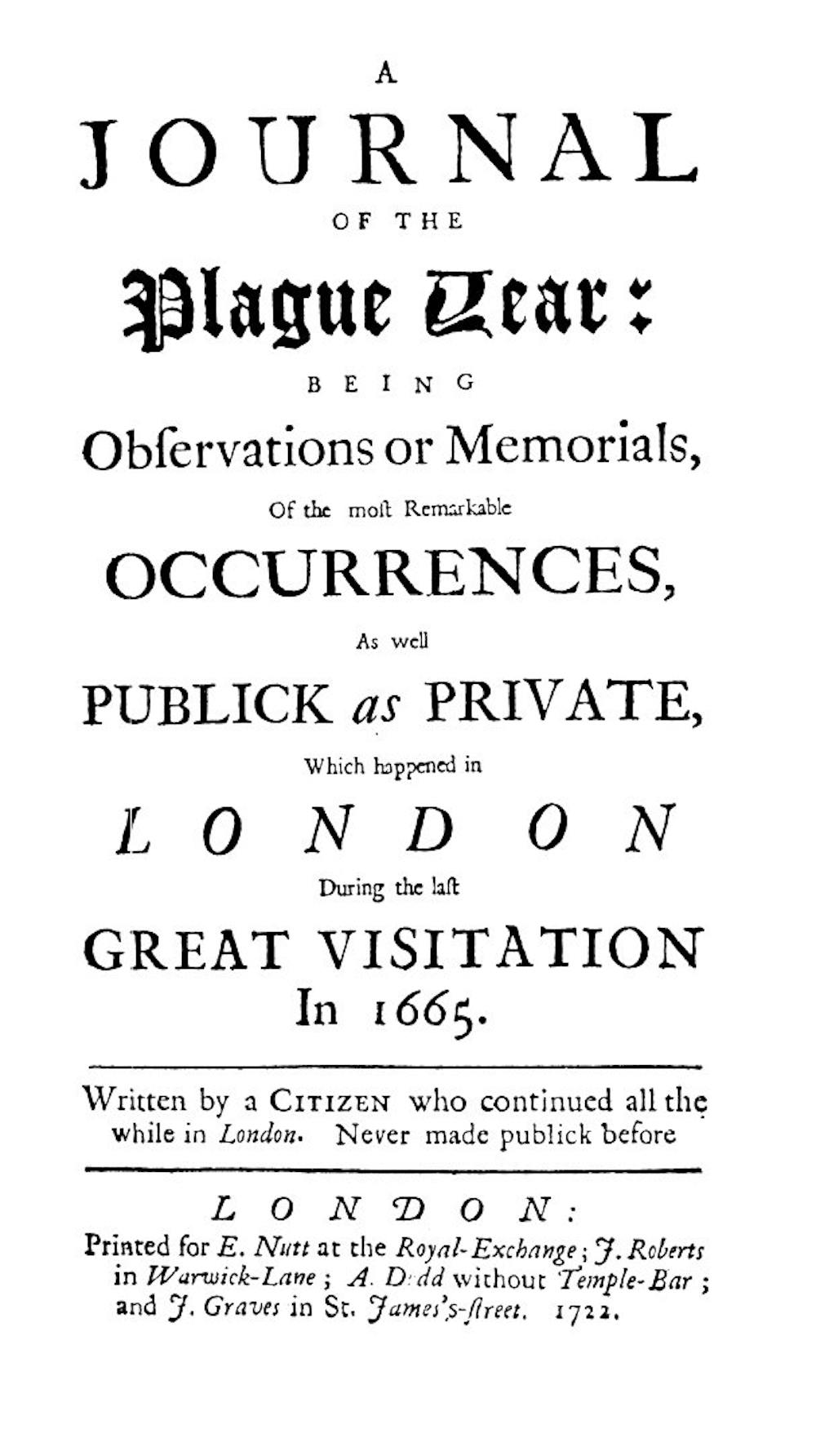
In 1722, Daniel Defoe pulled off one of the great literary hoaxes of all time. A Journal of the Plague Year, he called his latest book. The title page promises “Observations of the most remarkable occurrences” during the Great Plague of 1665, and claims it was “written by a citizen who continued all the while” in London – Defoe’s own name is nowhere to be found.
It was 60 years before anyone twigged. From oral testimonies, mortality bills, lord mayor’s proclamations, medical books and literature inspired by the 1603 plague, Defoe had cooked the whole thing up.
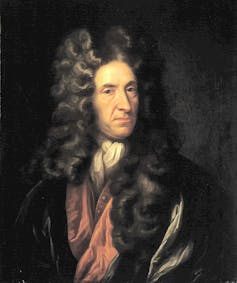
Unreliable memoir: Daniel Defoe (1660-1731) National Maritime Museum, London.
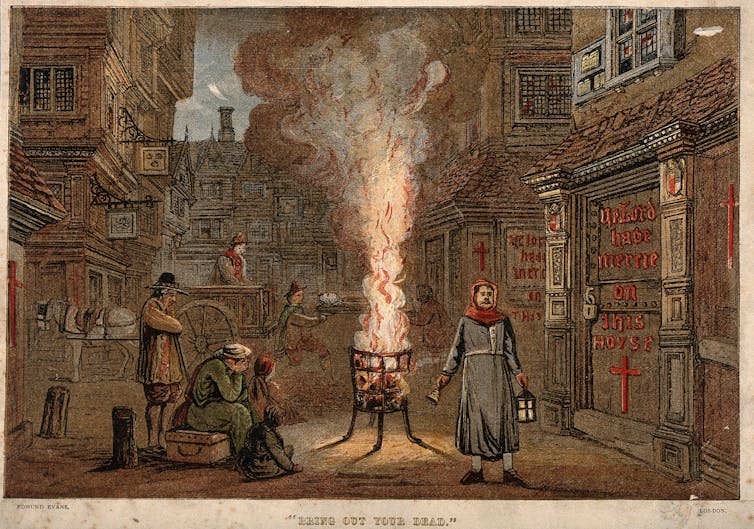
And yet this extraordinary book lies like the truth. It’s the most harrowing account of an epidemic ever published – and it really leaps off the page now in the era of COVID-19. We feel what it was like to walk up a main thoroughfare with no one else about. We read of the containment orders published by the government, and how people got round them. We share the distress of families denied proper funerals for their loved ones.
We learn of the mass panic as people tried to understand where the disease came from, how it was transmitted, how it could be avoided, what chance you had if you caught it, and – most modern of all – how fake news and fake practitioners multiplied answers to all those questions.
Then and now
Bubonic plague was, of course, far nastier than coronavirus. In its ordinary form – transmitted by fleabites – it was around 75% fatal, while in its lung-to-lung form, that figure went up to 95%. But in the way it was managed – and the effect it had on people’s emotions and behaviour – there are eerie similarities amid the differences. Defoe captured them all.
His narrator, identified only as HF, is fascinated by what happened after the lord mayor ordered victims to be locked in their homes. Watchmen were posted outside front doors. They could be sent on errands to fetch food or medicine and took the keys with them, so people contrived to get more keys cut. Some watchmen were bribed, assaulted or murdered. Defoe describes one who was “blown up” with gunpowder.
Defoe’s Journal of the Plague Year.
HF becomes obsessed with the weekly mortality figures. They charted deaths by parish, giving a picture of how the plague was moving around the city. Still, it was impossible to be sure who had died directly of the disease, just as in the BBC news today we hear people have died “with” rather than “of” COVID-19. Reporting was difficult, partly because people were reluctant to admit there was an infection in the family. After all, they might be locked in their homes to catch the disease and die.
HF is appalled by those who opened up taverns and spent their days and nights drinking, mocking anyone who objected. At one point he confronts a group of rowdies and gets a torrent of abuse in return. Later, exhibiting one of his less appealing traits, he is gratified to hear that they all caught the plague and died.
He is a devout Christian, but the stories that worry him most are the ones that still shock everyone today, regardless of their beliefs. Is it possible, he asks, that there are some people so wicked that they deliberately infect others? He just can’t square the idea with his more kindly view of human nature. Yet he hears plenty of stories about victims breathing into the faces of passers by, or infected men randomly hugging and kissing women in the street.
Discriminating disease
When Prince Charles and Boris Johnson fell ill recently, we were told the virus “does not discriminate”. HF has something to say about that. For all his uncertainties, he is adamant about one thing. Plague affected the poor disproportionately. They lived, as they do now, in more cramped conditions, and were more susceptible to taking bad advice.
They were more likely to suffer ill health in the first place, as now, and they had no means of escape. Near the start of the outbreak in 1665, the court and those with money or homes in the country fled London in droves. By the time the idea had occurred to the rest of the population, you couldn’t find a horse for love or money.
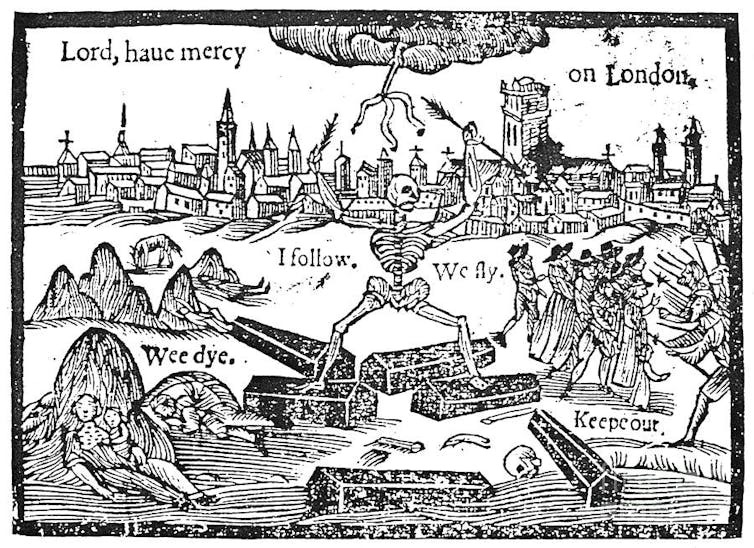
‘Lord, have mercy on London.’ Contemporary English woodcut on the Great Plague of 1665.
Throughout the journal, HF tells us he hopes his experiences and advice might be useful to us. There’s one thing in particular governments might learn from the book – and it’s tough. The most dangerous time, he reports, was when people thought it was safe to go out. That was when the plague flared up all over again.
Plague literature is a genre in its own right. So what draws writers and readers to such a grisly subject? Something not entirely wholesome, perhaps. For writers, it’s the chance to explore a world in which fantasy and reality have swapped places. We depend on the writer as heroic narrator, charting the horror like the best news reporter.
For readers, it’s the feeling that you might sneak with him to the very edge of the plague pit and live to tell the tale. For his closing words, HF hands us a doggerel poem that sums up his feelings and ours:
A dreadful plague in London was
In the year sixty five,
Which swept an hundred thousand souls
Away: yet I alive!





 At the BookShelf
You must be logged in to post a comment.