Unknown's avatar

Libraries can have 3-D printers but they are still about books


Reading and books are more important than ever for contemporary society. Here an image of The Rose Main Reading Room at the Stephen A. Schwarzman Building (also known as New York Public Library Main Branch) – an elegant study hall in the heart of Manhattan.
Patrick Robert Doyle /Unsplash

Paulette Rothbauer, Western University

How often do we hear that libraries aren’t just about books anymore? They are makerspaces with 3-D printers, scanners, laser vinyl cutters and routers. They provide green rooms, sewing machines, button makers, and tools like drills, saws and soldering irons. They are places to borrow seeds, fishing rods, cake making supplies, binoculars, laptops and tablets, radon detectors, musical instruments, bicycles and take-home wifi hotspots. They are important sites for learning with services dedicated to today’s newest literacies — coding, gaming, robotics and how to spot fake news.

There are consequences of these ideas and news that push books and reading to the margins in the commentary on the latest trends in public libraries.

One such consequence might be the disavowal of public librarians’ unique, professional knowledge base related to books and reading. Another might be the abdication of a mandate related to the promotion of reading as a social good.

Today’s libraries do build community, support healthy living, promote knowledge and provide space for city sanctuaries. But it is critical that libraries continue to be about books and reading, and that Canadians understand the high value of well-staffed, well-stocked and well-funded libraries.

The news isn’t that library services and programs have moved beyond books, it’s that public libraries are still very much about books.

I’m a researcher and educator in Library and Information Science, and I’ve been studying reading practices for nearly twenty years — those of teenagers, young adults and older adults. My research relies on the perspectives of people who like to read and choose to read for pleasure.

With my colleagues Catherine Ross and Lynne McKechnie at Western University, I’ve published two editions of a book about how reading matters to people, libraries and communities, and I talk about this work in two podcasts: Reading Still Matters and What Do You First Remember about Reading.

The inside of the beautiful public Stuttgart Library in Germany.
Tobias Fischer / Unsplash

I am not lamenting that this is how libraries always have been and, therefore, always should be. Of course, libraries have never been only about books! But reading and books are more important than ever for contemporary society, and public libraries occupy a unique position as a public reading institution.

Reading matters

There are so many reasons why reading matters. As UCLA literacy scholar Maryanne Wolf so compellingly argues, learning how to read and the habits of deep reading connect in important ways to brain circuitry related to our capacities for critical thinking, empathy and reflection. Reading matters for the ways our brains develop, and being able to read deeply affects the way we think and feel. This has consequences for how we live our lives, but also for how we make judgements about the world and our places in it.

The habit of reading carries many other rewards, among them improved language acquisition and other literacy advantages, as well as therapeutic benefits related to mental wellbeing. We know that reading brings comfort to readers. One large-scale study even found that people who read books also live longer lives in which to read them.
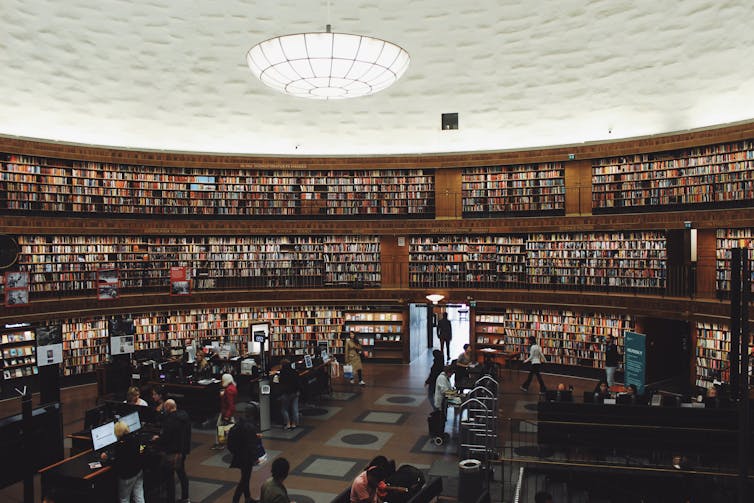
The Stockholm Public Library completed in 1928 is the main library in Sweden.
Unsplash

In my research I’ve interviewed young adults about the role of reading in their lives. They told me that reading helps them to explore and understand their identities. It allows them to exercise autonomy and independence. Reading gives them knowledge and experience of the world which, in turn, shows them new possibilities for their own lives.

Reading among older adults can support resilience and contemplation, and conversations about reading can promote a reflective stance on one’s life.

Toronto Reference Library.
Payton Chung/Flikr, CC BY

Reading develops the brain. Reading helps us sort out who we are, and who we might become, throughout the entirety of our lives. Through reading we understand where other people are coming from too, including those with whom we disagree.

Reading connects us to people in communities that organize around and through reading. Reading gives us space and time to slow down, pause and contemplate even in these hypermediated times.

People learn to love reading by seeing others do it, by being mentored, by making voluntary choices about what to read and by reading themselves, over and over again. This is good news for us because we already have accessible sites in our communities that can support the reading habit — I’m talking about public libraries, of course.

The value of a librarian

Libraries are the only places where we can find educated workers who know about reading and genres, and who are trained in how to best connect readers with what they want to read. Public library systems also have wide and deep collections of reading materials in all formats that go beyond current bestsellers and dominant tastes of the purchasing public. Public libraries are places where people can go to make reading choices for whatever reasons they choose and for whatever ends, and without having to spend a dollar.
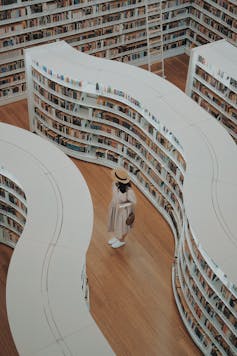
This library is located inside a shopping mall at Orchard, Singapore.
Arif Riyanto/Unsplash

Reading generates community in public libraries through programming like book discussion groups, author readings, reader reviews and one-book-one-community events. Because public libraries do all this, they are one of the best supports for books and reading in our society. Depending on who you are, or where you live, public library systems might be your only, your best or your preferred option for getting reading materials. Even people who may never use libraries still think they are good for their communities.

As many people who think that books and reading turn people away from libraries, there are those who think books and reading are the library’s signature brand.

The most recent BookNet Canada annual survey found that 78 per cent of the adults surveyed had read a book in the past 12 months, and most read on a weekly or daily basis. And a study by the American-based non-profit Online Computer Library Center found that Canadians borrowed nearly twice as many books from public libraries than were purchased in bookstores.

Public libraries support a positive culture of reading by making reading materials available, accessible and connecting readers of all ages and with a variety of needs to books of all kinds.

So, let’s dispense with the tired idea of “libraries aren’t just about books anymore” and instead, celebrate how libraries are both about books and reading, and all the other myriad ways that they support literacy, learning, culture and community.

[ Like what you’ve read? Want more? Sign up for The Conversation’s daily newsletter. ]The Conversation

Paulette Rothbauer, Associate Professor, Library and Information Science, Western University

This article is republished from The Conversation under a Creative Commons license. Read the original article.
Unknown's avatar

Writing Good Jacket Copy


The link below is to an article that takes a look at writing good jacket copy.

For more visit:
https://blog.nathanbransford.com/2019/07/how-to-write-good-jacket-copy

Unknown's avatar

As Herman Melville turns 200, his works have never been more relevant


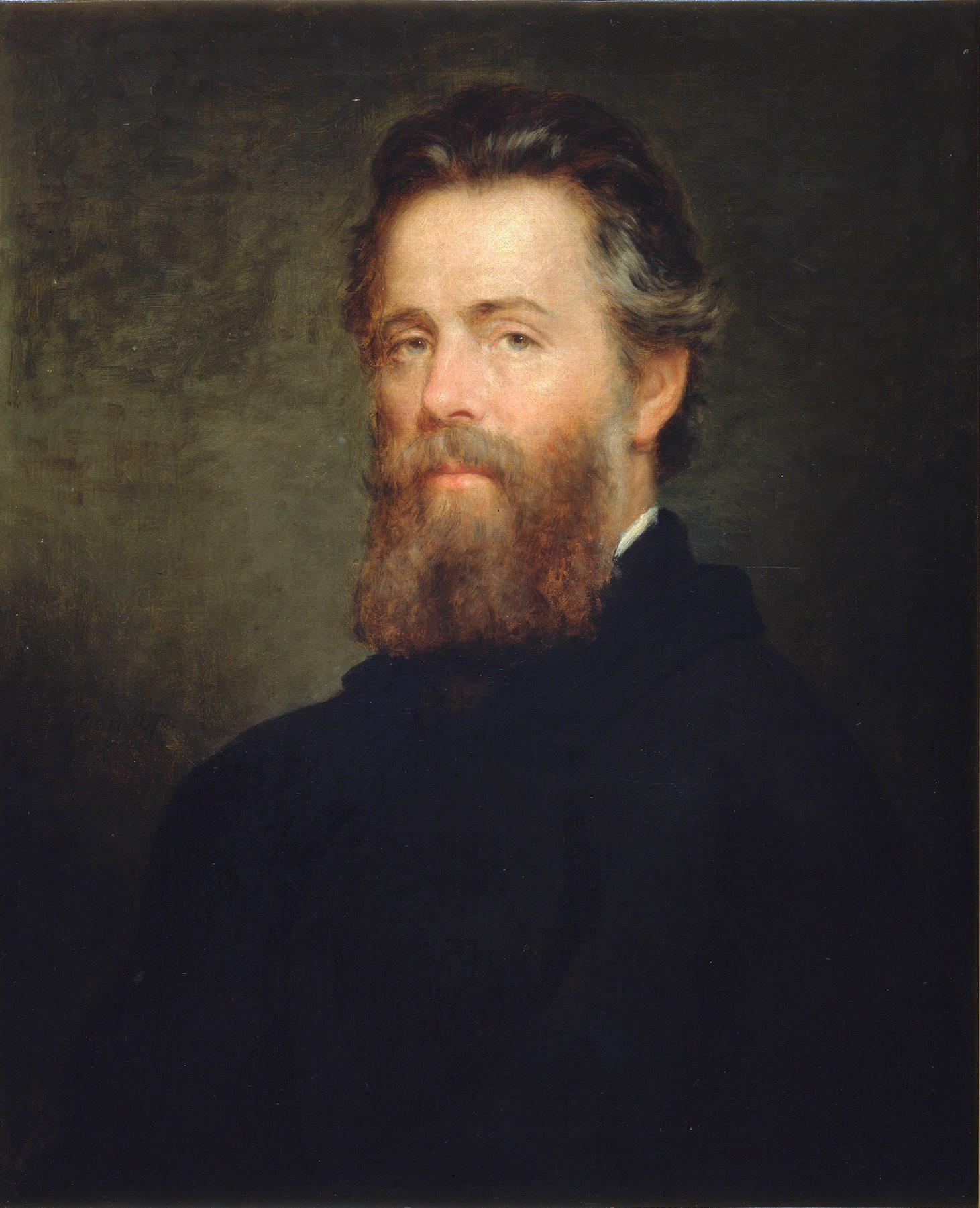
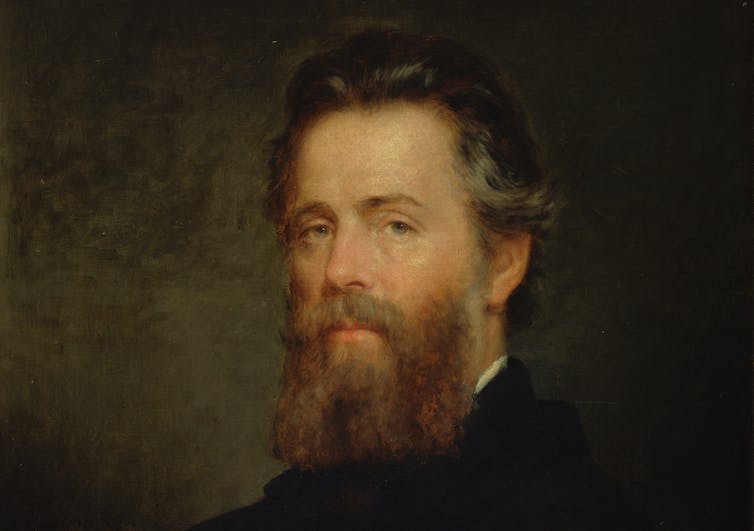
An 1870 portrait of Herman Melville painted by Joseph Oriel Eaton.
Houghton Library

Aaron Sachs, Cornell University

Outside of American literature courses, it doesn’t seem likely that many Americans are reading Herman Melville these days.

But with Melville turning 200 on August 1, I propose that you pick up one of his novels, because his work has never been more timely. This is the perfect cultural moment for another Melville revival.

The original Melville revival started exactly a century ago, after Melville’s works had languished in obscurity for some 60 years. In the immediate aftermath of World War I, scholars found his vision of social turmoil to be uncannily relevant.

Once again, Melville could help Americans grapple with dark times – and not because he composed classic works of universal truths about good and evil. Melville still matters because he was directly engaged with the very aspects of modern American life that continue to haunt the country in the 21st century.

Finding fellowship

Melville’s books deal with a host of issues that are relevant today, from race relations and immigration to the mechanization of everyday life.

Yet these aren’t the works of a hopeless tragedian. Rather, Melville was a determined realist.

The typical Melville character is depressed and alienated, overwhelmed by societal changes. But he also endures.

Ultimately, “Moby-Dick” is about the quest of the narrator, Ishmael, the story’s lone survivor, to make meaning out of trauma and keep the human story going.

In ‘Moby Dick,’ Ishmael seeks communion and adventure outside the stultifying confines of a capitalist economy.
Wikimedia Commons

Ishmael goes to sea in the first place because he’s feeling a particularly modern form of angst. He walks the streets of Manhattan wanting to knock people’s hats off, furious that the only available jobs in the new capitalist economy leave workers “tied to counters, nailed to benches, clinched to desks.” The whale ship is no paradise, but at least it affords him a chance to work in the open air with people of all races, from all over the world.

When the crewmen sit in a circle squeezing lumps of whale sperm into oil, they find themselves clasping each other’s hands, developing “an abounding, affectionate, friendly, loving feeling.”

Then there’s Melville’s novel “Redburn,” one of the author’s lesser-known works. It’s mostly a story of disillusionment: A young naïf joins the merchant marine to see the world, and in Britain all he finds are “masses of squalid men, women, and children” spilling out from the factories. The narrator is abused by the ship’s cynical crew and swindled out of his wages.

But his hard experience nonetheless broadens his sympathies. As he sails home to New York with some Irish families fleeing the famine, he remarks:

“Let us waive that agitated national topic, as to whether such multitudes of foreign poor should be landed on our American shores; let us waive it, with the one only thought, that if they can get here, they have God’s right to come…. For the whole world is the patrimony of the whole world.”

Melville’s fall and rise

Back in November 1851, when “Moby-Dick” was published, Melville was among the best-known authors in the English-speaking world. But his reputation started to decline just months later, when a review of his next book, “Pierre,” bore the headline, “Herman Melville Crazy.”

That opinion was not atypical. By 1857, he had mostly stopped writing, his publisher was bankrupt, and those Americans who still knew his name may well have thought he’d been institutionalized.

Yet in 1919 – the year of Melville’s centennial – scholars started returning to his work. They found a writer of grim, tangled epics delving into the social tensions that would ultimately lead to the Civil War.

It just so happened that 1919 was a year of labor strife, mail bombs, weekly lynchings, and race riots in 26 cities. There were crackdowns on foreigners, privacy, and civil liberties, not to mention the lingering trauma of World War I and the Spanish flu pandemic.

Over the ensuing three decades – an era that included the Great Depression and World War II – Melville was canonized, and all of his works were reprinted in popular editions.

“I owe a debt to Melville,” wrote critic and historian Lewis Mumford, “because my wrestling with him, my efforts to plumb his own tragic sense of life, were the best preparations I could have had for facing our present world.”

Why Melville still matters

America is now dealing with its own dark times, full of foreboding over climate change, extreme class divisions, racial and religious bigotry, refugee crises, mass shootings, and near-constant warfare.

Go back and read Melville, and you’ll find apt depictions of white privilege and obliviousness in “Benito Cereno.” Melville paints consumer capitalism as an elaborate con game in “The Confidence-Man,” while excoriating America’s imperial ambitions in “Typee” and “Omoo.” He was even inspired to break his silence at the end of the Civil War and write an earnest plea for “Re-establishment” and “Reconstruction.”

“Those of us who always abhorred slavery as an atheistical iniquity,” he wrote, “gladly we join the exulting chorus of humanity over its downfall.” But now it was time to find ways for everyone to get along.

His 1866 book “Battle-Pieces,” though full of bitter fragments, has a final section dominated by idealistic nouns: common sense and Christian charity, patriotic passion, moderation, generosity of sentiment, benevolence, kindliness, freedom, sympathies, solicitude, amity, reciprocal respect, decency, peace, sincerity, faith. Melville was trying to remind Americans that in democracies there is a perpetual need to carve out common ground.

It’s not that society doesn’t or shouldn’t change; it’s that change and continuity play off each other in surprising and sometimes bracing ways.

In dark times, the rediscovery that human beings have almost always had to confront terrible challenges can produce powerful emotions.

You might feel like knocking someone’s hat off. But you might also feel like giving the Ishmaels of the world a gentle squeeze of the hand.

And in doing so, you might help to keep the human story going.The Conversation

Aaron Sachs, Professor of History and American Studies, Cornell University

This article is republished from The Conversation under a Creative Commons license. Read the original article.

Unknown's avatar

Online Ebook Stores


The link below is to an article that takes a look at places to buy ebooks online.

For more visit:
https://www.makeuseof.com/tag/buy-ebooks-best-ebook-stores/

Unknown's avatar

2019 Booker Prize Longlist


Unknown's avatar

Wordslut: a new book aims to ‘verbally smash the patriarchy’, but its argument is imprecise


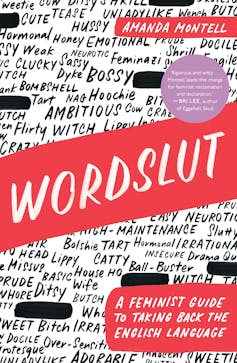
In Wordslut, Amanda Montell deconstructs gendered language.
Shutterstock

Roslyn Petelin, The University of Queensland

In her book Wordslut, Amanda Montell argues that patriarchal assumptions deny women an active role in society, claiming that, “In our culture, men run the show”.

With a degree in creative writing and linguistics, having studied “how language works in the real world”, Montell has set out to “verbally smash the patriarchy”. Her aim is to educate a readership of women who need “the knowledge to reclaim the language that for so long has been used against us”.

She promises that:

By the end of this book you’ll have all the nerdy know-how you need to sound like the sharpest word ninja in the room.

The wording of her promise sums up both the strengths and weaknesses of this book. Montell tries too hard to popularise her agenda by adopting up-to-date slang and jargon, although she must be fully aware of how transient and imprecise this strategy makes her argument.


Black Inc

Occasionally, she is also seduced into making irrelevant asides that contribute nothing to her argument. For example, she mentions a seminal feminist paper that was published in 1997, “the same year as Princess Diana’s death and Mike Tyson’s bite fight”.

Despite all this, it is a book that explores the fascinating etymology of words such as “bitch” and “slut” that we were taught never to use in polite company, and which have nonetheless underpinned gendered attitudes.

Gender and sexuality

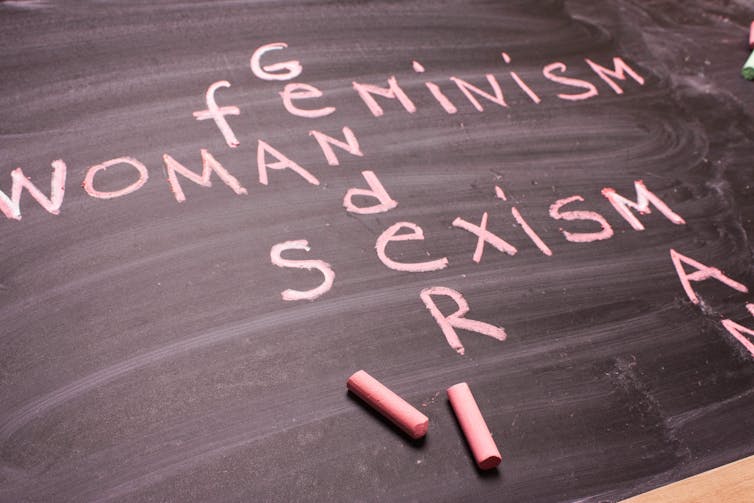
Since the second wave of feminism in the 1970s, sociolinguists have been studying language and gender: how people use language to express gender, how gender impacts how a person talks, and how their speech is perceived.

Montell comprehensively discusses the way in which second-wave feminist activists put the distinction between sex and gender on the “mainstream cultural radar in the mid 20th century”. She notes that “no one ever posed a semantic distinction between sex and gender until the 1960s” and that the word gender didn’t enter the mainstream English lexicon until the 1980s.

As she also notes, the rise of the #MeToo movement with fifth-wave feminism has accelerated discussions around gender and sexuality in the press, with even the Summer 2019 issue of Playboy magazine dedicated to the topic.

Montell’s book ranges across issues relating to sex, gender and language with many provocative pronouncements.

Amanda Montell, author of Wordslut.
Black Inc

The most astounding, to my mind, is her claim about “valley-girl ‘vocal fry’,” also known by linguists as “creaky voice”, “a raspy, low-pitched noise that we often hear as people trail off at the end of their sentences”. Particularly teenage girls.

Montell says that:

Today’s sharpest linguists … have data suggesting that “teenage girl speak”, one of the most loathed and mocked language styles, is actually what Standard English is going to sound like in the near future. In a lot of ways, it’s already happening. And that’s making a lot of middle-age men very, very cranky.

Her credibility would have been enhanced if she had provided data for this bold claim, as it would seem to me that this is a style of language mostly confined to certain parts of California.

Montell rails against sexism in relation to women, but exhibits it herself in relation to men, particularly older men. Through most of the book she uses the term “dude” to replace the word “man”, oddly claiming that “today dude is one of the most beloved terms in the English language”.

Her ageism is evident when she discusses how labels such as cisgender, transgender, graygender, and pansexual “aren’t surfacing just because it’s suddenly trendy to have an identity that will perplex and/or pissoff all our great-aunts and-uncles at Thanksgiving”. She quotes many male and female linguists throughout the book, but mentions the age of only two, a woman who is “now in her 70s” and a man who is 58 years old.


Read more:
Explainer: what does it mean to be ‘cisgender’?


He or they?

In his preface to Gwynne’s Latin (2014), the conservative British grammarian Neville Gwynne mentions what he calls the “now-contentious problem of how to express what for the entire history of English literature until the last few decades was the all-embracing ‘he’.”

Surprisingly, he suggests that before then it was never considered “remotely inappropriate or uncomfortable” and goes on to comfort the readers of his book by stating that “on the few occasions [in his book] that you see the all-embracing “he” or equivalent, that it is occurring without any offence being intended”.

Publications such as the Australian government’s Style Manual for Authors, Editors and Printers have accepted the singular “they” for decades, way ahead of those in the UK and the USA. Montell advocates the singular “they”, along with North American linguistics societies and dictionaries, although The Times style guide does not enthusiastically endorse it:

He and his can no longer refer to both sexes equally; he or she will sometimes do. It is often easier to use the plural they for he or she, and sometimes even the ugly their for his or her. Do this only when necessary.

Montell predicts, however, that “20 years from now, introducing yourself with your name and your pronouns could become the norm”.


Read more:
Gender diversity is more accepted in society, but using the pronoun ‘they’ still divides


Absent index

In a book that aims for an educated readership, we would expect to see an index and a list of references. This book has neither. Montell’s failure to consistently and meticulously cite her sources somewhat diminishes the value of the book.

Much of the research that she mentions, such as a 2003 study of 30 Irish men and 30 Irish women on their swearing habits, features very small populations.

She also makes sweeping generalisations with no evidence: “people above the age of forty have always loathed teen slang”. The smattering of underwhelming cartoons contributes nothing to the text.

The book could also have done with a closer edit. On page four, Montell makes a grammatical and a factual error when she states that “Homo sapiens have been around for 200,000 years”. (Homo sapiens is thought to have originated in Africa more than 315,000 years ago.) Many readers will be put off by the book’s annoyingly gauche and patronising style: “You may or may not have heard of a little thing called patriarchy?”

But is the book worth reading? Yes. Despite my reservations, I enjoyed reading it. Montell puts her linguistics degree to good use in a thorough coverage of historical sociolinguistics that forms the precursor to the contemporary feminist stance practised in many arenas today.The Conversation

Roslyn Petelin, Course coordinator, The University of Queensland

This article is republished from The Conversation under a Creative Commons license. Read the original article.
Unknown's avatar

Getting Your Teen Back Into Books… Or Not


The link below is to an article that takes a look at how ‘not’ to get your teen back into books.

For more visit:
https://bookriot.com/2019/07/10/how-not-to-get-your-teenager-back-into-books/

Unknown's avatar

The Next Big Thing In Ebook Readers


The link below is to an article that considers what will be the next big thing in ebook readers.

For more visit:
https://goodereader.com/blog/electronic-readers/what-will-be-the-next-big-thing-for-e-readers

Unknown's avatar

With wit and tenderness, Miles Franklin winner Melissa Lucashenko writes back to the ‘whiteman’s world’


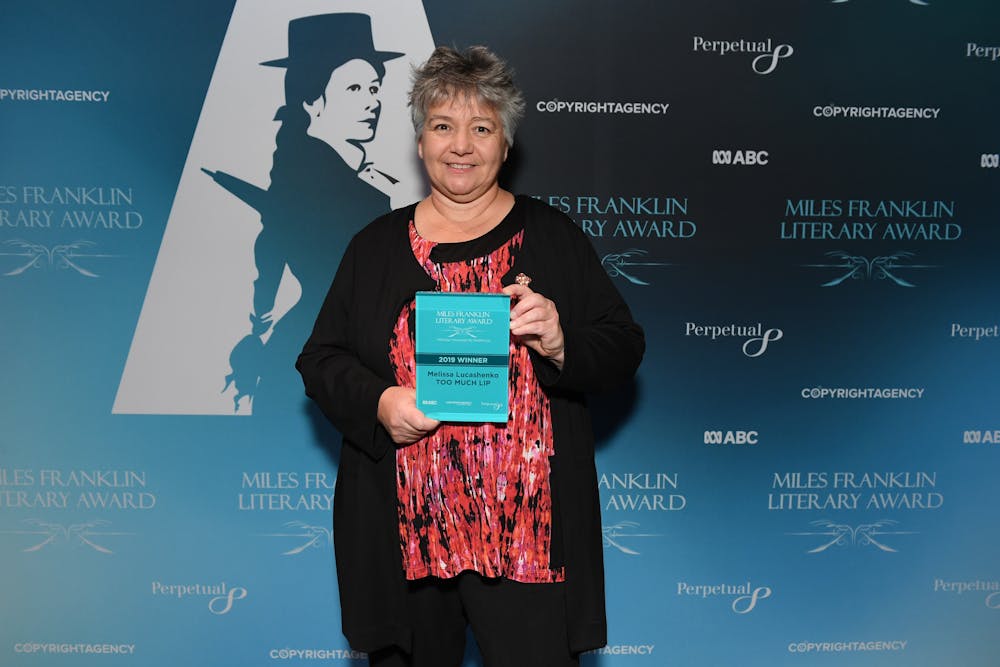
Melissa Lucashenko, winner of the 2019 Miles Franklin Award.
Courtesy of the Miles Franklin/ Belinda Rolland

Jen Webb, University of Canberra

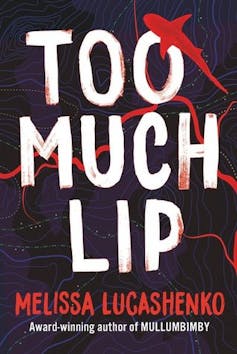
Too Much Lip joins the other prizewinning volumes in Melissa Lucashenko’s trophy cabinet. Her first-ever novel, Steam Pigs (1997), was shortlisted for or won several major prizes, and in the past two decades her books have racked up 26 awards.

Today’s win confirms her status as one of Australia’s top writers of contemporary fiction. Lucashenko has a marvellous knack of crafting fictions that are both drenched in anger, dysfunction and tragedy, and woven through with laugh-out-loud funny scenes, and relationships of great tenderness – with people and other living beings, and with the country in which they live.

Melissa Lucashenko at the awards ceremony.
Courtesy Miles Franklin Literary Award/Belinda Rolland.

This latest volume is a brilliant addition to her oeuvre. A sustained story about a highly dysfunctional and traumatised family, its chief focus is on Kerry, the sister and daughter who has returned home. It is a home summed up by brother Ken as “a fucking coma ward”.

Pop in bed with the remote welded to the nags. Mum sits doing her cards and reading about the Second Coming of Christ our Lord, and I’m just about ready to harvest [son] Danny for his organs if the useless prick doesn’t move his arse soon. Talk about Limpet Dreaming.

Kerry laughs in response, largely to placate her labile brother; but for her it is not a joyful return. Not only is she here to say goodbye to her dying grandfather, but she is still wounded from the recent loss of her girlfriend Allie, who has been imprisoned for armed robbery, and has ended their relationship. Adding to disaster, Kerry and her family discover plans to develop a sacred site – and not just develop it, but actually build a prison on it.

In an interview about Too Much Lip, Lucashenko says: “I discovered that I was writing hidden history without being aware of how close to home I was. If you stick at it long enough you will eventually discover that you were writing truth where you thought you were writing fiction.”

This novel seems to respond to Emily Dickinson’s famous axiom about creative writing: Tell all the truth, but tell it slant.

Too Much Lip is a performance of truth told slant, the actuality of life and of embodied history wrapped within a work of fiction that comes alive in the characters and events that fill its pages; thrumming with life.

But it is more than a story. Lucashenko’s work is a powerful response to the entrenched racism that still shapes Australian culture; to the public and official turning away from the brutalities and genocide on which this nation was built, or the violence and inequities that characterise contemporary society.

Kerry’s Pop says to her: “We livin’ in the whiteman’s world now. You remember that”, but like Kerry, Lucashenko refuses to be silenced.

In her fictions and public life she makes visible the vibrancy and resilience of Aboriginal communities and their continued connection to land and culture. At the same time she makes agonisingly clear the unhealed wounds of Australian culture, in writing that demands these wounds be addressed.The Conversation

Jen Webb, Director of the Centre for Creative and Cultural Research, University of Canberra

This article is republished from The Conversation under a Creative Commons license. Read the original article.