Unknown's avatar

How to write a novel – four fiction writers on Danielle Steel’s insane working day


Romance is officially dead.
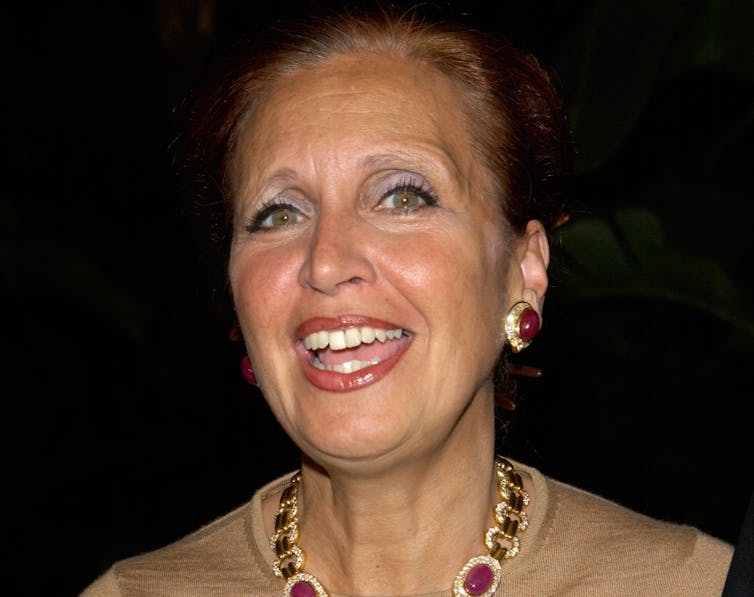
Featureflash Photo Agency

Sarah Corbett, Lancaster University; David Bishop, Edinburgh Napier University; Edward Hogan, The Open University, and Liam Murray Bell, University of Stirling

She might be the world’s most famous romance writer, nay the highest selling living author bar none, but there’s little room for flowers and chocolates in Danielle Steel’s writing regime. In a recent interview she laughed at the idea of young people insisting on a work-life balance, and has claimed she regularly writes for 20 to 22 hours a day, and sometimes 24. The result: 179 books in under 50 years, selling about 800m copies.

Some aspiring novelists might just have cancelled their entire lives to get on the Steel plan, but many more are probably wondering if it’s time to try something less demanding. We asked four creative writing teachers for their perspective:

Liam Murray Bell, University of Stirling

Steel’s claim reminds me of the thriller writer Edgar Wallace, who was known to write a novel over the course of a long weekend. He’d retire to his study on a Friday evening and not emerge until the Monday morning, dictating his words to a secretary and stopping only for half-hourly cups of tea. Poor secretary.

The only thing I recognise from that brutal regime is the need for copious amounts of tea. For me, a productive day is four hours of writing. Four hours of focused, uninterrupted time at the keyboard. This morning, I wrote for two hours and managed just shy of 1,000 words. Even that is a decent day; a steady day. To wrestle those hours of writing time free, I’m postponing teaching preparation, leaving my marking until the evening, relying on childcare. Most of all, I’m doing my damnedest to ignore emails. When does Steel answer her emails, is what I want to know.
Going blank again.
AVA Bitter

There have been times, on writing retreats or under threat of impending deadline, when I’ve been known to stretch to six or seven hours. No more, though, because then the words stop making sense and the delete key takes a hammering. I start explaining my plot to the mantelpiece and rehearsing lines of dialogue with the cat. Instead, I go and do something else. It’s amazing how often clarity about your writing comes while washing the dishes, trimming the hedge, taking the dog for a walk. The writers I know are full of anecdotes of story ideas scribbled on bus tickets, or pulling over the car to jot down a poem opening by the side of the road.

It’s often when I’m out for a lunchtime run that I find myself reflecting on what I wrote that morning or find the thread for a scene to write the next day. Haruki Murakami talks about the similar feats of concentration and endurance required for long-distance running and for writing a novel; each endeavour requiring the person to turn up day after day for months or even years. At the University of Stirling, we’ve actually formed a research group to look at the links between creative writing and physical activity because so many writers are also keen runners or cyclists or swimmers.

The appeal of Steel’s process, then, seems to be that every day is race day. But you can’t sustain that. Little and often is my mantra, with every day building momentum. If you manage 200 words today then those are 200 words you didn’t have yesterday. That might take you 15 minutes or it might take six hours; either way, it’s progress. The aim isn’t to get as many words on the page as quickly as possible; the aim is to get the right words on the page, however long it takes.

Sarah Corbett, University of Lancaster

I’m sorry to say there isn’t a formula for how to write a novel (so don’t buy those “how to” books) – only hard graft, staying power, blinding self belief (rescued every morning from the teeth of doubt), and the willingness to meet the devil at the crossroads and outwit him. And to write, rewrite, write, rewrite, write, rewrite …

Perhaps this isn’t very helpful to the beginner; and I have to admit that I’m just finishing my own first novel – after five years. But having taught creative writing for almost 20 years across all genres, here are some things I can say from experience:

1) Read other novels. There’s no getting round this: you have to do a lot of reading – passionate, engaged and risky – but also the kind where you start to notice, and then investigate how the writer does things. Read lots of different types of books too: be curious, endlessly;

2) Practice, practice, practice. Write regularly even if you can only spare an hour in the evening or an afternoon at the weekend. Most writers have other jobs, families, pets, households, and you’d be surprised how much writing gets done in the gaps between other things;

3) Work at your technique at every level of detail from sentencing and phrasing to word choice, creating believable characters, immersive settings, dynamic scenes and authentic dialogue;

4) Write what saddens/moves/frightens/turns you on; write with the whole of your self and the whole of your senses;

5) Join a course, start a group;

6) Write because you enjoy it, and you enjoy a challenge;

7) Be prepared to tear it up and start again;

8) Remember that writing is work, the best kind, that transports and enchants you;

9) Keep going…;

10) Write your own rules.

So how did I write my novel? Slowly – I published two poetry collections in the same period, did a lot of teaching and saw my son through his GCSEs and A-levels – and with a lot of gutting and rewriting; begging more experienced friends to read it and give me their toughest, most honest advice, and then acting on it, even when it meant radical cuts and changes.

Mine is a literary novel – about family, home and shame – but with a psychological twist. The character and her story came to me all in one go on the train home from Manchester after an unsettling encounter in Waterstones, and since then it’s been a process of excavation, as if the novel already existed somewhere in the world, and I just had to keep uncovering it, slowly, layer by layer. I’m still adding scenes, taking others away, fine tuning every line. I’m still working out the best way to tell the story, but I know I’m nearly ready to let it go because the next one has already arrived.

Edward Hogan, Open University

For his 2016 book Rest, the writer and Silicon Valley consultant Alex Soojung-Kim Pang collected the routines of creative people throughout history. From the habits of writers such as Charles Dickens, Anthony Trollope, and Alice Munro, he concluded that four hours a day is optimum, and you need to wake up early. Trollope rose at 5am each morning (a servant brought him coffee at half past), and wrote until 8.30am, before going to his job at the post office. On that schedule, he published over 40 novels.

As a writer with a family and a full-time job, I currently follow the 5am method, though I make my own coffee. In theory, this “little and often” approach seems straightforward: if you write 500 words a day, you’ll have a first draft in months. But it isn’t that simple. My first novel took eight years, but my third was pretty much done in 40 days. Writing requires two states of mind: you need the researcher’s brain, the clear-thinking editor’s, but you must be open to the dark mess of creation, too. My routine changes, because I haven’t figured out how to do it yet. When I do, I’ll probably quit.

Kazuo Ishiguro.
Wikimedia

I’m interested in Steel’s way of working. That sort of immersion, favoured by Kasuo Ishiguro, and Jesse Ball – who claims to write his novels in as little as six days – allows them to retain the vitality of the initial idea.

Paul Sheldon, the author and narrator of Stephen King’s Misery, describes “falling through a hole in the page” when writing. Maybe that’s the sort of compulsion that Steel experiences, and it’s refreshing to hear her address the physicality of the process. Writers are reluctant to talk about the (rare) sensation of extreme focus that results when they become possessed by their work. Rambling about raised heart-rates, losing track of time, and being “in the zone”, can make writing sound like a cross between yoga and golf.

The writer’s routine is where practical concerns meet the more ephemeral subject of inspiration. You have to decide what kind of writer you want to be. Jenny Colgan produces two books a year, and this involves hitting deadlines so that her novels appear around Mother’s Day and the Christmas season. Writing is work, the daily pursuit of a word count. For Hilary Mantel, that sort of regularity is alien. She talks about “flow days” when she has no idea what she’s written until she reads it back. But both writers are at their desks, daily.

The act of writing can be exhilarating, but it’s mostly quite difficult. Then again, it’s not like going down the pit. So if you want to write a novel, and find Steel’s method unappealing, let me refer you to the celebrated and prolific children’s author Jacqueline Wilson, who writes for about half-an-hour a day. In bed.

David Bishop, Edinburgh Napier University

Steel’s regime sounds extreme, but if that works for her – so be it. Every writer has their own unique sweet spot, a time and place where they can produce words that will be ready for reading one day. The trick is finding your personal approach, and also recognising it might not suit every project.

Some people say you must write every day to be a writer. Perhaps, but writing is not simply the act of typing words on paper or screen. There is so much more that goes into creating narratives from your imagination. Reading widely is often the sign of a voracious writer, though there is always the danger of a project being infected by the style or substance of whatever you happen to be reading at the time.

It’s also a myth that you need to write a certain number of words in a session. Some writers do benefit from a daily or weekly target, but others prefer to devote a fixed amount of time to writing, and trust that the words will come. Feeling guilty for not matching another writer’s productivity is certainly not good for your mental health. Besides, quantity is no measure of quality. I once had 600,000 words published in one calendar year, but they certainly weren’t my best work.

The act of not writing is just as important as writing. Never underestimate the importance of staring out of a window or going for a walk. All too often the knottiest story problems can only be untangled by getting away from the desk. If all else fails, try going to sleep and letting your subconscious do the heavy lifting. It’s amazing how often the resting mind can resolve a problem your active thoughts couldn’t fix.
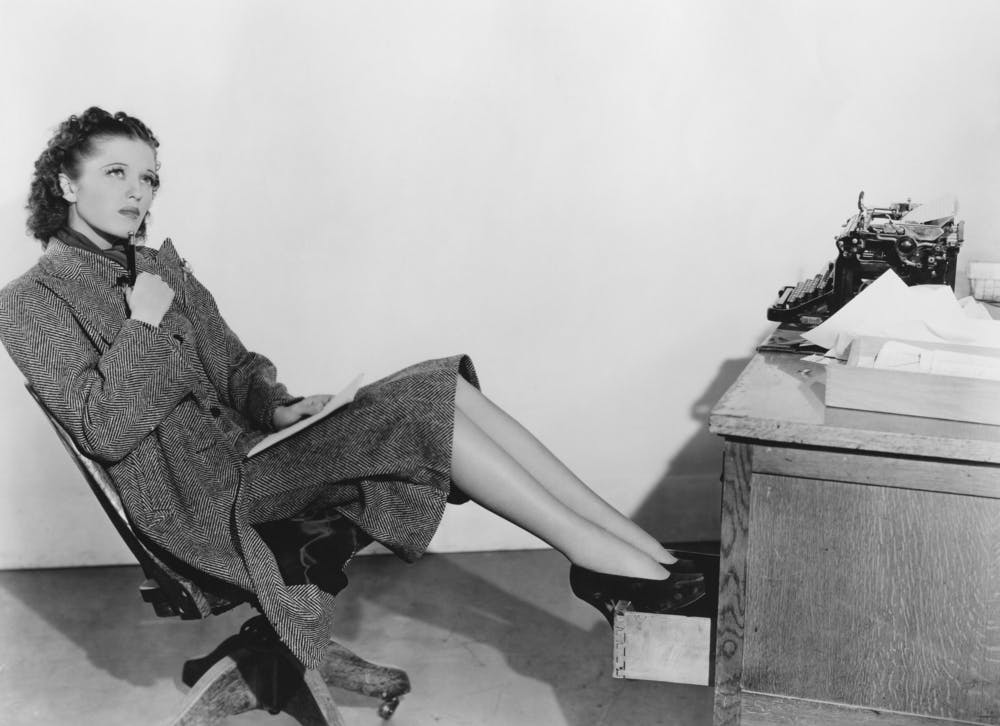
‘Where did I put that dog?’
Everett Collection

For most writers, finding the best way to write a novel is trial and error: experimenting with different systems until they discover one that chimes. Some writers craft detailed plot outlines as a narrative safety net; others prefer a journey of discovery that could mean wholesale rewrites later. Some work in total silence; others needs background sounds such as music. An idea to spark your imagination is necessary, along with a trajectory to follow – but what happens next is up to you.

Steel has a sign in her office that reads: “There are no miracles. There is only discipline.” To be a writer does not require 22 hours at a desk each day, but Steel is right that there are no miracles, either. If you want to be a writer, you have to write – however you do it. That much is inescapable.The Conversation

Sarah Corbett, Lecturer in Creative Writing, Lancaster University; David Bishop, Programme Leader in Creative Writing, Edinburgh Napier University; Edward Hogan, Associate Lecturer in Creative Writing, The Open University, and Liam Murray Bell, Lecturer in Creative Writing, University of Stirling

This article is republished from The Conversation under a Creative Commons license. Read the original article.
Unknown's avatar

Inside the story: writing trauma in Cynthia Banham’s A Certain Light


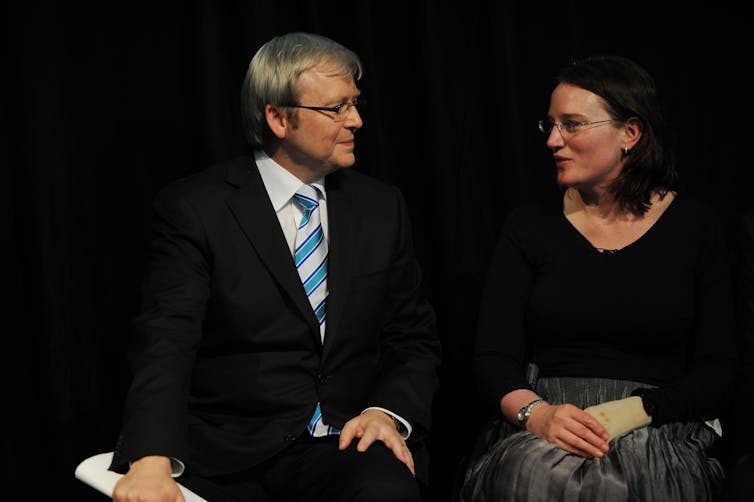
Cynthia Banham with Kevin Rudd in 2008. Banham’s memoir explores both the trauma she experienced during a plane crash in 2007 and her family’s history.
Dean Lewins/AAP

Tess Scholfield-Peters, University of Technology Sydney

Why do we tell stories, and how are they crafted? In a new series, we unpick the work of the writer on both page and screen.


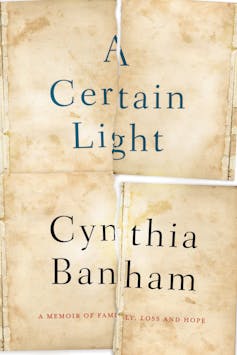
Former Fairfax journalist and lawyer Cynthia Banham voices the silenced pain of generations in A Certain Light, her evocative, hybrid work of docu-memoir.

In an effort to process the trauma she experienced while on assignment more than ten years ago – a plane crash over Indonesia claimed both her legs and left 60% of her body covered in full thickness burns – Banham locates her own experience within her wider family’s narrative.

Banham’s memoir was released in 2018. Her story was once again in the news earlier this year, when Eddie McGuire mocked her pre-match coin toss at an AFL game (McGuire later apologised and said his comments were not about Banham).

In the book, Banham confronts the impact of the accident on her identity, and the ways in which her own resilience can be traced backwards through her heritage. She writes of her family: “We were shaped by each other’s trauma, just like we were shaped by each other’s love.”

Her voice shifts between the investigative (she incorporates historiography, images, documents, footnotes and parentheses) and the insightful and emotional first person. Yet her journalistic attention to detail is constant. Woven together, these voices comprise her fragmentary memoir, an arduous journey into the past and ultimately, resolution.


Allen & Unwin

Banham says A Certain Light is written for her young son, so he will one day know about his family’s history. The book begins with an epistolary prologue that speaks directly to him, predominantly through first person but sometimes in second.

We are invited by Banham into the intensely personal space of the text. She reveals to us her maternal indecision – the desire for her son to know, yet be shielded from, her trauma’s painful excesses.

Banham writes: “Will you, my son, grow up with memories of your mother’s suffering, feeling that you are somehow my compensation?” The first of many rhetorical questions throughout the text reminds us of her vulnerability, and the fraught task of communicating trauma through generations.

Connected narratives

Banham’s painful telling of her rehabilitation after the crash is threaded through other, broader stories of the past, an act of deflection perhaps signifying the difficulty endured in writing about the crash itself.

She retraces the trauma narratives of her grandfather, Alfredo; Alfredo’s sister, Amelia; and Banham’s mother, Loredana. She collects memories from family members across Europe, and artefacts and documents she has chosen to incorporate into the text, reflective of her own pieced-together family narrative.

The images are haunting at times and lend an immense gravity to Banham’s storytelling. Connecting stories of suffering to a face or a real artefact allows the reader to explore her own empathic ties with the story.

Banham finds a connection between the experiences of these relatives and her own. While her grandfather’s plight as an Italian prisoner of war in Nazi Germany is of course different to her own experience, Banham draws effective comparisons.

For example, she likens her thirst immediately after the plane crash as she waited, unable to move, in a foreign hospital hallway, to the excruciating thirst felt by victims of war.

In her research she encounters an image of German soldiers who had lost their legs. “War wounds”, she writes, “how did I end up with war wounds?” These comparisons show a lingering resonance of war in her mind, of the shared, transcendental suffering that connects generations.

Through her mother’s story as an Italian immigrant to Australia during the 1950s, Banham connects to a deep feeling of shame – the shame of difference, of abnormality. Shame was so innate that her mother was reluctant to let the surgeons amputate Banham’s legs in life-saving surgery, for fear of what her daughter’s life might be like without a “normal” body.

Banham leans painfully into her trauma in the final chapter of the book, titled Crashing. She revisits the site of the plane crash, and the days immediately before and after – the most distressing moments.

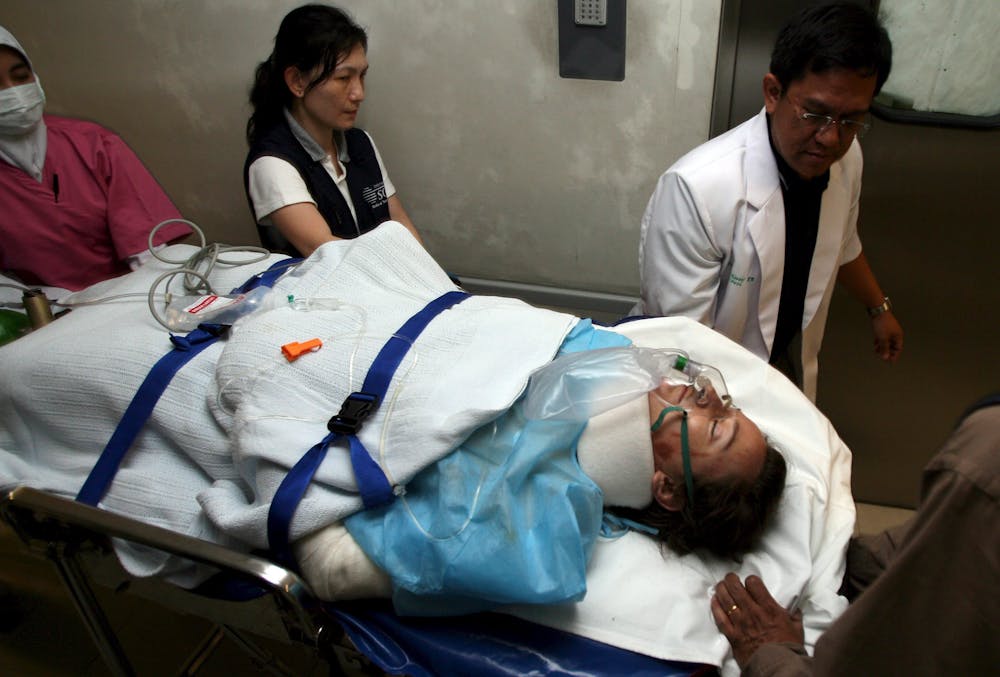
Cynthia Banham is evacuated from Sardjito hospital, in Yogyakarta, Wednesday, 07 March 2007.
Weda/EPA

Tension builds as she recalls a handful of details: the description of her hotel room; the clothes she chose to wear that morning (might her life be different now if she had worn pants instead of a skirt?); the trivial pre-flight conversation she had with fellow journalists about Indonesia’s air crash record.

The actual recount of the crash is surreal. Banham writes: “Shit, I was thinking. Is this really happening? Then: Oh God.” On the next page: “Shit, actually, this could be it, this could be the end, maybe this is how I am going to die.”

The terror Banham experienced in those moments is beyond comprehension, and yet the incredibly human, common thoughts of panic incite an immense sense of empathy in the reader. It reminds us this could happen to anyone.

This is Banham’s second book – her first, Liberal Democracies and the Torture of Their Citizens, was derived from her PhD undertaken at the Australian National University several years after her accident.

A Certain Light reconciles the woman she was before the plane crash with the woman who writes this text. Banham explores the fragility of memory and the shared longing to know the stories of family members who can no longer speak, or perhaps do not want to.

“Memory is fluid, malleable, untrustworthy”, Banham writes, yet ultimately it’s memory that has created her narrative, her identity reclaimed from trauma. A Certain Light is a reminder that despite even the greatest tragedy, time moves on and there is light in the darkness – if we choose to see it.The Conversation

Tess Scholfield-Peters, PhD candidate in Creative Arts, University of Technology Sydney

This article is republished from The Conversation under a Creative Commons license. Read the original article.
Unknown's avatar

Finished Reading: Red Queen (Book 2) – Glass Sword by Victoria Aveyard


Glass Sword (Red Queen #2)Glass Sword by Victoria Aveyard
My rating: 4 of 5 stars

View all my reviews

Unknown's avatar

Finished Reading: The Saxon Stories (Book 1) – The Last Kingdom by Bernard Cornwell


The Last Kingdom (The Saxon Stories, #1)The Last Kingdom by Bernard Cornwell
My rating: 4 of 5 stars

View all my reviews

Unknown's avatar

Judith Kerr: read her autobiographies to understand The Tiger Who Came to Tea


Judith Kerr, author of the Tiger Who Came to Tea, at the International Literature Festival Berlin in 2016.
Christoph Rieger, CC BY-SA

Eleanor Byrne, Manchester Metropolitan University

Judith Kerr’s death at the age of 95 was met with an avalanche of tributes from readers, writers and publishers alike. Her illustrated books such as the Mog series and her first book, The Tiger Who Came to Tea (1968) have endured as children’s classics, with illustrations that bear witness to the domestic spaces of the 1960s suburban British home, carrying a focus on children and their pets and the security of a loving family life. The loving depiction of a safe and stable childhood that Kerr created in her books for stands in sharp contrast to her experience of childhood as one involving a sudden cataclysmic destruction of the life she knew in Berlin under the Nazis.

This history speaks to her place in the children’s literary canon as one of its most loved writers but also part of a transnational group of writers who bore witness to the Holocaust and contributed to a distinctive and significant migrant vision and storying of London and Britain.

Both Kerr and her brother made their homes in Britain and all her family took British citizenship after the end of the war. Her London settings can seem quintessentially British, offering an intimate portrait of 1960s London. But her own childhood was marked by constant movement and upheaval, as well as a need to learn new languages, fleeing Germany for Switzerland, France and finally England, where her family lived in impoverished conditions for a number of years in cheap London hotels, often relying on the kindness of friends and connections to survive from week to week.

Her books describing these years show she was conscious of being an outsider —- a “clever refugee girl” as the fellow pupils in her school dismissively referred to her. Visibly different, she was poorly dressed in hand-me-down clothes from the two daughters of a London friend. She sometimes “passed” as English because of her command of the language, but left school at 16 out of desperation to earn money to help her parents survive in London lodgings.

Security destroyed

Kerr’s trilogy of less well-known largely autobiographical books about this period sheds light on her illustrated work in perhaps unexpected ways and are testimony to survival after an experience of the almost total destruction of her own security and stability.

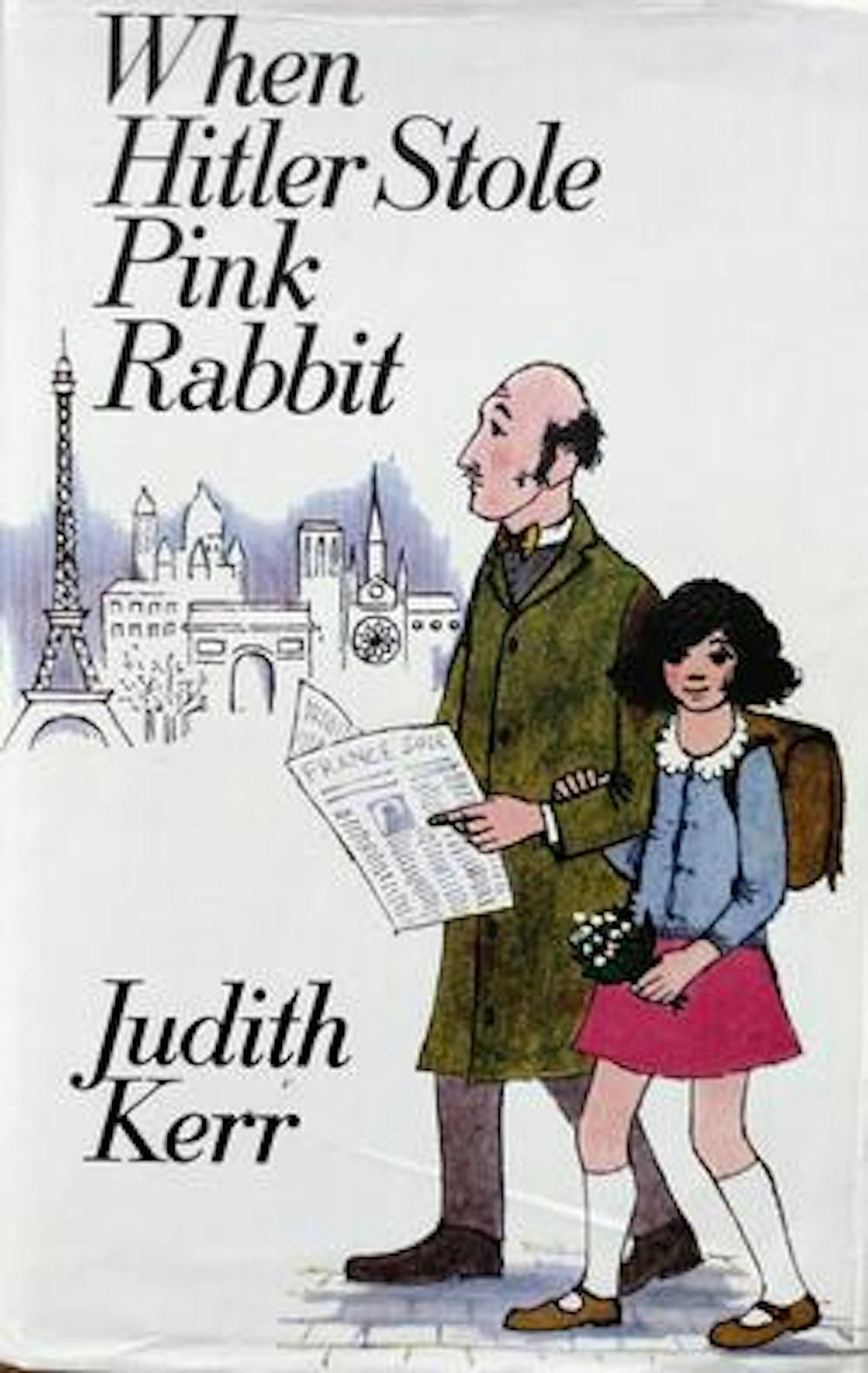
When Hitler Stole Pink Rabbit: first edition cover.
Wikipedia

Collectively called Out of the Hitler Time, When Hitler Stole Pink Rabbit (1971), Bombs on Auntie Dainty (1975) and A Small Person Far Away (1978), the trilogy loosely followed her own experiences as a Jewish refugee from Nazi Germany. Her father, Alfred Kerr, a well-established and respected German-Jewish theatre critic was a vocal opponent of the Nazis (his books were burned by them after he fled Germany in 1933).

The first and most well-known is a memoir of leaving Germany and living in exile in Switzerland and France, told through her eyes as a nine-year-old child. The second speaks to her earliest experiences of living in England. It tells of her family’s move to London to escape German advances into France, depicting life among the international refugee population of the hotels in Bloomsbury, with her parents in severely reduced circumstances and her father struggling to cope in a foreign language or to find paid writing jobs. It also recounts her experience of the Blitz and of her brother’s sudden internment on the Isle of Man, as an enemy alien, two weeks before he was set to take his finals at Cambridge University. The last portrays her return to Berlin as an adult, now married to an English scriptwriter, to visit her sick mother after her father’s death.

A much loved children’s classic: The Tiger Who Came to Tea.
Wikipedia

Literary critics have offered readings of The Tiger Who Came to Tea, reflecting on the tensions between pleasure and fear surrounding the arrival of a tiger with unlimited appetite into the protagonist Sophie’s home. Louise Sylvester offered a reading of the book juxtaposed with extracts from When Hitler Stole Pink Rabbit, in order to construct an argument about how the story might reflect the radical instability of Jewish households during WWII.

Tim Beasley-Murray read the book as a space of carnival, but one which is resolved when it appears to threaten the continuation of normal life, once the father returns from work. Beasley-Murray argued, however, that the father is an ambiguous figure of safety who never meets the tiger but instead resolves the situation by taking the family out for dinner.

Alongside Kerr’s second book in her trilogy another reading might emerge. Her father was truly the centre of their lives in Berlin in the 1930s, his life in London was as series of hard reversals, speaking poor English and finding little written work as a journalist or novelist he underwent a catastrophic collapse of fortunes. And while he was briefly rehabilitated in Germany after the war he died soon afterwards.

This contradictory status of her father is painfully witnessed by Kerr as she comes to grasp the great respect he is held in by the German Jewish émigré community and the frustrating powerlessness of the position he finds himself in. When Kerr narrates going to visit her parents from free lodging she has been given, to their hotel room in central London where evening meals are included in the price paid for the room, her mother argues with the waitress that she should not have to pay for her daughter’s meal as she missed her own the previous day due to illness.

The pain and precarity of the scene are keenly felt. During the war years in London the family had no private home, no kitchen and no food supplies apart from those that were served in the hotel restaurant. Kerr lived apart from her parents when they could no longer afford two rooms, and they all relied on charity and the goodwill of friends. Like the tiger, the war swallowed up not just all the food in the house and the water in the taps but the kitchen itself, the table, the chairs, the bathroom and the parenting that might have taken place in all those domestic spaces. The family did eat in a restaurant every night as lodgers in a hotel because they had no home of their own.

Kerr’s illustrated books were written for her own children and featured thinly disguised family members and pets, but her autobiographical trilogy was also written with her children in mind to try to portray how different her childhood had been to theirs. Reading them together is to bear witness to her immense artistic achievements and to her important accounts of the German-Jewish refugee experience in Britain.The Conversation

Eleanor Byrne, Senior Lecturer in English, Manchester Metropolitan University

This article is republished from The Conversation under a Creative Commons license. Read the original article.