
The link below is to a book review of ‘A Tour Through the Whole Island of Great Britain,’ by Daniel Defoe.

The link below is to a book review of ‘A Tour Through the Whole Island of Great Britain,’ by Daniel Defoe.
The links below are to articles and reviews concerning the new Kindle Oasis ebook reader.
For more visit:
– http://phx.corporate-ir.net/phoenix.zhtml?c=176060&p=RssLanding&cat=news&id=2306012
– https://the-digital-reader.com/2017/10/11/new-kindle-oasis-waterproof-costs-249-7-screen/
– https://kindleworld.blogspot.com.au/2017/10/all-new-kindle-oasis-e-reader-finally.html
– https://goodereader.com/blog/electronic-readers/here-is-what-you-need-to-know-about-the-waterproof-kindle-oasis

Jeanne-Marie Jackson, Johns Hopkins University
African literature is the object of immense international interest across both academic and popular registers. Far from the field’s earlier, post-colonial association with marginality, a handful of star “Afropolitan” names are at the forefront of global trade publishing.
Books like Chimamanda Adichie’s “Americanah” and “Half of a Yellow Sun”, Teju Cole’s “Open City”, Taiye Selasi’s “Ghana Must Go” and Yaa Gyasi’s “Homegoing” have confounded neat divisions between Western and African literary traditions. The Cameroonian novelist Imbolo Mbue captured a million-dollar contract for her first book, “Behold the Dreamers”. That’s even before it joined the Oprah’s Book Club pantheon this year.
Such commercial prominence, though, has attracted considerable and unsurprising push back from Western and Africa-based critics alike. Far from advancing narratives with deep roots in local African realities, such critics fear, many of Africa’s most “successful” writers hawk a superficial, overly diasporic, or even Western-focused vision of the continent.
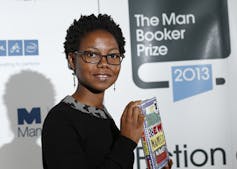
The most visible of these critiques has been directed at the Zimbabwean writer NoViolet Bulawayo’s “We Need New Names” (2013). The Nigerian novelist Helon Habila worried in a review in the London Guardian that it was “poverty-porn”. The popular Nigerian critic Ikhide Ikheloa (“Pa Ikhide”) frequently makes a similar point. Fellow Nigerian writer Adaobi Nwaubani critiqued the West’s hold on Africa’s book industry in a much-circulated New York Times piece called “African Books for Western Eyes”.
Such debates about African writing could, and likely will, go on forever. Questions about Africa’s place in the current global literary marketplace broaden some of the most urgent queries of the postcolonial era. Who gets to document African realities? Who are the “gatekeepers” of African publishing traditions?
It goes on: To what sort of audience does African writing cater? What is the role – and what should it be, if any – of Western institutions in brokering cultural prestige?
All these issues merit concern.
Too often, though, African writing ends up volleyed between two default poles of “corporate global” and “activist local”. Some onlookers, as in a recent essay by the Canadian scholar Sarah Brouillette, go as far as to name the biases of even Africa-based print outlets. Kenya’s Kwani Trust is exposed as “Western-facing” due to a web of donor relations. “West” here is code for neoliberal. “Western-facing” is for complicity with a market that skews toward British and American interests.
Faced with a “world system” argument like Brouillette’s, African literature would seem trapped between a rock and a hard place.
But, in fact, this tells only a small part of the story of how African writing now makes its way through the world. It is incomplete to the point of being outdated, given the boom over the past five years in new, globally conscious small US literary presses collaborating with African writers.
A “West subsuming Africa” brand of critique works fine for scholars with no real skin in the game of literary publishing. It also denies real agency to a lot of African writers and other literary professionals. On the ground the literary field is far more forward-thinking and diverse.
There is an entire new body of African writing that escapes this closed circuit of damning truisms. A wave of new or recently galvanised independent literary presses in the US and the UK are working in tandem with some of Africa’s most generative outlets. Together they are publishing and promoting work by young and adventurous African writers.
Books published originally by presses like Umuzi (South Africa), amaBooks (Zimbabwe) and Kwani (Kenya) find second lives with international publishers working to defy the constraints of profitability. They’re mostly labours of love with skeleton staffs that speak to a transcontinental commitment to innovative African writing.
Here are a few key examples of African texts published by independent American outlets – “independent” here refers to presses beyond the “Big Five” US trade publishers (Hachette Book Group, HarperCollins, Macmillan, Penguin Random House and Simon and Schuster.
These include Jennifer Nansubuga Makumbi’s Ugandan epic “Kintu” which was originally launched by Kwani. It was the first Anglophone novel put out by the brand-new Transit Books based in Oakland, California. The press seeks maximum visibility for translated fiction alongside texts originally written in English. They advocate for more ethical legal and financial dealings with translators, as well as international writers.
A number of similarly tiny, ambitious ventures have published some of the most acclaimed recent African writing in translation. Deep Vellum Publishing was behind the English translation of Fiston Mwanza Mujila’s Etisalat Prize-winning “Tram 83”.
Also dedicated exclusively to works in translation, LA-based Phoneme Media in 2016 published the first ever Burundian novel in English, Roland Rugero’s deeply contemplative “Baho!”. Phoneme’s tagline, fittingly, is “curious books for curious people”.
In a similar vein, Brooklyn’s Restless Books was founded to combat “parochial, inward-looking, and homogenised trends in American publishing”. Among their forthcoming titles, translated from the French is Naivo’s “Beyond the Rice Fields”. It’s the first novel from Madagascar to see its way to English.
Veteran nonprofit press Archipelago Books is also in Brooklyn. In 2015, it published the translation from the Portuguese of Angolan writer Jose Eduardo Agualusa’s “A General Theory of Oblivion”.
Every one of these throws a wrench in a clear, cynical sense of what kind of novel Western presses prize. That is not to mention the many African writers, publishers, and editors working in concert to promote these same texts.
It applies to the Anglosphere too. Books that offer a decidedly more locally textured experience than those of the “Afropolitan” rock stars have made their way abroad through small, focused channels.
These works might include Tendai Huchu’s “The Maestro, the Magistrate, and the Mathematician” (published originally by amaBooks, and in the US by Ohio University Press); Imraan Coovadia’s “Tales of the Metric System” (from Umuzi, and again by Ohio University Press); and Masande Ntshanga’s “The Reactive” (also Umuzi; in the US by family-run Two Dollar Radio.
Clearly, this collection just scratches the surface. But what these works have in common is an investment in stylistic and structural experimentation that confounds rather than caters to an international taste for “digestible” fiction, or to mostly Western points of cultural and institutional reference.
This counter-current of transnational African literary life complicates the equation of culture, geopolitics and economics in more useful ways than stale materialist critiques.
As such titles and presses continue to gain acclaim and recognition by an international readership that is aware of and hostile to shallow representations of Africa – and who crave engagement with challenging fiction, regardless of its origin – critics will need to rethink some of their orthodoxies.
 There is more to both African literature and Western publishing than meets an eye too practised in its suspicion. If literature is doomed only to echo the failings of globalisation, then why bother? On the contrary, a new generation of writers and publishers deserve our awareness of the “global literary marketplace” as a meaningfully multidimensional space.
Jeanne-Marie Jackson, Assistant Professor of World Anglophone Literature, Johns Hopkins University
This article was originally published on The Conversation. Read the original article.

Cynthia F. Wong, University of Colorado Denver
On a damp October day in 2006, I followed Kazuo Ishiguro and my 10-year-old daughter Grace to a back table at a bustling cafe in London for an interview. As Ishiguro answered my questions, he explained how he “auditions” his characters’ voices and personalities in his head before they appear in his fiction. He spoke candidly about a writer’s messy work.
Now he is the laureate for the Nobel Prize in literature, for what the Swedish Academy praised as his unapologetic portrayals of “the abyss beneath our illusory sense of connection with the world.”
It’s a nod to the self-delusion that many of Ishiguro’s characters possess. One, for example, rationalizes his service to a fascist loyalist. Others see their past through the cloudy lens of trauma. If we were to peel back the warped self-deception, we might find a bottomless pit of despair.
At that interview years ago, Ishiguro talked about his characters’ painful chasms, the way they protected themselves by concealing their mistakes. But when everything seems hopeless, his characters often courageously turn to their imagination to forge a connection to life and meaning.
In doing so, they beckon readers to imagine something better, too.
When I asked Ishiguro about his 2005 dystopic novel “Never Let Me Go,” his tone shifted. He lowered his voice when he told me about the students in that novel, and how they eventually perish. But he was surprised when I said that I found the novel sorrowful.
“There is an inevitable sadness,” he admitted. “On the other hand, it’s not a bleak view of human nature.”
I could sense Ishiguro’s concern for how my daughter might take his observations about death and despair.
He continued: “The question, ‘What are we useful for?’ is the question that your daughter Grace asks, and one Tommy and Kathy ask in ‘Never Let Me Go.’ Some cold system says to Tommy and Kathy that they will be useful [to the world], and it’s the same as another system saying to Grace that someday she will be useful to the world economy.”
Human systems figure in all of Ishiguro’s novels, whether these are governments, communities or families. Often, these systems are damaged, and humans still must move through them. They try to repair them or save themselves. Ishiguro has examined many facets of what it means to live among and within countless systems.
The first-person narrators of Ishiguro’s first three novels, “A Pale View of Hills,” “An Artist of the Floating World” and “The Remains of the Day,” reflect on personal losses in the context of world events: friends and families dead from atomic bombings in Japan, unrealized romances, wrong choices and lives founded on delusion. These characters long for clarity, retribution or forgiveness.
The narrators of his next three novels are, variously, a pianist (“The Unconsoled”), a London detective (“When We Were Orphans”) and a roving hospice-type worker (“Never Let Me Go”). Whether they’re situated in Japan, Great Britain, some unnamed European city or even a medieval village, Ishiguro’s characters beguile his readers with their disclosures. His eloquent prose expresses their anguish or their repressed longings. We sense time passing darkly for these characters. We see how they face disappointments and ache for dignity.
Ishiguro explained that to probe the emotional force of his novels, we must understand that the characters are set within “an internal world [and] it’s an emotional logic that is being played out.”
In narrating their sorrows and their fruitless optimism, Ishiguro gives his readers a way to empathize with his characters’ situations.
Ishiguro’s capacity for compassion was cultivated during his university gap year, when he worked with the homeless. He also studied piano and guitar and dreamed of a career in music before he detoured to the creative writing program at the University of East Anglia. He still writes musical lyrics and works with musicians as an avocation.
By his own admission, Ishiguro is a slow writer; he produces a novel every few years. In 2015, when he came to Denver’s Lighthouse Writers Workshop to promote his latest novel, I was able to catch up with him. He remarked that he may have only a couple more books forthcoming.
“We’re not immortal,” he said. “We’re here for a limited time. There is a countdown.”
The Swedish Academy honors a laureate for a lifetime of achievement. To date, Ishiguro has published eight books as well as many short stories, television and film scripts. His career may seem disjointed when focusing on only the best-known novels, “The Remains of the Day” and “Never Let Me Go.”
But few contemporary authors have dared to take as many risks as Ishiguro. The more complicated, Kafka-esque novel “The Unconsoled” is a book some critics called disappointing. A different sort of writer might have quit, but Ishiguro persisted.
Similarly, even though some readers responded coolly to “The Buried Giant,” Ishiguro had taken yet another literary leap: The highly metaphorical story is set in an early English era that predated historical records. Memory, repression of pain and the resolve to protect oneself and loved ones return as themes, but in unusual, allegorical ways.
Each novel is a singular achievement; each successive undertaking enriches a broader canvas of Ishiguro’s portraits of alienated lives.
During that 2006 London interview, I watched Ishiguro banter with my daughter during a break. They were laughing about what it means to “snarf” food, and they were picking up some biscuits and spooning melted ice cream to demonstrate. Ishiguro’s ease and humor when speaking with my child captivated me.
In spite of the sadness in his books, Ishiguro is a gracious guardian of humanity. He is a fine curator of emotions and a skilled storyteller.
 We don’t know how many more books Ishiguro will publish. But we can be certain that in his literary explorations, he will remain undaunted.
Cynthia F. Wong, Professor of English, University of Colorado Denver
This article was originally published on The Conversation. Read the original article.
 At the BookShelf
You must be logged in to post a comment.