Unknown's avatar

Man Booker: who decides what makes a good book, the experts or the readers?


File 20170907 9573 xf0btm

Pexels

Susan Jones, University of Nottingham

The announcement of the shortlist for the Man Booker Prize 2017 will certainly encourage many bookworms to catch up with a new set of “must reads”.

This year’s list for the “leading prize for quality fiction in English” includes three debut novelists, as well as previously shortlisted and winning authors. Being shortlisted can lead to a dramatic increase in sales. The winner, announced in October, can also look forward to a £50,000 prize as well as joining a canon which includes Iris Murdoch, Salman Rushdie and Margaret Atwood.

Awards such as the Man Booker can offer a shortcut to the classics of the future, readily assigned by a panel of people regarded as experts in the field. And for some readers, choosing books from an official selection like the Man Booker shortlist makes it easier to know that what they are reading is deemed “acceptable” by the literary elite.

This is not to say that’s the only reason people enjoy poring over such shortlists. But let’s not pretend that what other people think of what we read isn’t important to many of us. For some, this could even mean going so far as to disguise a guilty pleasure by reading it on an e-reader – making it impossible to judge a book (or the reader) by its cover.

Reading together

Despite reading often being seen as something people do in a room of one’s own, in recent years there has been a big rise in the number of book groups and reading clubs, emphasising the social experience reading can bring.

The success of what researchers have called “mass reading events”, like those led by Oprah Winfrey or Richard and Judy, are testament to the power not only of recommendations from people whose opinions we value, but also of feeling that we’re reading the same things as lots of others.

Book groups have long fulfilled this social function of reading for their many members. Over a cup of tea or glass of wine, people share their thoughts about a book they have read (or at least intend to read), debate its merits and its flaws, and collectively explore what it means to them.

More recently, the proliferation of online book groups has also allowed space for readers to interact over their reading from further afield, often focused on specific genres, or with choices influenced or curated by celebrities or vloggers.

Shared experience

Through my own experience of being part of a community reading group, I have also seen how the act of reading itself is something that brings people together.

Shared reading groups have grown in popularity across the country in recent years. They have been an integral part of the work of the Liverpool based charity, The Reader, which promotes the benefits of reading across different communities. In a range of venues including libraries, health centres, schools, and care homes, members of a shared reading group join together to listen to a story or a poem being read aloud, reading along with a copy of the text if they want to. Members join groups for lots of different reasons – not least because of the impact reading can have on well-being.

Reading with friends.
Shutterstock

Not only do the members of a shared reading group physically meet to listen to the reading, but they also come together through talking about the story or the poem, listening and responding to each other’s interpretations, and working collaboratively to explore what it means to them.

These types of shared experiences are a powerful reminder that the meanings we make from a text are different every time it is read. In this way, reading groups bring people together in the active sharing of interpretation.

The ConversationThose shared readings which are made in the moment sit alongside the “expert” readings of critics and judges as part of the richness of what literature represents to different people. And no doubt as the nights draw in, armed with a new shortlist of titles to get stuck into, reading groups up and down the country will be coming together to read and to work at making meanings of their own.

Susan Jones, Assistant Professor in English Education, University of Nottingham

This article was originally published on The Conversation. Read the original article.
Unknown's avatar

Man Booker Prize Shortlist 2017


Unknown's avatar

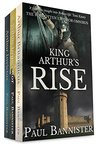
Finished Reading: King Arthur’s Rise – The Forgotten Emperor Omnibus, by Paul Bannister


King Arthur's Rise: The Forgotten Emperor OmnibusKing Arthur’s Rise: The Forgotten Emperor Omnibus by Paul Bannister
My rating: 2 of 5 stars

View all my reviews

Unknown's avatar

Finished Reading: Forgotten Emperor (Book 3) – Arthur Invictus, by Paul Bannister


Arthur Invictus (Forgotten Emperor #3)Arthur Invictus by Paul Bannister
My rating: 2 of 5 stars

View all my reviews

Unknown's avatar

Beyond cats and Kardashians: can journalism satisfy audiences without dumbing down?


Peter Fray, University of Technology Sydney

Jeff Jarvis, director of the Tow-Knight Center for Entrepreneurial Journalism speaking with Peter Fray.

As the Federal government attempts to reform Australia’s media ownership laws, evidence is emerging that journalists are moving away from the traditional watchdog role of the press towards satisfying the demands of audiences.

Decades of debate about whether journalists ought to give audiences what they like rather than what journalists think they need is being resolved in favour of what US journalism thinker Jeff Jarvis dismisses as the “cats and Kardashians” model of digital journalism.

But is giving audiences what they want the same as dumbing down?

Results from a recently published study of Australian journalists indicate that journalists are shifting their thinking away from the “citizen orientation” typically associated with the watchdog role of the press to a more consumer focus.

Senior editors say that understanding what audiences want — as recorded by clicks and other forms of web-based feedback — is an essential part of contemporary journalism.

Growing advertising revenues on the basis of audience reach and volume remains the dominant journalism business model.

As Kate de Brito, the editor-in-chief of the country’s most visited news website, news.com.au, puts it, if no one clicks, “you may as well have just emailed it to your mum”.

But Jarvis, the director of the Tow-Knight Center for Entrepreneurial Journalism at City University New York, argues news organisations need to understand that getting more clicks isn’t the same as listening to your audience.

The price of advertising is going down, desperation up. Journalism gets cheapened in the process.

Efforts to reshape how journalism survives and makes money — and serves its multiple roles in society — has emerged as a key sticking point in Federal government moves to change Australia’s media ownership laws.

Reform of the media ownership laws that restrict any one person controlling radio, TV and a newspaper in the same market hinges on the government’s willingness to back measures promoted by Senator Nick Xenophon to support public interest journalism.

Xenophon, a key member of a current senate journalism inquiry, has supported tax breaks to small media companies and other ways to develop new business models for journalism.

The government has been reluctant to support tax relief but reportedly has a more positive attitude to other measures to boost journalism jobs and explore new business models.

Without support from Labor or the Greens, Team Xenophon’s votes will be crucial to the passage of any deal that would also end restrictions on any one person controlling TV licenses that reach more than 75% of the population.

Indications from Canberra are that a compromise deal could be close.

Alternatives to one-size-fits-all mass audience model are under trial or development across the journalism sector, from experiments in surfacing quality journalism using artificial intelligence to moves to personalise news and information feeds.

The New York Times, for instance, has stated it wants to deliver individualised news based on what individuals read, where they live and how often they come to the site.

Given the NYT has 2.3 million digital-only subscribers, this is perhaps the most ambitious attempt yet at active audience listening.

Jarvis calls on media companies of all sizes to recreate journalism as a service based on “relevance and value”; cast aside the idea of mass, rethink audiences as communities and individuals.

But, as he concedes, media companies are understandably finding it hard to build a new house (based on his notion of service) when the old one (based on volume) is burning down.

Audience reach and volume — and the constant flow of metrics that reveal them — drive the news agenda for most media companies. Ratings always have in commercial radio and TV.

But now few media outlets can afford to ignore what audiences are doing (or not) with their content. Advertisers won’t let them.

In the recently published study of Australian journalists, Folker Hanusch, from the University of Vienna, and Edson Tandoc, from Nanyang Technological University in Singapore, explored the impact of audience feedback via readers’ comments, Twitter and web analytics on journalists’ thinking.

In a survey of 358 journalists, they found a marked shift towards providing “the kind of news that attracts the largest audience” as opposed to the more traditional role of holding the politicians and business to account.

This especially held true for journalists working in competitive markets; those freed from market pressures were “able to prioritize their normative functions of being watchdogs and shaping public opinion”.

Even so, most Australian media companies, including the national broadcaster, are enamoured by the sugar hit of audience reach.

In the most recent Nielsen digital ratings, the closest competitor to news.com.au, with its 5,905,000 unique visitors a month, is the ABC. Its combined news sites reach 4,651,000 Australians a month.

Little wonder then that Fairfax chief Greg Hywood gets so upset about the ABC using taxpayers’ money to buy Google ads: smh.com.au is about half a million behind the ABC and no other Fairfax site is in the current top 10.

Hanusch and Tandoc’s work indicates that a radical reshaping of how journalists see their roles is underway.

“Seeing the number of unique visitors to the site, the number of page views a page gets, and the amount of time readers spend on a story, among others, easily and regularly, could be socializing journalists into prioritizing these metrics.”

But what do clicks actually mean?

Results of a recently published Dutch study of news consumers indicate that the act of clicking — or not — is more complex than like or not and driven by a host of considerations. The study also makes the obvious but useful observation: clicks do not account for the preference of consumers who browse without clicking.

The study by Tim Groot Kormelink and Irene Costera Meijer, both from Vrije University in Amsterdam, described 30 considerations for clicking or not clicking among a group of 56 news consumers.

Reasons for not clicking included supersaturation (“not another story about Syria”, said one participant) to “bullshit”: the users instantly dismissed the “pettiness of the headline”.

The study’s participants often engaged in “online browsing patterns that did express interest in news, yet did not necessitate a click”. The authors conclude that “even if one seeks a rough estimate of people’s news interests, clicks are a flawed instrument”.

The ConversationTherein lies a pressing conundrum for the online news industry: if not clicks, what? If audiences — and advertisers — are going to be fully served, there needs to be better way.


CC BY-ND

Peter Fray, Professor of Journalism Practice, University of Technology Sydney

This article was originally published on The Conversation. Read the original article.

Unknown's avatar

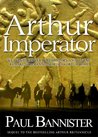
Finished Reading: Forgotten Emperor (Book 2) – Arthur Imperator, by Paul Bannister


Arthur Imperator (Forgotten Emperor #2)Arthur Imperator by Paul Bannister
My rating: 2 of 5 stars

View all my reviews

Unknown's avatar

Audiobook Resources


The link below is to an article that looks at audiobook apps and resources.

For more visit:
https://bookriot.com/2017/09/11/best-audiobook-apps/

Unknown's avatar

Not My Review: The Dreadful Tale of Prosper Redding (Book 1) – The Dreadful Tale of Prosper Redding, by Alexandra Bracken


Unknown's avatar

Not My Review: The Wealth of Nations, by Adam Smith (1776)


The link below is to a book review of ‘The Wealth of Nations,’ by Adam Smith.

For more visit:
https://www.theguardian.com/books/2017/sep/11/100-best-nonfiction-books-84-the-wealth-of-nations-by-adam-smith

Unknown's avatar

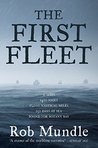
Finished Reading: First Fleet, by Rob Mundle


First FleetFirst Fleet by Rob Mundle
My rating: 4 of 5 stars

View all my reviews