History is a story about the past told by people who didn’t live there. Historical fiction and scholarly histories and biographies dominate the field, but a fresh approach, the literary nonfiction narrative of reflection, is making its presence felt.
As a writing genre, history is no spring chicken. Livy (59 BC – 17 AD) gave us the history of ancient Rome, while Australian histories have an even longer provenance, from the First Peoples’ Dreamtime narratives to Grace Karskens’ excellent scholarly account of European settlement in The Colony: A History of Early Sydney (2009). Historical novels are nothing new either, from Walter Scott’s Waverley (1814) to Hilary Mantel’s Wolf Hall (2009).
A relative newcomer to the field is the literary nonfiction historical narrative, in which the archive serves as a springboard into a pool of reflection for a contemporary writer. The latest example, published this month, is Kerrie Davies’ A Wife’s Heart, published by University of Queensland Press, a book that retells the life of poet and short story writer Henry Lawson, from multiple viewpoints. Central to Davies’ narrative is a sadly damning affidavit filed by Lawson’s wife Bertha when she sued for divorce in 1903 alleging domestic violence.
When journalist and academic Davies emerged blinking from the archives and into the glare of publication and media interviews, she was greeted by headlines like “Henry Lawson, voice of a nation, larrikin, likely wife beater”.
My excitement reading that headline was due not just to the fact that Davies is a colleague and friend. I was simply happy to see that unorthodox approaches to history are welcomed, and can ignite and enrich our readings of our past.
History, as we know, is a political football. We struggle over the meaning of the past in order to control the game of present and future. A marriage like Henry Lawson’s that began in 1896 and ended seven years later can be hijacked by anyone with an agenda. Davies adopts a light touch. She moves among the many contemporaneous perspectives on Henry from friends and foes as a man who struggled with poverty, ambition, deafness, a failed marriage and alcoholism.
Bertha, who struggled to raise two children while coping with Henry’s ups and down, had her critics as well. She ended up doing a long stint in a mental institution for what today might be called manic depression. Their fraught marriage and messy divorce provides Davies with a ball of historical wool to untangle. She chases it through the archives and across the landscapes through which her subjects drifted, including a grinding stint in London. The affective impact of this pursuit turns the pond of reflection into a whirlpool, inexorably drawing the reader in.
Not everyone sees it that way. Though he has not commented on Davies’ book specifically, Sydney journalist and author David Marr recently disclosed his distaste for biographies in which authors share the personal reflections and experiences they have had while researching and writing their books.
For evidence of the correctness of his position, Marr conveniently points to his own writing, quoting from a scene in Patrick White: A Life in which he reports a medical emergency he witnessed at White’s home not long before the Nobel Laureate’s death in 1991. Marr was witnessing what could have been (but wasn’t) his venerable subject’s demise. Yet his own voice is detached. He expresses no personal emotion or reaction, acting instead as a fly on the wall observer.
I’m on the side of invisible biographers. I don’t give a damn about their happy thoughts as they tread in the footsteps of their subjects. Spare me their personal reflections on the Straits of Gibraltar or the old House of Reps. I’m not interested in their research triumphs. I want the life, not the homework.
In A Wife’s Heart, Kerrie Davies transgresses Marr’s “law”, sharing generously of her own life story while telling Henry and Bertha’s. Readers learn that, like Bertha, Davies is a single parent whose marriage has ended in divorce. The pressures are financial as well as emotional, just as they were for the Lawsons.
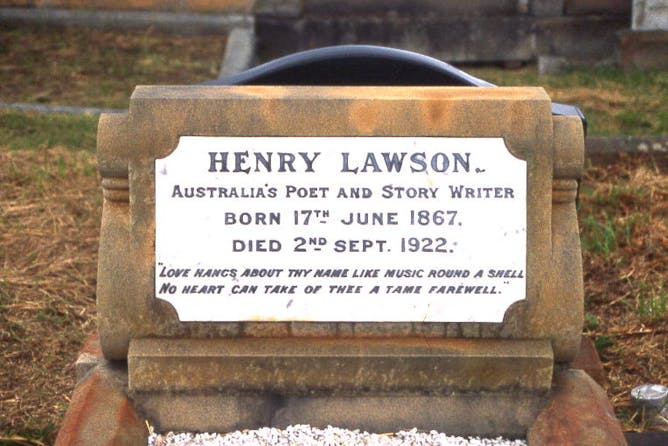
Lawson’s grave lies next to his wife’s in Waverley Cemetery. Sardaka, CC BY-SA
At first I found these personal references, which begin on page three of the book, jarring. I simply wasn’t ready to have the focus shifted so early in the story. However, as the book progresses the personal reflections merge with her subjects’ narratives. Conflicting accounts by the Lawsons’ friends and colleagues give the book the feel of a detective novel, a texture well suited to a story of marital failure in which there seems plenty of blame to go round.
Some readers no doubt share Marr’s views about biography, but there are good reasons why younger authors working in a less journalistic genre might profitably venture where Marr warns them not to go.
The distant voice of the “invisible” biographer – like the voice of God booming from above Mount Sinai – has a slightly anachronistic feel these days. To depart from this voice challenges readers who like being reassured by an authoritative tone, or perhaps, put less kindly, enjoy being told what to think. But others prefer more open, less conclusive arguments and reflections.
For some, Marr’s preference for invisibility is out of synch in a world in which readers routinely write back at authors, questioning their logic and exposing mistakes in the “comments section” that now follows most online articles. The invisible narrator’s biases are more implicit, or opaque. That may seem subversive in an era when transparency is valued.
Marr’s argument is that the reader is not well served by an introspective or performative narrator, and that is often true. Some of the worst nonfiction I’ve read in recent years was penned by authors who lost focus on their subject by sharing too much of themselves.
The changing economics of publishing are contributing to our evolving literary landscape. The ranks of subeditors patrolling the borders of mainstream media publications, beating the literary crap out of upstarts who dare to use the personal pronoun “I” are being depleted.
On the bright side, literary rules exist to be broken in the more diffuse structure of contemporary publishing. There never was a golden age.
The subjects of Marr’s early biographies, like White and former Attorney General Sir Garfield Barwick, were alive and highly influential when he started writing about them, good reasons for being careful and adopting an orthodox style. But for Davies, archival sources were all she had. No living witnesses of the trouble between Henry and Bertha survive. The author was left to curate documents. Personalising the narrative breathes life into documentary sources.
There are dangers in interpreting the facts of history. Historians grapple constantly with the problem, while historical novelists can choose whether to stick with the facts or alter them, sometimes radically. Literary nonfiction’s third path allows the juxtaposition of an author’s experience and perspective alongside the archival evidence. This might just reduce the temptation to invent or over egg.
Meanwhile, in the world outside the book, the world in which we live, marital violence is at epidemic levels, commanding our society and governments’ attentions. In that context, Davies’ personal story as a single parent acts as a footbridge connecting contemporary readers to the world of her subjects.
Beyond questions of literary technique, Davies’ academic writing on the Lawson story reveals that her literary reflection was catalysed by previous accounts by respected historians that favour Henry over Bertha.
The biographers of the iconic bush poet and writer – most notably Denton Prout (1963) Manning Clark (1978) and Colin Roderick (1982, 1991) – have all constructed a victim as hero narrative around Lawson’s life, blaming Bertha Lawson (nee Bredt) for his personal and creative decline. In their biographies, Lawson’s marriage breakdown and judicial separation from Bertha Lawson is narrated as a destructive turning point, with Bertha portrayed as a callous persecutor who “spun the wheel of retribution” … against her husband. The unanimous interpretation in these works is that Bertha Lawson in her legal claims disregarded Henry’s evident inability to pay child support, resulting in his imprisonment at Darlinghurst Gaol sporadically from 1905 to 1910.
Was Lawson a wife beater? Davies thinks so, but some who knew Bertha believed otherwise. We may never know, but it’s a worthwhile conversation in which all voices and literary styles are welcome.
Marr’s argument for invisibility is undermined somewhat by the fact – which he acknowledges – that he has previously put himself into his stories about others, including the White biography (in a note near the end of the book), and in essays on Kevin Rudd and the Bill Henson case. In all of these his narratives were better for it.
Kerrie Davies and David Marr will be speaking at separate events at next month’s Sydney Writers Festival.
Christopher Kremmer, Senior Lecturer in Literary & Narrative Journalism, School of the Arts & Media, UNSW
Research concludes these debates are redundant because comprehension and decoding are codependent.
The federal government’s recent proposal, however, for a Year 1 Phonics Screening test – which tests a child’s ability to decode made-up words – appears to support the view that decoding comes before comprehension.
Comprehension, therefore, is deemed irrelevant – at least initially.
So who is right? The researchers or the politicians?
Let’s take a look at what the research tells us about how we learn to read.
Tackling unknown words
It was the first word in the car park sign that threw me. “Egress.”
I used my knowledge of how sounds map on to letters in English to decode it. However, because I couldn’t remember ever hearing the word said out loud, I wasn’t sure if I was decoding it correctly.
It might be EE-gress or ee-GRESS, EGG-ress, or egg-RESS. It is the first, apparently. I Googled it later.
In any case my decoding efforts didn’t help me understand what the word means. In order for decoding skills to be of any use in reading, children need an excellent vocabulary to which they can cross reference as they attempt to decode.
Tip 1: teach phonics through words already in the children’s vocabulary.
If someone had shown me “egress” by itself on a flashcard, I might have guessed it was a bird.
Luckily, “egress” was in a full sentence on a sign in front of a car park, and all of that context helped me comprehend the word.
Without context, words are just letters on a page. This is because all words in English are polysemic – they have multiple meanings depending upon the context.
The wind in my hair. My baby has wind.
And some words keep their spelling but change their pronunciation as well as their meaning.
I’d like to wind you up. I need to wind my clock. Why do I always **wind **up doing the dishes.
Tip 2: build your children’s vocabulary by talking and reading to them so that they encounter words in all their many and varied guises. Seeing a word in many different contexts is more important than just seeing the word flashed at you many times.
Grammar matters
The grammar of the parking sign in Wynyard also helped my comprehension.
I had figured out from the context that “egress” meant either entry or exit.
I hear a lot of language so I understand how words “collocate” in English – that is, how some words always hang out together grammatically. My experience with the language meant I knew that we exit “from” and enter “into”.
The more we hear and read real language, the more we learn about how word order works in English.
Tip 3: teach reading through real books with real language so that children learn the rhythm and patterns of English grammar.
Experience counts
I relied on my experience as a driver to look around and see that a median strip in the road would make “egress” from the front of the car park tricky. Life experience helps us read too.
If I write I live in a studio apartment in San Jose, your interpretation of where I live will depend upon whether you understand a studio apartment to be a basement bedsit, or penthouse bachelor pad. It will depend on whether you understand San Jose to be an affluent tech hub or an working class industrial city.
The words alone cannot carry all the meaning of my message. You bring your life experience to the task of reading my words.
Tip 4: give children lots of real life experiences and talk to them about what they see. Trips out and about, and chats about things beyond their everyday environment are important.
Are we giving poor readers the help they need?
Good readers have a full repertoire of skills, each dependent upon the other.
They have excellent oral language and a wide vocabulary. They know what words mean and this helps them decode.
They can decode and this helps them locate the word in their existing vocabulary.
They know the structure of English through exposure to authentic complex written and spoken language.
They use rich life experiences to support their comprehension of written texts.
Poor readers need all of these skills too. Yet our interventions for poor readers typically only address one skill – decoding.
Our declining results in international tests of literacy show us that our 15 year olds can decode but they can’t comprehend.
Until we pay full attention to all the other reading skills, the decline will continue.
Heather Rose has won the 2017 Stella Prize for her novel The Museum of Modern Love, a fictional exploration of the power of art to transform individual lives, written in exquisite prose, with rare and subtle insight.
Brenda Walker, Chair of the judging panel, said:
It is rare to encounter a novel with such powerful characterisation, such a deep understanding of the consequences of personal and national history, such affection for a city and the people who are drawn to it, and such dazzling and subtle explorations of the importance of art in everyday life.
Rose’s novel centres on Serbian artist Marina Abramović’s The Artist is Present, a 75-day performance piece that took place at the Museum of Modern Art in New York. Throughout the work, Ambramović sat perfectly still at a table in the museum’s atrium, with bright lights shining down and around her, while spectators took turns to sit opposite. As each visitor sat, Abramović lifted her face and maintained eye contact.
Within days, people began crowding the atrium to watch, the lines frequently spilling out onto the street. Some gathered overnight or in the early hours before the museum opened. Occasionally the sitters cried.
Rose’s novel subtly explores the individual lives of fictional characters in the audience, all of whom are transformed by the strange intimacy of the work. At its centre is Arky Levin, a music composer who is emotionally cut off from life.
He wasn’t sure why he needed to keep returning to the sidelines of this strange performance, but he kept finding himself taking the train, walking in the door, climbing the stairs, taking his place by the white line. The atrium was a magnet, or maybe it was Abramović. Something about this was important, but he couldn’t say why.
In Rose’s novel, chance conversations with strangers offer rare and disarming insights not only into the emotional lives of the characters, and their often tragic situations, but also into our own yearning for “some new idea of life” – a more authentic kind of intimacy or connection in our disconnected, media-saturated world.
In a list that included significant and moving books by two writers, Georgia Blain and Cory Taylor, who have both died since the publication of their works, the choice to award Rose’s novel could not have come easily to the judging panel.
The Stella Prize judges, from left to right: Ben Law, Sandra Phillips, Brenda Walker, Di Johnston, Delia Falconer. Connor Tomas O’Brien
Taylor’s book, Dying a memoir, genuinely broke new ground in writing powerfully and with astonishing clarity about a subject that is rarely treated with such effect. Blain’s novel, Between a Wolf and a Dog, is the final achievement of a mature writer whose work spoke clearly and in a quietly profound way to a whole generation – my generation – of women.
But Blain and Taylor would have been the emotional choice. And objectivity is – perhaps – not possible in the face of such calamity. I am uncertain. But I do think there should be a special place in literature for books that do some real work in the world.
The Museum of Modern Love is Heather Rose’s seventh book. Her previous novels include White Heart (1999), The Butterfly Man (2005) and The River Wife (2009). She is co-author (with Danielle Wood) of the Tuesday McGillycuddy series for children, published under the pen name Angelica Banks. She won the Davitt Award in 2006, and her novels have been shortlisted for the Nita B. Kibble Award and the Aurealis Awards, and longlisted for the IMPAC Award.
Rose joins previous Stella winners including Carrie Tiffany, Clare Wright, Emily Bitto and Charlotte Wood.
Shortlisted Stella authors, clockwise from top left: Cory Taylor, Maxine Beneba Clarke, Catherine de Saint Phalle, Heather Rose, Emily Maguire and Georgia Blain. Stella Prize/The Conversation , CC BY-ND
There are certain books that have the knack of getting under your skin. This is why George Bernard Shaw declared Charles Dickens’ Little Dorrit to be a far more “seditious” text than Karl Marx’s Das Capital.
What he was getting at is the power of books to work on your emotions. The intellect can be too cold an instrument to engender empathy, to bring people who are distant from you into your “circle of concern”. And it is precisely this, as philosopher Martha Nussbaum argues, that matters for the pursuit of social justice.
In 2017, the Stella Prize judges have again come up with a shortlist of books that will engage your brain, but also your heart. They illuminate all the aspects of life that make us frail and vulnerable – sickness, dying, inequality – realities that many of us would prefer to ignore.
Two of the remarkable writers shortlisted, Cory Taylor and Georgia Blain, have died since the publication of their work: Blain of brain cancer; Taylor of melanoma-related cancer. And yet their books – alongside all those on this list – fasten our attention on the means to live better, more ethically, and with greater generosity. It is in the smallest things, in embracing everyday joys and sorrows, that we can learn to live large.
These are books that matter because they show us how to live in desperate times.
Let me draw them to your attention, one by one.
Georgia Blain, Between a Wolf and a Dog
Hilary is a 70-year-old filmmaker, dying of cancer, determined to choose the moment and manner of her death. She has not told her daughters, Ester and April, about her illness or her plans. Ester is the mother of young twins, a family therapist whose consulting rooms contain a world of pain – “post-natal depression, school aversion, relationship crisis, death, and loneliness”. Ester is estranged from her sister April, a once famous singer who never realised her potential, and from her one time husband, Lawrence, who has lied and cheated in his work.
The action unfolds in the space of a single rainy day – ending in the mauve light of dusk, “between a wolf and a dog”, a place filled with ambiguity and irresolution. Here, like Hilary’s last film – a “seemingly random scatter of images” – the characters find “narrative order”.
Blain is a quietly profound writer with an astonishing eye for the ways in which human beings hurt and heal one another. This, her final novel, addresses the significant questions of life, “what to keep, what to discard, what clings despite all efforts to dispel it, and what slides away”. It is modern, unflinching, and unsentimental.
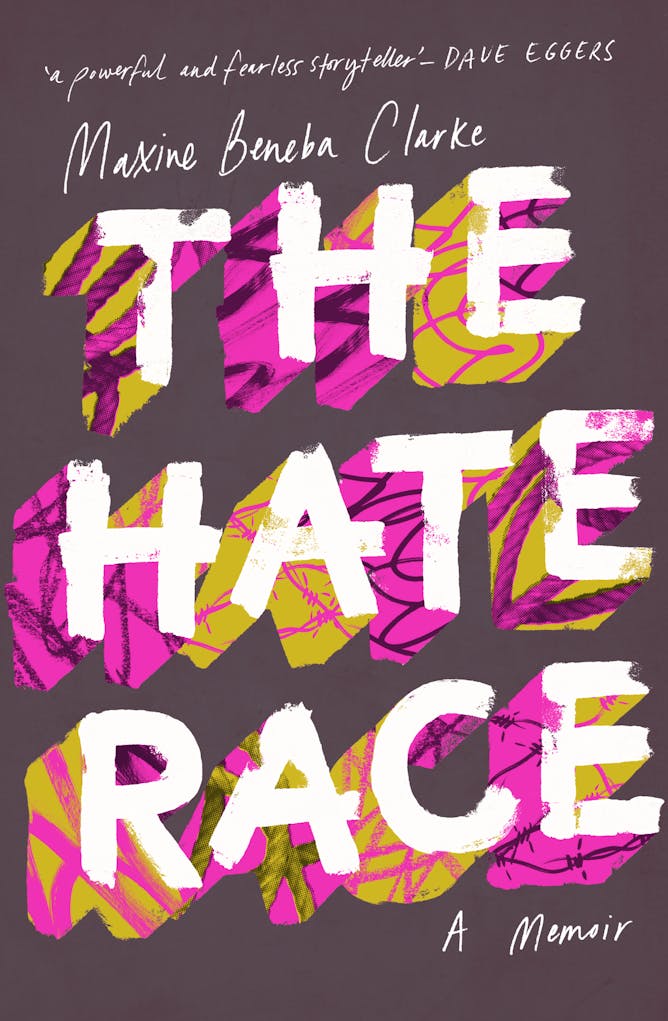
Maxine Beneba Clarke, The Hate Race
Maxine is brown.
Maxine has brown skin.
Maxine has funny curly hair.
Maxine thinks her family comes from England.
Maxine has dark brown skin.
There is an utterly transfixing, yet deeply disturbing moment in this memoir in which the young Maxine, growing up in suburban, middle-class Australia, believes that she is turning white.
In a realist, not magic realist work, the fervently desired “miracle … quietly brewing” on her skin, turns out to be a rare skin condition, diagnosed after a trip to the dermatologist’s office. What the poignant humour of the memoir conceals is the extraordinary violence of a society that would cause a child to want this transformation.
Clarke’s story charts the experience of everyday racism, tracing the lives of her British-Caribbean parents on their journey to a better life. This ideal life is turned upside down by shredded school books, abusive notes left in bags and pencil cases, and the hapless ineffectuality of teachers and school administrators.
Positive experiences seem few and far between: her friend Jennifer’s kind words written in her album, or the high school teacher who had the foresight to advise Maxine that the things she’d been told in primary school were as “bizarre as I’d suspected”. It takes courage to speak out again and again on issues that many of us would prefer to think did not exist. The book soars above its subject matter, demonstrating humanity in the face of the inhuman.
Emily Maguire, An Isolated Incident
Emily Maguire’s novel centres on the sexual assault and murder of a young woman in a tough-talking, truck-stop town midway between Sydney and Melbourne. It is in the form of a thriller, but the author is perhaps less interested in seeking out the murderer than studying the town’s reaction.
Chris Rogers, the victim’s sister, is an astonishing character, reeling from the breakdown of her relationship to the love of her life; the death of her mother, and the murder of her sister. Chris struggles with men, alcohol and society’s obsession with cleavage. Then there is May Norman, a city-based journalist who arrives in Strathdee to cover the murder, and who, like Chris, is no stranger to the sexual double standard through which women – and not men – are judged for their conduct.
This novel tackles the insidious idea that rape is “never simple” but a “murky and confusing” situation in which the “lines of consent” are “blurred”. Maguire has a keen eye for the practices that excuse, tolerate and trivialise sexual violence, and for the language of misogyny that demeans women, blaming the victim for what she wore, what she did, or where she went.
What starts out as a realist venture ultimately lands in the territory of the gothic. Ghosts drift over scorched landscapes, and the bodies of murdered women rise up to haunt the living. “It’s always the men,” says the local historian. “I’ve never had a female hear the scream.” The novel’s title is, of course, ironic – it turns out that the violent death it investigates is not an isolated incident at all.
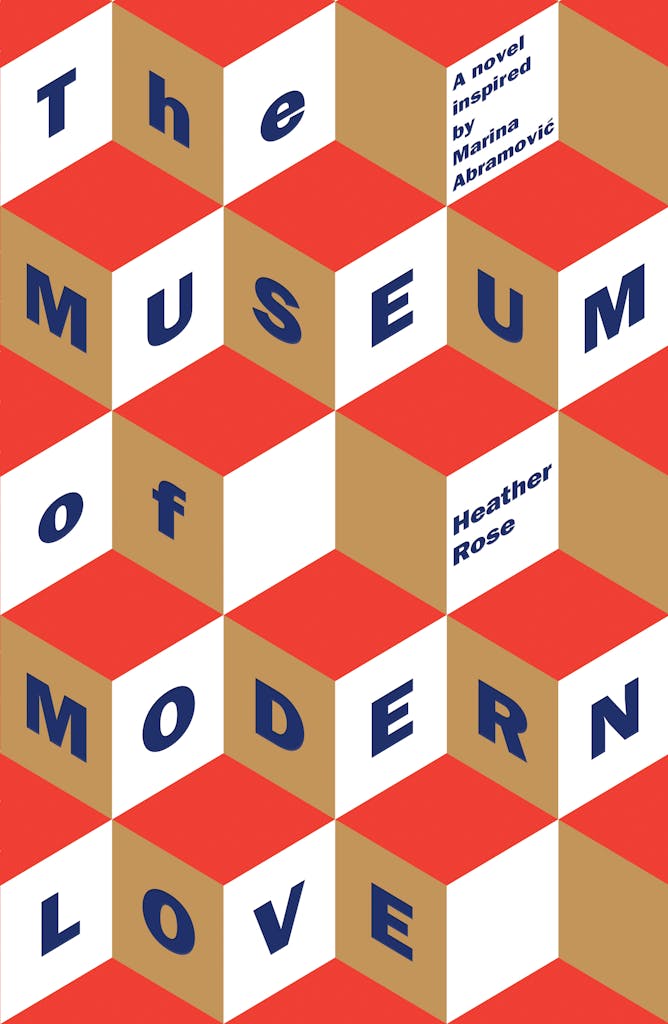
Heather Rose, The Museum of Modern Love
If everything goes to crap, it won’t be art that saves us. Art won’t matter one iota. You can’t write your way alive, or paint your way out of death.
Against the odds, this is exactly what Heather Rose achieves in her startlingly original and strangely beautiful novel. It is built around the 75-day performance piece by Serbian artist Marina Abramović that took place at the Museum of Modern Art in New York in 2010.
Rose’s novel has a crystalline structure, tracing the lives of the characters who are transformed by the artwork. At its centre is Arky Levin, an emotionally-crippled composer who is cut off from life: from his daughter Alice, a medical student, and his wife, Lydia, an architect, facing the final stages of a potentially fatal illness in a nursing home without him.
Arky is joined at the performance by Jane Miller, an art teacher, who is mourning the death of her husband, Karl. There is also Brittika, a student; Healayas, a journalist assigned to cover the final days of the performance, and Danica – the ghost of Marina Abramović’s mother – who drifts, unsurprisingly, through its pages.
The unexpected oddity of the characters and their situations, and the luminous intensity of the language, marks out a philosophical territory that will be familiar to readers of Milorad Pavić, Dubravka Ugrešić or Danilo Kiš. This is an astonishingly beautiful book. In a culture that incessantly questions the worth and relevance of art for life, the novelist mounts a defence that is all the more astonishing for being successful.
Catherine de Saint Phalle, Poum and Alexandre
De Saint Phalle’s memoir is narrated through the eyes of a child who is beguiled and bewildered by her parents’ relationship, and the secret they appear to be hiding. They lead a fabled Parisian existence, always at some distance from their child. Her mother crosses herself frequently, talking incessantly about “the nuns” and what they might think. Her parenting mainly consists of reeling off long verses from The Odyssey.
Saint Phalle’s father regales her with tales of Napoleon, and could “convince me that Karl Marx was a practising Catholic” or “a bird that the sky is full of water”. He appears and disappears in the child’s life, for no apparent reason. A string of unknown aunts, cousins and siblings also arrive and depart unannounced, accentuating the book’s unstated sense of loss and abandonment, and the adults’ lack of awareness that a child may require a little more in the way of stability or commitment.
Written in soft, cloud-like prose, with a sense of elegy, this book is finally about the power of stories to conjure hope and possibility, and impart a sense of acceptance.
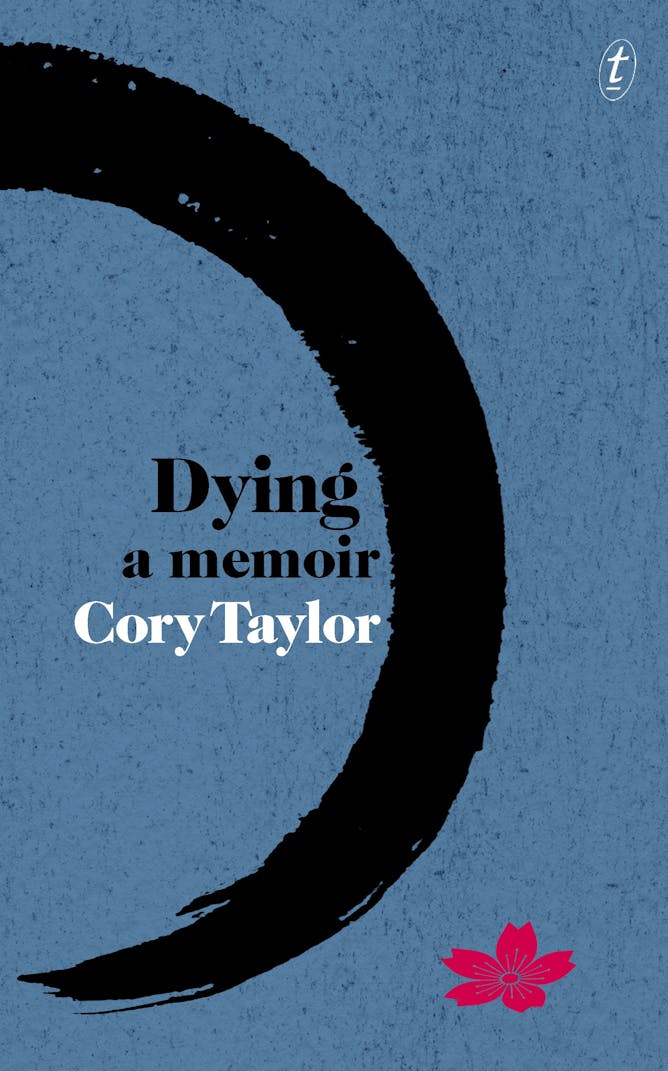
Cory Taylor, Dying a memoir
My suicide note was by way of apology. ‘I’m sorry,’ I wrote. ‘Please forgive me, but if I wake up from the surgery badly impaired, unable to walk, entirely dependent on other people to care for me, I’d prefer to end my own life.
Cory Taylor did not finally choose to take her life. Ultimately, she feared the trauma such a death would have inflicted on other people. Suicide, she writes, remains shrouded in a sense of “mental angst, hopelessness, weakness, the lingering whiff of criminality”.
In short, the problem is not hers but ours. We have “lost our common rituals and common language for dying,” becoming a society that only understands death, as “a form of failure”, as Taylor’s doctors seem to do. But living longer also means dying longer, and because of this the dying “are probably lonelier now than they’ve ever been”.
Taylor had already seen what it meant to die “badly”, witnessing her parents’ long, drawn out deaths from dementia in a nursing home. And so the desire to choose the way you die – assisted dying – becomes a source of comfort to her and a means of facing the things that are most terrifying about death – its total randomness, and our lack of control.
What is truly profound about this book is that – though it ought to be harrowing – it is astonishingly easy, if not strangely uplifting, to read. In part, this is because the narrative voice is so gentle, and tightly controlled. Every scene has a radiant quality; it glows.
The memoir ends with a “coming into dying”, a kind of effloresce that occurs at the edge of life – “the edge of words”. Images take over: “an over-exposed home movie footage of a girl with a dog in dappled sunshine, a car speeding down the road.” And then “The jet takes off. A kookaburra sits on a branch laughing.”
Taylor does not speak of death so much as she shows it to us, leaving the reader with an inexpressible sense of gratitude. This is writing that matters.
The winner of the 2017 Stella Prize will be announced in Melbourne tonight.







 At the BookShelf
You must be logged in to post a comment.