Unknown's avatar

‘Finding Freedom’: the new Harry and Meghan book is the latest, risky move in a royal PR war


DPPA/AAP

Giselle Bastin, Flinders University
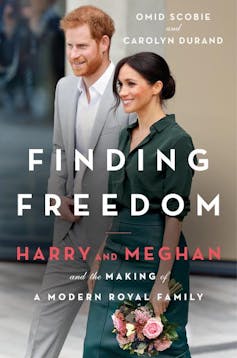
Front cover of 'Finding Freedom', Harry and Meghan smiling for cameras
Finding Freedom was published on August 11.
HarperCollins Publishers

A new book about the Duke and Duchess of Sussex is generating sensational headlines about their private life, defiance of Queen Elizabeth and how Prince William “behaved like a snob” to his future sister-in-law.

It is also the latest foray of British royals into the minefield that is royal
biography.

Finding Freedom: Harry and Meghan and the Making of a Modern Royal Family, by royal reporters Omid Scobie and Carolyn Durand, promises stories about how the royal couple has struggled with “the many rumours and misconceptions that [have] plagued” them since their 2017 engagement.

According to numerous reports, this also includes tales of their clashes with palace officials and members of their own families, as well as their courtship and ill-treatment by the British press.

A spokesperson for the couple has firmly said they “did not contribute to ‘Finding Freedom’”. But there is widespread speculation Harry and Meghan were nevertheless involved, given the level of detail in the book.

According to the publishers, HarperCollins, the biography has been produced with “unique access and written with the participation of those closest to the couple”.

‘Never explain, never complain’

We’ve seen this before, and it is a tale that seldom ends happily or well. In 1976, John Wheeler-Bennett, official biographer of George VI, observed royal biography is

not to be entered into advisedly or lightly; but reverently, discreetly, advisedly, soberly and in the fear of God.

Wheeler-Bennett was here referring to the role of the royal biographer, but could just as easily have been referring to the royals themselves.

The royals are not supposed to go on the record and speak of private matters. The dictum ruling the House of Windsor for the best part of the 19th and 20th centuries was they should “never explain, never complain”.

In 1947, when hearing of a former servant’s plans to write about her time in royal service, the Queen Mother summed up the royal family’s strong expectations when she said:

people in positions of confidence with us must be utterly oyster.

Subsequently, the royal family was dismayed when the Duke of Windsor fed his story to a ghostwriter in 1951’s A King’s Story, outlining his own version of the abdication crisis. Prince Philip also disapproved strongly of Prince Charles’s candid revelations in Jonathan Dimbleby’s 1994 book Prince of Wales: A Biography and subsequent interview.

Diana’s experience

Prince Harry could also have learned some valuable lessons from his own mother, who flouted the “utterly oyster” rule.
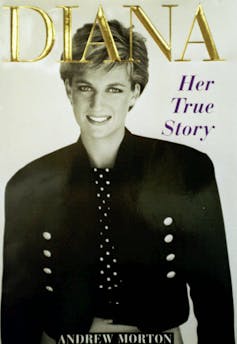
Cover of 1992 book, Diana: Her True Story, with portrait of Diana
Diana: Her True Story generated waves of controversy for the Princess in 1992.
PA/AAP

Diana, Princess of Wales, was behind the most famous royal biography of all time when she commissioned Andrew Morton to “ghost” her tale of marital woe and royal suffering with the 1992 tell-all Diana: Her True Story.

Her True Story was a huge commercial success – having sold more than ten million copies as of 2017. But after the book’s publication, Buckingham Palace and conservative media outlets went after Morton, expressing disbelief a royal princess would talk to a tabloid journalist with no official royal biographer status.

After publicly eviscerating Morton, and the airing of Diana’s explosive 1995 Panorama interview, the palace and establishment then went after Diana. Conservative MP and close friend of Prince Charles, Nicholas Soames, claimed she must have been “in the advanced stages of paranoia” to have been disclosing the types of things she had.


Read more:
Diana revived the monarchy – and airing old tapes won’t change a thing


‘Her True Story’ backfires

Diana thought Her True Story would act as a passport to freedom. She hoped it would help her separate from the royals, while keeping her privileges intact. As journalist Tina Brown wrote in her 2007 book, The Diana Chronicles, the princess thought she would get to keep all

the good bits of being a princess and doing her own global thing without Charles around to cramp her style. She did not factor in the power of royal disapproval and its consequences.

Nor did she factor in “the risk of … the Palace ‘going nuclear’ and continuing until there [is] nothing left”.

Critically, Diana had thought the revelations in Her True Story would invite her estranged royal relations’ sympathy. As Brown also notes,

she had been so long in her private panic room she thought this deafening public scream would solve the matter once and for all.

Brown records how Diana quickly regretted the book, telling her friend David Puttnam shortly before the book’s release in 1992,

I’ve done a really stupid thing. I have allowed a book to be written. I felt it was a good idea, a way of clearing the air, but now I think it was a very stupid thing that will cause all kinds of terrible trouble.

Diana was right. The biography and the Panorama interview hastened Diana’s exit from the royal enclosure. This gave her a short spell of relief and exultation. But this was followed by unhappiness that she had to live, in effect, in exile.

A long-running soap

With release of another sensational royal biography – that very much gives one side of the story – the parallels between Diana and her son are uncanny.

Harry and Meghan obviously already have a rocky relationship with the palace, given their split with the royal family in March.

Harry and Meghan looking uncertain at public event.
Harry and Meghan are trying to win the PR war, but history suggests a ‘tell-all’ book is a dangerous move.
DPPA/AAP

Their latest public pronouncement about their “true story” (albeit via interlocutors) is the latest salvo being fired in the long-running soap opera known as “The Windsors”. It has obviously been made to try to win a public relations war. Indeed, public relations is what the royals do. They don’t have “jobs” as such, but merely have to be “seen to be”.

Finding Freedom might have felt like a good idea to the Sussexes — an opportunity to set the record straight – but as Diana’s experience suggests, they may well come to regret the opening of their particular oyster of royal rage.

Their contribution of yet another chapter to the Windsor soap is one that will likely prove unstoppable, insatiable even. And one thing is almost certain: Harry and Meghan will very probably lose any editorial control they thought they had over their own story.


Read more:
The Crown series 3 review: Olivia Colman shines as an older, frumpier Elizabeth


The Conversation


Giselle Bastin, Associate Professor of English, Flinders University

This article is republished from The Conversation under a Creative Commons license. Read the original article.
Unknown's avatar

Guide to the Classics: Boccaccio’s Decameron, a masterpiece of plague and resilience


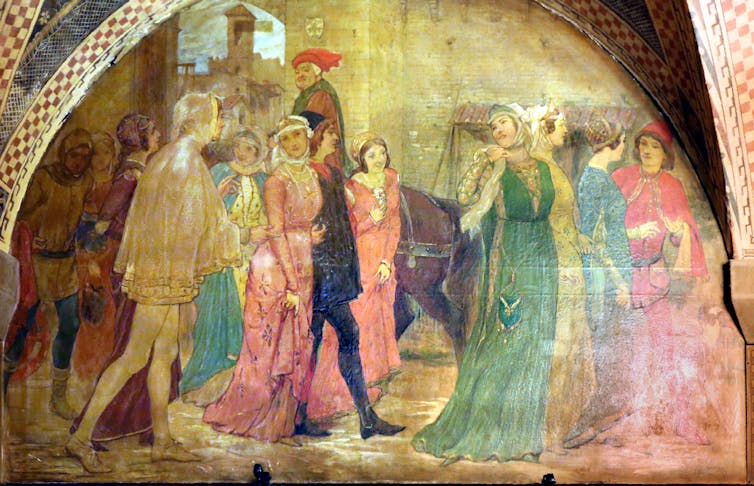
A scene from the Decameron painted by Carlo Coppede in 1916.
Sailko/Wikimedia Commons, CC BY-SA

Frances Di Lauro, University of Sydney

In the year then of our Lord 1348, there happened at Florence, the finest city in all Italy, a most terrible plague…

Giovanni Boccaccio introduces his acclaimed collection of novellas, the Decameron, with a reference to the most terrifying existential crisis of his time: the decimating effects of the bubonic plague in the 1348 outbreak known as the Black Death.

Boccaccio’s book, written between 1348 and 1353, has been acclaimed as an exemplar of vernacular literary prose, and a commentary on the “peste” that swept through Europe that year.

A classic of medieval plague literature, it continues to be cited by physicians and epidemiologists to this day for its vivid depiction of a disease that held a city under siege.

In the introduction to his book, Boccaccio estimates that more than 100,000 people – over half of the city’s inhabitants – died within the walls of Florence between March 1348 and the following July.

He vividly describes physical, social and psychological sufferings, writing of people dying in the street, rotting corpses, plague boils, swollen glands known as “buboes” – some the size of eggs, others as large as apples – bruises and the blackening skin that foreshadowed death.

Boccaccio’s introduction is followed by ten sections containing short stories. Each of the book’s ten storytellers tells a story a day for ten days. Derived from Greek, the word decameron means ten days and is an allusion to Saint Ambrose’s Hexameron, a poetic account of the creation story, Genesis, told over six days.


Read more:
Guide to the Classics: Albert Camus’ The Plague


The Decameron is a tale of renewal and recreation in defiance of a decimating pandemic. Boccaccio attributes the cause of this terrible plague to either malignant celestial influences or divine punishment for the iniquity of Florentine society.

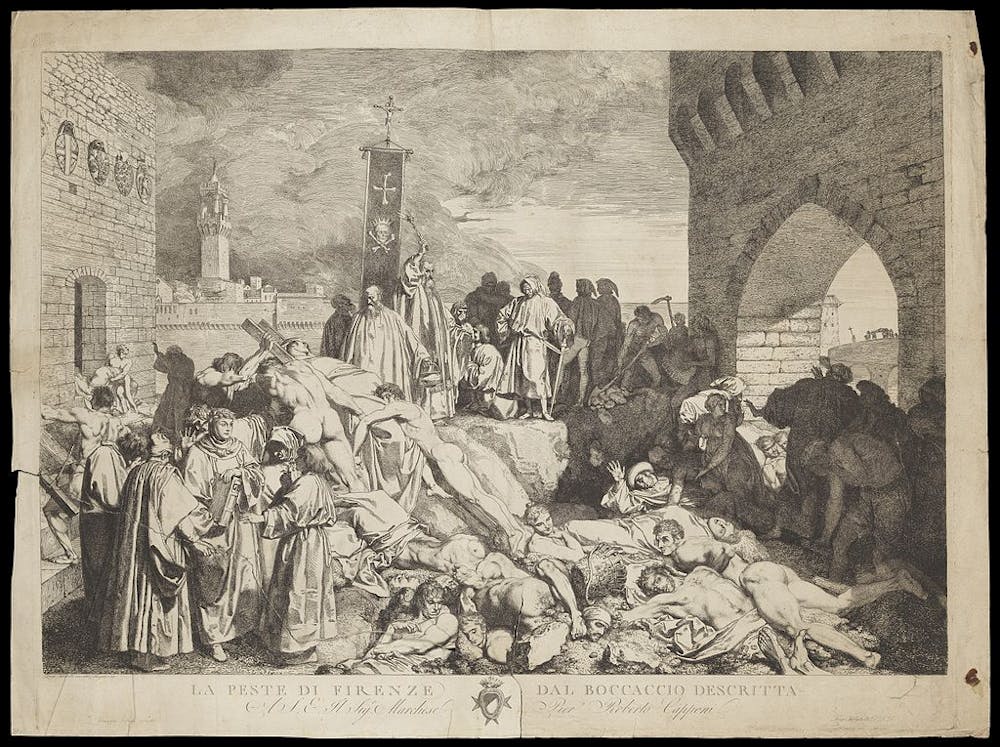
Boccaccio's 'The plague of Florence in 1348'
The plague of Florence in 1348, as described in Boccaccio’s Decameron. Etching by L. Sabatelli after himself.
Credit: Wellcome Collection/Wikimedia Commons

Social distancing and fragrant nose coverings

Unlike the plague of 1340 – which killed an estimated 15,000 Florentines – that of 1348 was, according to Boccaccio, far more contagious, spreading with greater vigour and speed.

It was extraordinary, in his view, that the disease did not merely spread from human to human but crossed species too. He saw two pigs dying within moments of biting infected clothing in the street.

Florentine officials removed household waste and contaminants from the city in attempts to eradicate the deadly pestilence, and banned infected people from entering.

They issued public pleas and advised residents on measures that would minimise risk of contagion, such as social distancing and increased personal hygiene.

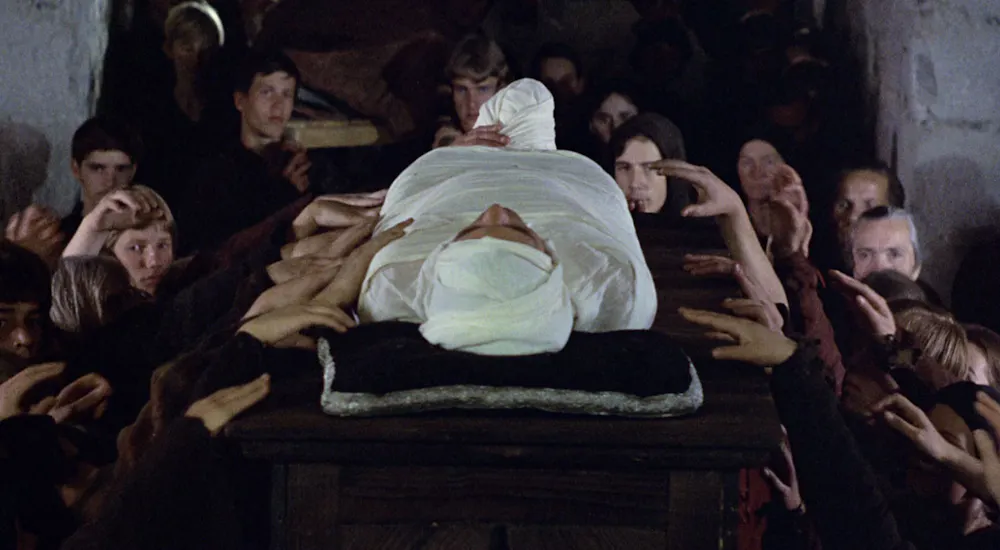
A scene from Pasolini’s 1971 film The Decameron.
Produzioni Europee Associate (PEA), Les Productions Artistes Associés, Artemis Film

Boccaccio, in the same introduction, takes aim at those who fled the sick to protect their own health and in doing so degraded the social fabric.

Extreme interpretations of social distancing led to people shunning neighbours and members of their extended and immediate families. In some cases, he writes, parents even deserted their children.


Read more:
Guide to the Classics: how Marcus Aurelius’ Meditations can help us in a time of pandemic


While some took conservative measures – self-isolating indoors in small numbers, eating and drinking moderately and shutting out contact from the outside – others, he writes, roamed freely, gratifying their senses and meeting their desires for food, fun and sex:

…satisfying their every yearning, laughing and mocking at every mournful accident; and so they vowed to spend day and night, for they would go to one tavern, then to another, living without any rule or measure…

Others still consumed only what their bodies needed and excluded contact with the infected. But they wandered wherever they wished, carrying bunches of fragrant flowers, herbs, or spices, or wearing them across their noses in a bid to repel the infection and the offensive odour of death.

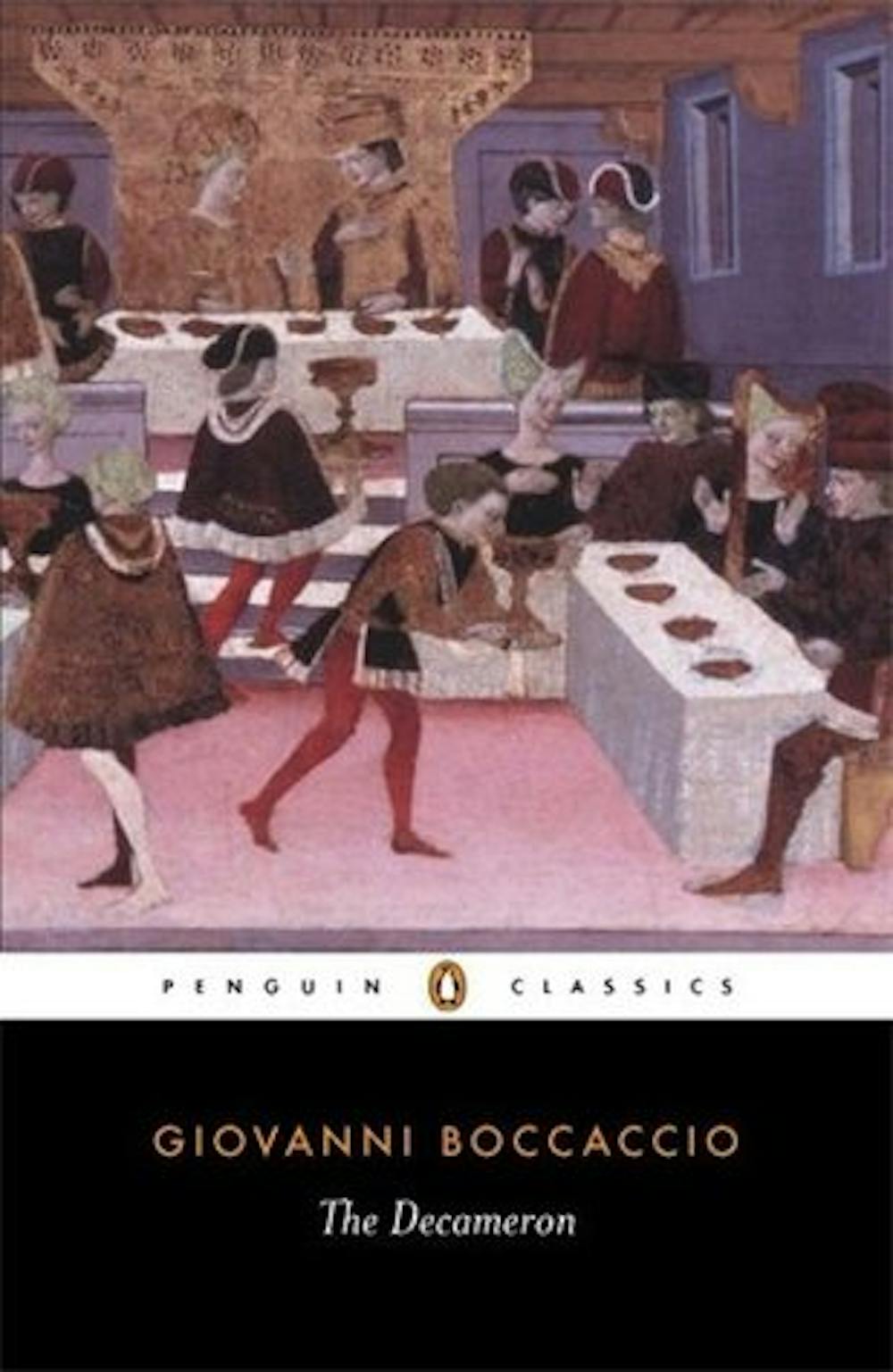
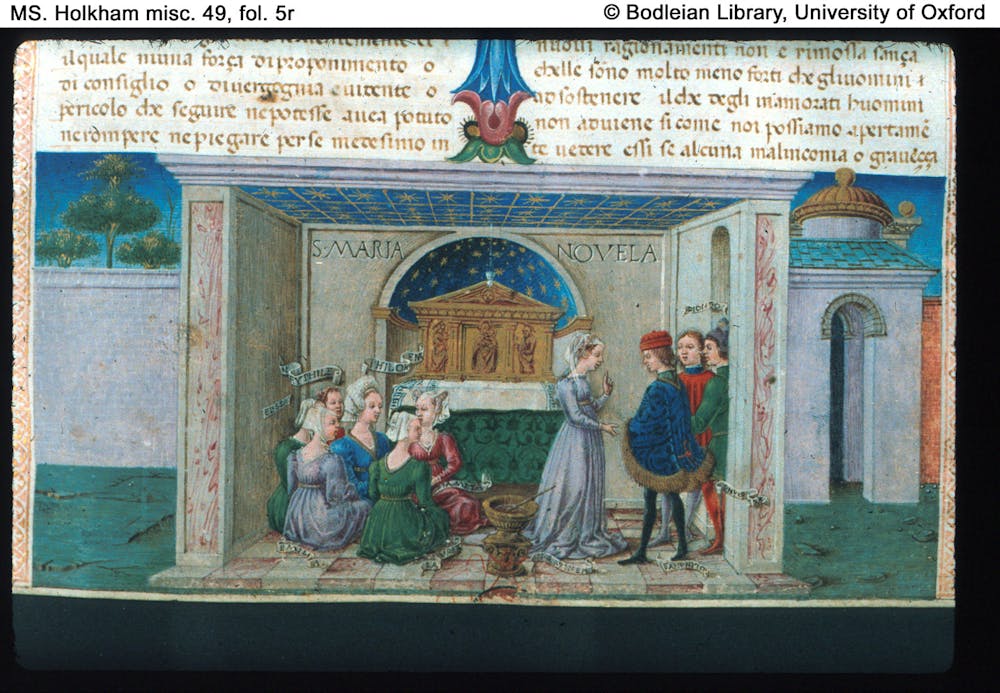
Manuscript from the Decameron illustrated by Taddeo Crivelli.
Wikimedia Commons

Boccaccio’s unfavourable account, lamenting moral degradation and the enormous human suffering, is interrupted by a ray of light in the form of seven young noblewomen and three young gentlemen who appear in the Church of Santa Maria Novella on a Tuesday morning.

They become the storytellers of the Decameron. Collected as a brigade (brigata), they exhibit civility, gentility, strength and a commitment to duty.

Boccaccio presents them as decorous and untarnished, having each cared for their loved ones while within the city walls. He gives each a name that suits their personal qualities, choosing monikers from his own and other literary works. They are: Pampinea, Filomena, Neifile, Filostrato, Fiammetta, Elissa, Dioneo, Lauretta, Emilia and Panfilo.

Refuge through story

At the suggestion of the eldest noblewoman, Pampinea, the brigata leave the terrible pestilence and their devastated, plague-ridden city to take refuge in a rural villa in the nearby hills.

They are not abandoning others, she assures the group, as their relatives have either died or fled. The ten pass time by partaking in banquets, playing games, dancing, singing and telling stories.

Each member of the group narrates one story every day across the following ten days, under the supervision of the elected king or queen for the day. The proceedings close with singing and a dance.

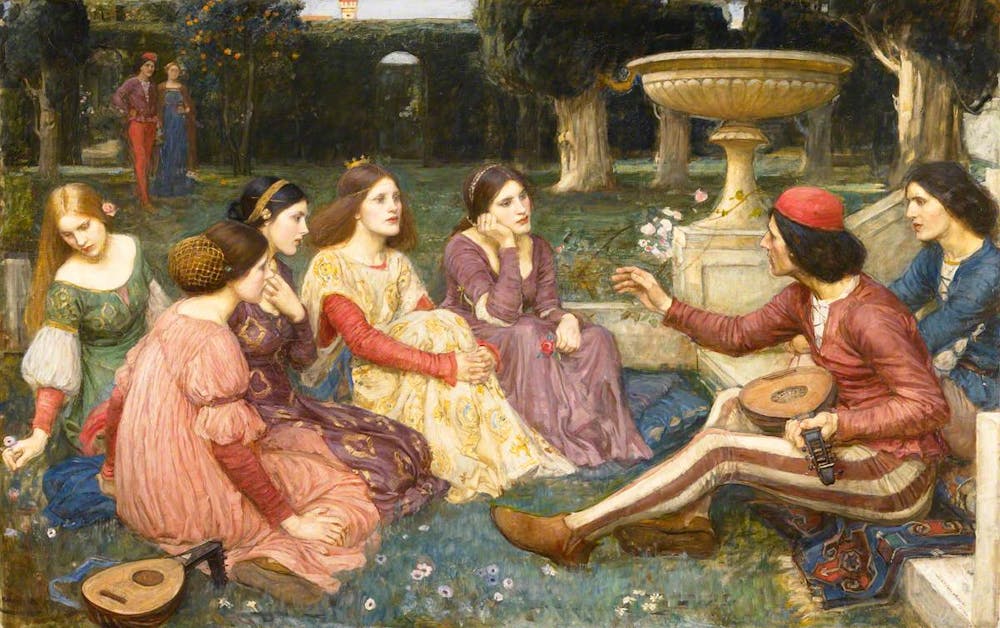
John William Waterhouse, 1916, A Tale from the Decameron.
John William Waterhouse/Wikimedia Commons

Over those ten days, the brigata tell 100 stories. In them, they name real people – historical, contemporaries and near contemporaries – who would have been recognisable to readers of the Decameron in Boccaccio’s lifetime.

This gives a semblance of reality to the stories told inside an otherwise imaginary scene. The stories reflect Boccaccio’s accounts of moral decay in Florence at the time. Corruption and debauchery abound.


Read more:
Guide to the Classics: Dante’s Divine Comedy


How then do the pastimes of the brigata bring about renewal and recreation?

The Decameron situates vices within fiction and serves as a guide for preserving the mind during physical isolation. Retreating from a stricken city to live a simple life in a communal isolation, the brigata entertain each other and by following disciplined, structured rituals, recover some of the predictability and certainty that, according to Boccaccio, had been lost.

Contemporary resonances

The Decameron was the first prose masterpiece to be written in the Tuscan vernacular, making it more accessible to readers who could not read Latin. It was first distributed in manuscript form in the 1370’s and almost 200 copies were printed over the following two centuries.

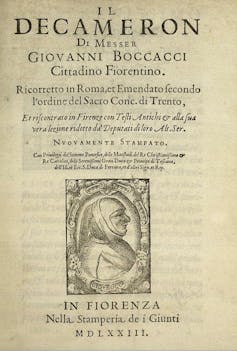
The work was censured in 1564 by the Council of Trent and a “corrected” version, expunging all references to clerics, monasteries and churches, was released in 1573.

Il Decamerone di Giovanni Boccacci riccoretto cover page
Cover page of the Decameron, heavily redacted (recorrected) in 1573 by orders of the Council of Trent.
Fransplace/Wikimedia Commons

Boccaccio’s introduction to the Decameron is a frame-story – a narrative that frames another story or a collection of stories.

This form became a popular literary model for enveloping collections of short stories that blend oral storytelling and literature. Variations and borrowings are seen in Chaucer’s Canterbury Tales and Shakespeare’s All’s Well That Ends Well.

The most well-known film adaptation of the Decameron is the first of a trio of masterpieces in Pier Paolo Pasolini’s 1971 Trilogy of Life. Showcasing ten of the 100 stories in the Decameron, it remains one of Italy’s most popular films.

The Decameron will resonate with modern readers as we grapple with the horror of our own current pandemic. The book is a prescription for psychological survival, a way of mentally distancing from terrible visions, death counts and grim economic forecasts.

Although its framing events took place over 600 years ago, the Decameron’s modern readers, like Boccaccio’s brigata, will find comfort in company and optimism and a sense of certainty in the programmed rituals it describes.

Through its 100 stories, readers can vicariously experience situations that are out of their reach. They can be entertained, find lots to laugh about, and ultimately celebrate the joy and restorative powers of storytelling itself.The Conversation

Frances Di Lauro, Senior Lecturer, Department of Writing Studies, University of Sydney

This article is republished from The Conversation under a Creative Commons license. Read the original article.
Unknown's avatar

Not My Review: The Only Good Indians by Stephen Graham Jones


Unknown's avatar

Paul Kelly biography traces his journey but not his work with young artists today


Liz Giuffre, University of Technology Sydney

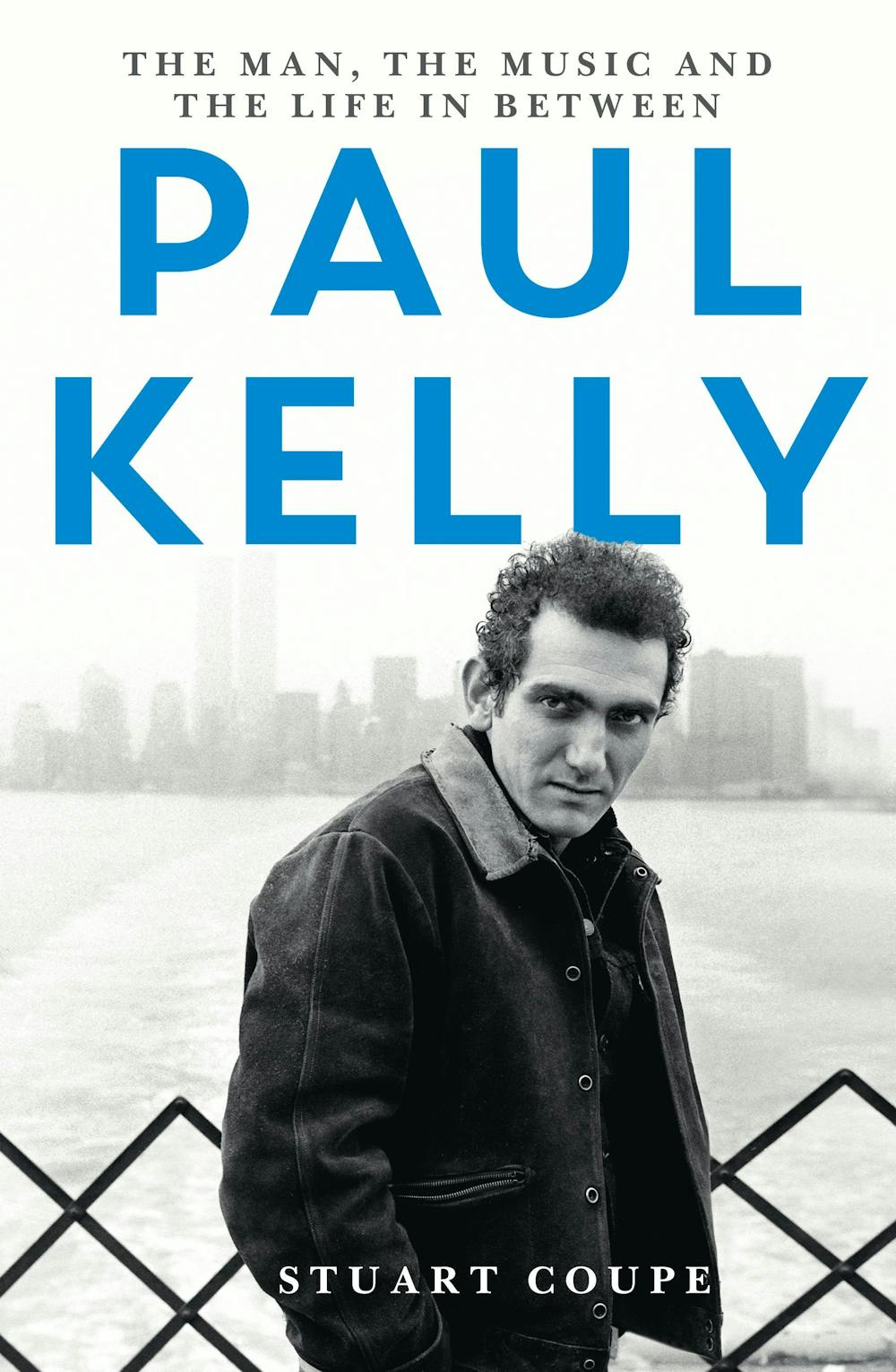
Review: Paul Kelly: The Man, the Music and Life in Between (Hatchette)

Stuart Coupe’s new biography of Paul Kelly takes many known elements of Kelly’s story and rouses them again. Paul Kelly: The Man, the Music and Life in Between reads the way a Kelly cover version sounds: familiar, but also a bit disorienting.

Old school music fans might go to the liner notes first – in this case the back cover and acknowledgements. Both detail the insights Coupe has drawn from others: hundreds of interviews, including Kelly himself and over 80 people thanked in the acknowledgements.


Hachette

It’s a who’s who of Australian music from the last few decades – Archie Roach, Kasey Chambers, Kev Carmody, Vika and Linda Bull and Neil Finn – but not too many younger voices. Coupe’s emphasis is on how Kelly became, rather than who he is today.

The impressive interview list provides the choir that sings this cover version. Each person adds an extra layer: a solo to recall a key memory of Kelly as a band member, collaborator, business partner.

As Kelly’s former manager, Coupe also chimes in with his own testimony.


Read more:
Listening to Songs of Leonard Cohen: singing sadness to sadness in these anxious times


If I could start today again

Large parts of Kelly’s early career have been lost to time, with records not added to the master log.

Particular casualties are his first two albums with The Dots, Talk (1981) and Manila (1982). Coupe’s interviews do however explore singles like Billy Baxter and Alive and Well, which have been left out of subsequent Kelly histories, including best of compilations and Kelly’s 2018 autobiography.

As Kelly explains it:

When I gained control of my work in the late nineties I simply chose not to make them available anymore. It wasn’t the fault of the bands on those records. It was me.

Studio recordings of this time are now hard to come by (as Coupe and his colleagues lament), though a few iconic Countdown snippets linger on.

The 1982 Countdown performance of Alive and Well captures the perspectives of some of Coupe’s interviewees. Kelly is working in collaboration, but also keen to draw the spotlight for himself. He is rake thin. Is this youth’s blessed metabolism, or the drug use many remember throughout the book?

The Paul Kelly he became in terms of sound and songwriting is here, but some of the interviews in Coupe’s book make the wobble of his head and unsteadiness of his gait hard to ignore.

Look so fine, feel so low

References to Kelly’s use of heroin in the past appear repeatedly in the biography. Fans will be curious to know how drugs influenced Kelly’s actual music, however Coupe doesn’t focus on Kelly’s writing process in this way. Some details are there, but nothing as forensic as Kelly has already offered himself in terms of craft and context. Instead, Coupe focuses on the machinations of the music industry.

As a songwriter, Kelly’s value was seen early. Accounts by Mushroom Records alumni and other associates from the early 1980s, show how his writing talent was privileged despite his unsteady performance style.

Still, Kelly’s songs were so popular so quickly that there was money to be made. Although many of the musicians in the book were left by the wayside as Kelly moved from project to project, his publisher continued to benefit.


Read more:
Death, beauty and poetry come together in Ancient Rain


Deeper water

The biography brings readers to the present day, including the 2019 How To Make Gravy concert in the Domain in Sydney and his 2020 album releases (one in lockdown, and with Paul Grabowsky).

However, it would have been nice to see Coupe explore Kelly’s continued association with youth broadcaster Triple J and the newer artists and audiences who find him via contemporary collaborations.

Kelly’s 2016 collaboration with AB Original and Dan Sultan for Triple J’s Like A Version remains as much a step up for Kelly as it does for the younger musicians.

A reworking of Dumb Things, Kelly’s anthem (and his art) is sampled into a new context. Its energy is breathtaking.

How many teenagers discovered Kelly for the first time after this?

As well, the 2019 collaboration with Dan Sultan on Every Day My Mother’s Voice shows the fundamental connection Kelly continues to make with new audiences and artists – only vaguely referenced as “the Adam Goodes song” by Paul Luscombe in Coupe’s book.

While of, course, there had to be an end to Coupe’s address book, a bit more on these more recent and younger collaborators would strengthen this story and tell us more about where Kelly is going, not just where he has been.


Read more:
Why Scott Morrison’s white, male music playlists matter


The Conversation


Liz Giuffre, Senior Lecturer in Communication, University of Technology Sydney

This article is republished from The Conversation under a Creative Commons license. Read the original article.
Unknown's avatar

Not My Review: Synthesis (Book 1) – Synthesis Weave by Rexx Deane


Unknown's avatar

‘The essential is invisible to the eye’: the wisdom of The Little Prince in lockdown


Chris Pietsch/AP

Julia Kindt, University of Sydney

In our series Art for Trying Times, authors nominate a work they turn to for solace or perspective during this pandemic.

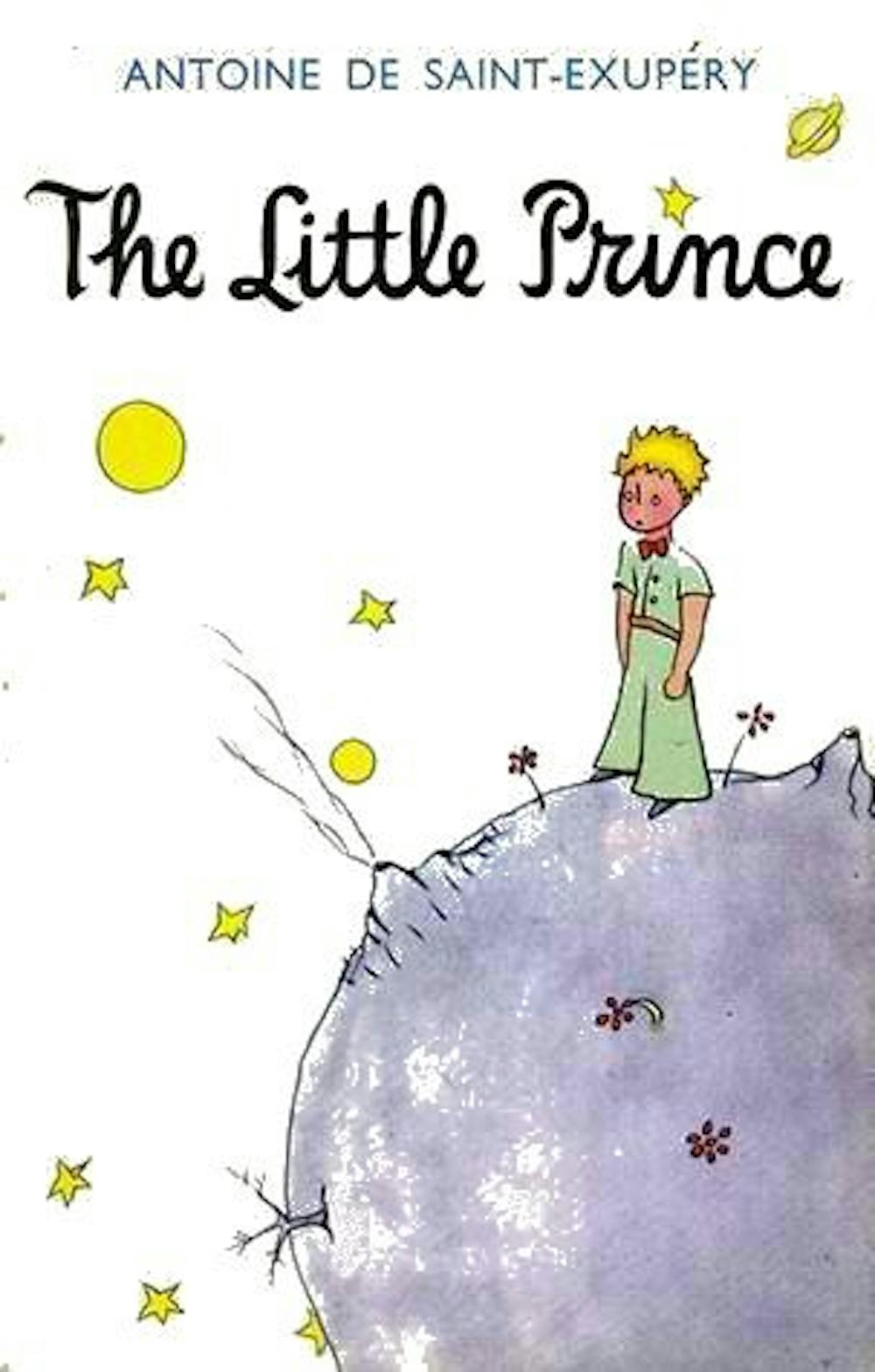
During the lockdown in Sydney, I turned to my shelf of well-loved books and found Antoine de Saint-Exupéry’s The Little Prince. Browsing through it again, I realised that the situation in which the book’s narrator finds himself uncannily resembled my own: crash-landed in the middle of a desert, his plane’s motor broken, he had nowhere to go.

He was stuck – stuck in a place that seemingly provided little hope of surprise or wonder.

The first night, then, I went to sleep on the sand, a thousand miles from any human habitation. I was more isolated than a shipwrecked sailor on a raft in the middle of the ocean.

But little did he know! The next morning, a boy appears seemingly out of nowhere who claims to be a prince from a faraway planet.

His account of intergalactic travels takes the desert castaway to a number of places as strange as they are familiar: one planet inhabited by a king and nobody else, another by a conceited man, a third by a lamplighter, a fourth by a businessman, a fifth by a tippler and so on.

In Saint-Exupéry’s book, first published in French in 1941, the point is that all these individuals live in their own little worlds.

The king believes everybody arriving on his planet to be a subject. The conceited man considers each comer a potential admirer. The lamplighter turns the single streetlight on his little planet on and off, on and off, multiple times a day. The businessman counts all the stars he can see in the belief this will make them his own. The tippler drinks to forget that he feels guilty for drinking.

Even though they pursue different ends, there is a certain uniformity to these characters: in the uncompromising resoluteness with which they apply themselves to their tasks, they reduce and diminish their lives and worlds.


Read more:
P.G. Wodehouse in a pandemic: wit and perfect prose to restore the soul


The lockdown cuts back the radius of our actions. Even though some of the frantic activity that defines our days continues online, it deprives us of many of our usual interactions. No more twice-daily commutes, no more school runs, no more rushing to social engagements, no more travel.

Rather than looking for adventure outside, in public and faraway places, lockdown involves taking a fresh look at things close to home. And this long hard look in the mirror can bring the realisation that our pre-pandemic lives resembled those of the king, the conceited man, the lamplighter, the businessman, and perhaps even the tippler in more ways than we are prepared to admit.

‘People where you live,’ the little prince said, ‘grow five thousand roses in one garden, … yet they don’t find what they are looking for.’

In some sense, and in addition to other central themes such as love, friendship and loss, The Little Prince is a story about looking: about how we see only what we are prepared to see; about the narrowness that can come with our perspectives, professional and otherwise; about the way grownups and children look at the world differently.


Read more:
It’s Always Sunny in Philadelphia, the funniest, filthiest comfort TV around


Reassessing in moments of rupture

Moments of rupture, of crisis, and distress, when everything we took for granted suddenly seems up in the air, always also harbour an opportunity to take stock and to reassess. To look at our life and the lives of those around us from the point of view of an intergalactic traveller, or, indeed, a child.

‘Men,’ said the little prince, ‘set out on their way in express trains, but they do not know what they are looking for. Then they rush about, and get excited, and turn round and round…’

Back home in lockdown with my little daughter (aged seven), I was fortunate to have my own guide who took me to once familiar but long-forgotten places: listening to the sounds of the sea in an empty seashell; throwing paper planes down a cliff; blowing dandelion seeds; gazing at the stars at night. Our radius had shrunk considerably. And yet the world seemed rich and marvellous and full of wonder.

At one point in the book, the little prince explains to the castaway that real seeing is not even a physical activity but a matter of the heart.

And now here is my secret, a very simple secret: It is only with the heart that one can see rightly; what is essential is invisible to the eye.

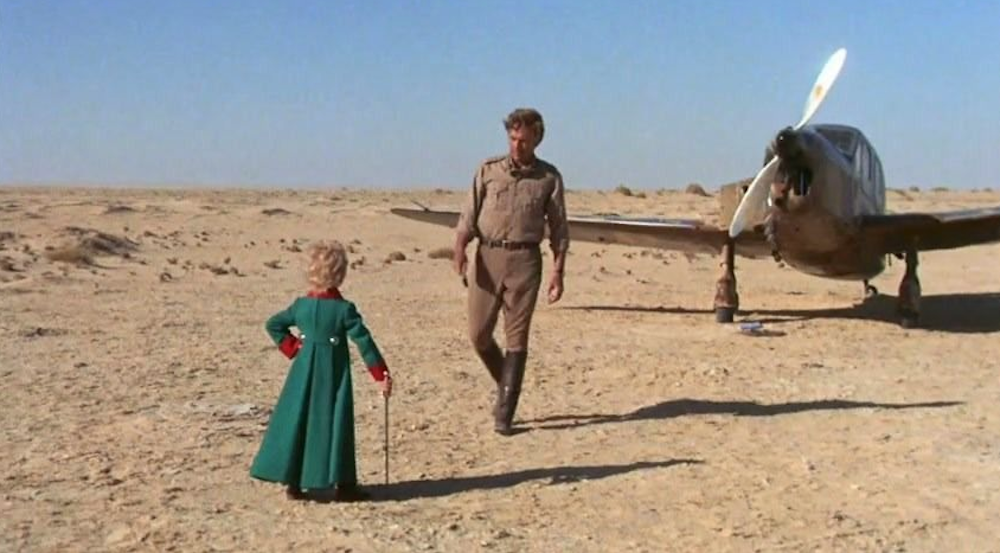
Richard Kiley and Steven Warner in a 1974 film version of The Little Prince.
Paramount Pictures

What changes our world and our being in the world is that there are things, activities, and people we care for deeply; and we make them as special (for us) as they are. In Saint-Exupéry’s book it is a flower with four thorns back on his home planet, that the little prince misses and holds dear. But it could be anything, really …

Saint-Exupéry’s book ends with the little prince returning home and the narrator repairing his plane and returning to civilisation. And yet, he never looks at the world again with the same eyes.

The knowledge that somewhere up there among the myriad little planets there was one with a prince and his beloved flower, a sheep, and three volcanoes (one extinct) made all the difference.

And what about us? Will we too look at the world differently once this has passed? Or will we return to the routines and habits that defined our worlds before?

Ask yourselves: Is it yes or no? Has the sheep eaten the flower? And you will see how everything changes …The Conversation

Julia Kindt, Professor, Department of Classics and Ancient History, University of Sydney

This article is republished from The Conversation under a Creative Commons license. Read the original article.
Unknown's avatar

Not My Review: An American Uprising in Second World War England – Mutiny in the Duchy by Kate Werran


The link below is to a book review of ‘An American Uprising in Second World War England – Mutiny in the Duchy,’ by Kate Werran.

For more visit:
https://www.theguardian.com/books/2020/aug/05/an-american-uprising-in-second-world-war-england-by-kate-werran-review

Unknown's avatar

Not My Review: A Room Made of Leaves by Kate Grenville


The link below is to a book review of ‘A Room Made of Leaves’ by Kate Grenville.

For more visit:
https://www.theguardian.com/books/2020/jul/31/a-room-made-of-leaves-by-kate-grenville-review-the-untold-story-of-an-unruly-woman

Unknown's avatar

Sense and Sensibility in a time of coronavirus: vicarious escape with Jane Austen


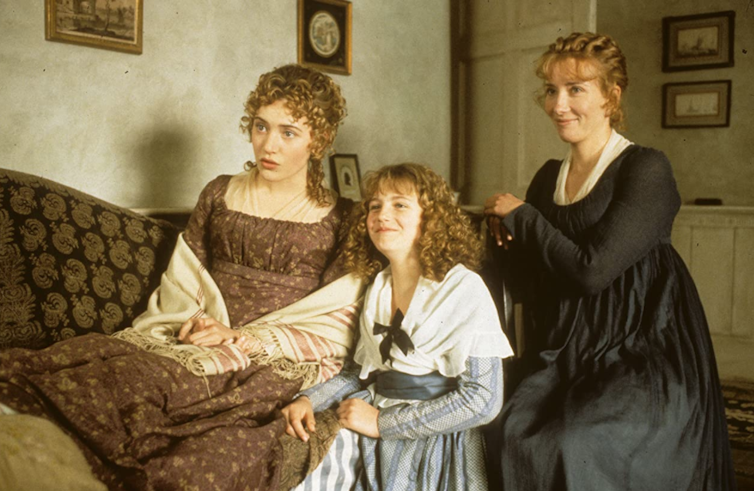
Emma Thompson, Kate Winslet, and Emilie François in Ang Lee’s film of Sense and Sensibility (1995).
Columbia Pictures

Judith Armstrong, University of Melbourne

In our Art for Trying Times series, authors nominate a work they turn to for solace or perspective during this pandemic.

That we are all spending more time at home these days goes without saying; for those of us in Melbourne, our four walls feel restraining when most ways of leaving them are proscribed. So let me persuade you of a marvellously legitimate alternative to breaking the law, sorting your messy passwords, or rearranging your higgledy-piggledy books into some kind of order. It’s called vicarious escape.

Oddly enough, if my bookshelves had been in proper order I might have missed out on this experience. During the first lockdown I was looking for inspiration among the over-familiar titles when I discovered a book I had bought but not read, and then forgotten I owned. In triumph I carried it as far as the couch, stretched out (the sun was streaming through the windows), and turned to page one.

This was not a cop-out, you understand, for the book was Literary Criticism. It would be instructive, even demanding; it could almost count as work. It was a book born of impressive knowledge but written in a lively, deceptively simple style; it offered new and clever perceptions about a writer of whom you might think everything had long been said. It plunged me back into the beloved novels of Jane Austen, and I read it with delight.


Read more:
Friday essay: the revolutionary vision of Jane Austen


By the time I had reluctantly reached the last page, the next lockdown was imminent, and I rejoiced that one effect of my excellent discovery was to know exactly what I must do next. I would reread one, two, or all of Jane Austen’s major works, beginning with Sense and Sensibility, the first of the six to enthral an unsuspecting 19th century English audience.

Published anonymously in 1811, its first run had sold out. What I did not anticipate was the light this book could throw on life under COVID-19.

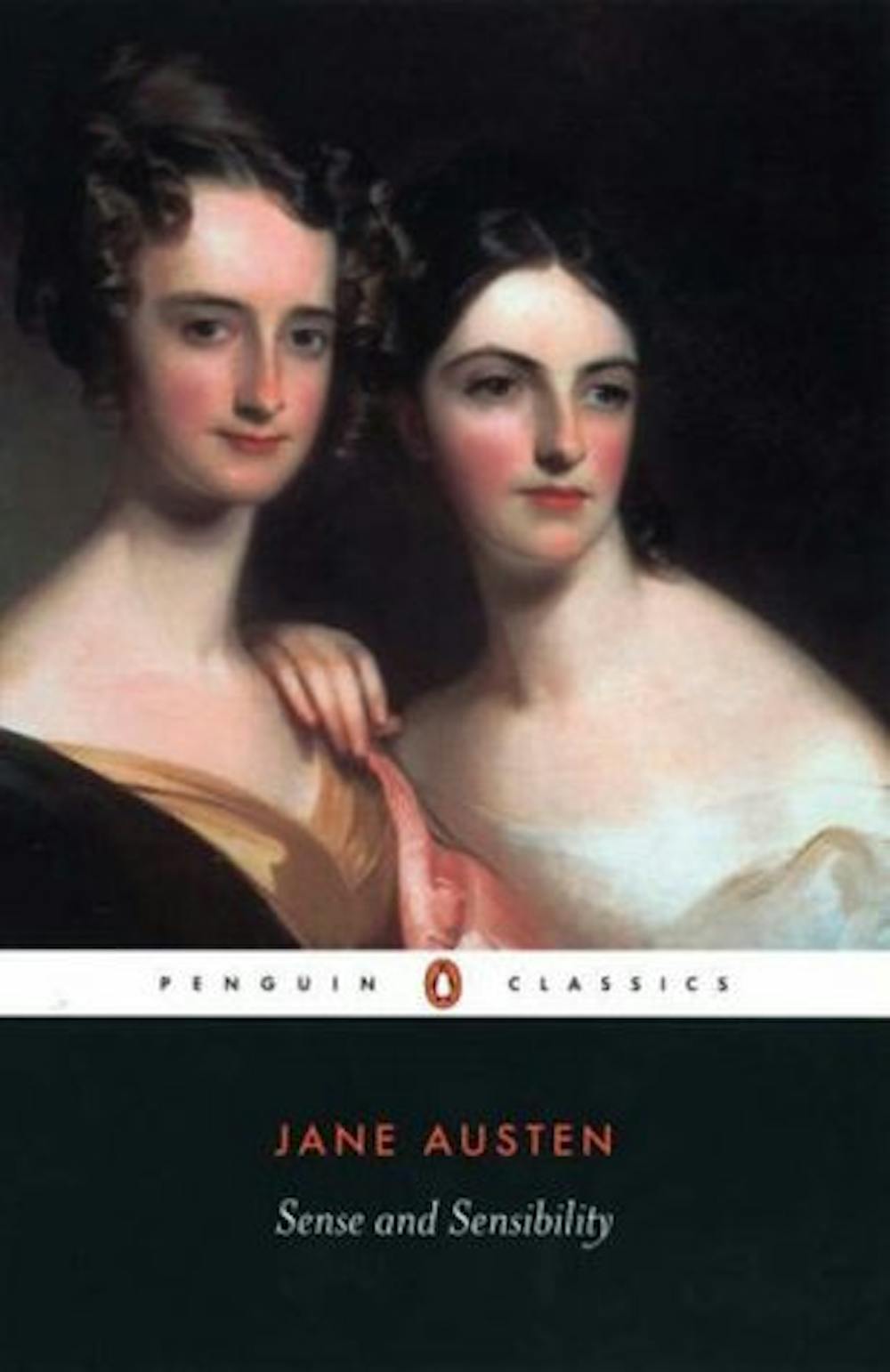
The novel concerns two sisters, Elinor and Marianne. The contrasting natures of the two girls provides Austen’s title, but there is also a younger daughter, Margaret, and an older stepbrother by the mother’s first marriage whose new wife forces the mother and daughters out of the large family house into a cottage in a small village in another county.

It is this move that puts the sisters in a situation that has parallels with ours. The tiny village of Barton could offer no social life. A little like people obliged to work from home, the girls found themselves with no external stimuli, other than Nature, with which to fuel their inner thoughts and mutual exchanges.


Read more:
Turning to the Code 46 soundtrack: bearing solitude in a time of sickness


Thrown back on their own resources then, the two older sisters work on their existing accomplishments. Elinor sketches and paints, Marianne practises her piano-playing; they walk daily, sew and read. Their every activity seems to the modern reader almost weirdly extended: a short stroll will occupy two hours; Marianne, at least in intention, will read for six.

Now that lack of time is no longer an excuse, we might even think of emulating them, but there is one great difference (at least for me). Each sister has in the other, on tap, a daily companion who provides companionship and stimulation. There is no mention of boredom or restlessness; depression results only from romantic mishaps. How? Their neighbour Sir John turns up, some social life takes off, and Marianne falls in love. Well, this is a novel.

Literary isolates

I briefly put aside the Dashwood sisters to consider darker examples of literary isolates. Dostoevsky’s Underground Man leapt to mind. He lives utterly alone in a basement; his first words announce that he is “a sick man… a spiteful man … an unattractive man” whose liver is diseased. As a solitary he qualifies, but he’s hardly an example to follow.

Back to Jane. But could even she help someone without a sister? Someone whose props, given the age we live in, are texts and emails, both of which seem determined to shorten our exchanges. “U?” is all we need say to seek an opinion by SMS.

The phone seems currently the only resource by which we Melburnians could copy the sisters’ ability to introduce, develop, and thoroughly draw out a conversation. But even that we can’t count on. Usually our life-saving story isn’t nearly finished before the friend we’ve rung rudely interrupts with what she wants to say.

No. The only escape must be vicarious, and preferably delivered by the divine Jane, with her potential Mr Rights completely taken in by her unscrupulous Miss Wrongs; where Incomes (salaries are for the middle classes, wages for the servants) can suddenly become desperately insufficient or dangerously excessive; where heart-stopping vicissitudes abound. All related in elegant prose that flashes with pointy wit and lashes with quiet disdain.

The lockdown does permit you to lose yourself in a beguiling other world – if you have a Jane Austen on hand.The Conversation

Judith Armstrong, Honorary Fellow of the School of Languages and Linguistics, University of Melbourne

This article is republished from The Conversation under a Creative Commons license. Read the original article.
Unknown's avatar

Not My Review: A Court of Miracles (Book 1) – The Court of Miracles by Kester Grant