

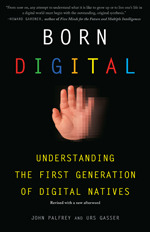
 ‘Born Digital – Understanding the First Generation of Digital Natives,’ by John Palfrey and Urs Gasser was published by Basic Books in 2010 and as such it can be said to be outdated, but that is only because of the pace of change in the digital age. Though much has changed in the last three years (now 2013) in the digital realm, this book remains relevant in the issues that it raises, which include privacy, security and safety.
The book is primarily concerned with ‘digital natives,’ or those born post 1980, who have only known a digital world and have therefore lived all of their life in a digital world. The book’s thrust is not just at this first generation (and those beyond), but also to parents and teachers of this generation, and even beyond to regulators, government, etc. Born Digital seeks to educate the first generation and those who hold influence with the first generation, as well as to provide encouragement and warning to the opportunities and dangers presented by the digital age and the Internet. The book is however relevant to anyone that experiences life in the digital realm, which in reality is pretty much everyone.
Overall I think Born Digital provides a very balanced look at what it means to live in the digital age as both the dangers and opportunites are presented in a very fair presentation of the fact and life examples. There is little in the way of over the top alarm in presenting the dangers – neither are they glossed over. The dangers of the digital world are not highlighted over and above the opportunities that are presented to digital natives by the digital world. Neither are the opportunities presented in some wonderful over the top manner while the dangers are swept under the carpet. A very balanced view is maintained throughout.
The first four chapters are concerned with giving the first generation and those involved with the first generation an understanding of what life in the digital age means for a person. There are great opportunities, but there are also dangers and the realities of personal identity, curated dossiers, privacy and safety are all addressed. Important issues of pornography, identity theft and cyber-bullying (to name just a few) are raised and possible solutions offered to address these serious concerns.
The opportunities of creating various forms of content on the Internet are balanced by the concerns of copyright and piracy. Legislative changes are a possible means of addressing outdated approaches to these issues, though more innovative approaches are probably needed if the creativity of digital natives is not to be stunted. Then there is the issue of accuracy of information and the decisions being made on the basis of information gleaned from the Internet. There are obvious dangers with simply trusting every source online, though there is certainly great value in the amount of information being distributed throughout the World Wide Web at every moment and in every location where it is available. But this also leads to overload, with the sheer magnitude of information that is available online. How do we deal with all of this information while remaining productive and capable of taking it all in? These are all areas that we need to contend with in the digital age. There is also the problem of what all of this information and digital stimulus does to a person, especially if the digital native is exposed to massive amounts of violence and other related content. How does all of this impact on the life of a young person and how can it be mitigated?
The three chapters titled ‘Innovators,’ ‘Learners’ and ‘Activists’ highlight more of the positive aspects of the digital age. There are great opportunities to be had on the World Wide Web for those able and willing to look at new ways of doing things in cyberspace. The digital world offers a plethora of means for enhancing educational and activist pursuits, which often compliment more traditional ways of doing things. All and all, the opportunities to improve our lives far outweigh the negatives of the digital age, though there are damgers that need to be guarded against.
Born Digital is a great introduction to the current age of human experience and expansion into the digital age. It seems to me to be a very balanced and well thought out presentation of the main issues confronting digital natives and those tasked with the various roles of guiding them in their formative years, as well as the many opportunities just waiting to be embraced in this brave new world of rapidly changing technology.
There does however seem to be a lot of unnecessary repeating of what has already been said throughout almost every chapter (if not every chapter), which is probably the most negative thing I can say about the book. If the constant repitition wasn’t there, the book would certainly be much smaller and perhaps be a more engaging read. Having said that, I did enjoy reading the book and think that it will provide a useful overview of the digital age’s opportunities and dangers to both the digital native and/or the parent/teacher of him/her. Despite the rapid changes online in the digital world and the fact that this book was clearly penned prior to the current online landscape, this book still has a role to play in addressing the curent issues and opportunities presented by life in the digital age that we now live in.
Buy this book at Amazon:
http://www.amazon.com/Born-Digital-Understanding-Generation-ebook/dp/B003P9XDX4/
 At the BookShelf