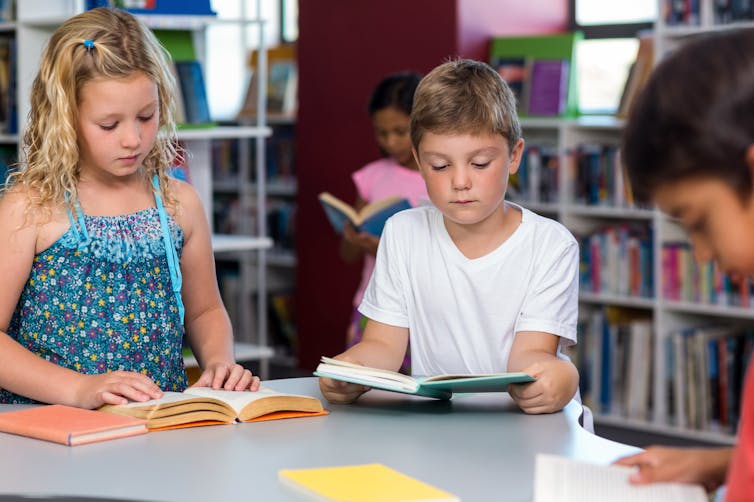
Despite improvements in the national average score, the 2016 PIRLS report confirms many Australian children continue to be left behind. wavebreakmedia/Shutterstock
The results of an international study into the reading skills of Year 4 students offer reason for optimism for Australian children.
The latest Progress in International Reading Literacy Study (PIRLS) shows that, on average, reading achievement among the Australian children surveyed improved significantly between 2011 and 2016. This is excellent news.
However, there is still cause for concern about Australia’s literacy standards, with the PIRLS study showing that a substantial minority of Year 4 children continue to struggle with reading.
The Progress in International Reading Literacy Study
The study has been running internationally every five years since 2001. In 2016, it encompassed 50 countries. Australia has participated twice – in 2011 and 2016.
In 2016, 6,341 Year 4 students from 286 Australian primary schools took part.
The study focuses on two reading abilities – reading for literary experience, and reading to acquire and use information. Students were given texts to read and then asked to answer multiple choice and short answer questions. Example questions include:
How does the author show you what the red hen is like?
According to the article, what is one way people have made the sea more dangerous for turtles?
Signs of improvement
The results show Australia’s national average performance improved significantly between 2011 and 2016.
With the exception of the Australian Capital Territory, all the states and territories showed an improvement. The improvement was statistically significant in Western Australia, Queensland and Victoria.
The increase in the average scores in many states is due to better performance by students at the top end of the scale. This is a wonderful outcome for those students.
While the 2016 PIRLS results run counter to the trends in the most recent PISA and TIMSS international assessments, the improvement isn’t entirely unexpected. Recent years of NAPLAN results have shown an improvement in average reading scores for Year 3 students.
It’s difficult to draw any firm conclusions about the reason for this improvement. But it’s fair to say there has been a strong focus on early reading since NAPLAN was introduced in 2008, putting a spotlight on progress in this vital area of education.
Indeed, the PIRLS results provide a very useful external validation of the reliability of the NAPLAN results, as they report similar trends in reading over similar periods.
The sting in the (long) tail
The improvement in average scores is certainly heartening. But the PIRLS data also show that when it comes to reading, many Australian children are still being left behind.
In 2016, 6% of Australian children did not meet the minimum (low) international benchmark for Year 4 reading. This is only a very small improvement from the 2011 figure of 7%.
Some 19% of Australian children in Year 4 did not achieve the intermediate benchmark. To reach this benchmark, children needed to be able to:
make straightforward inferences about things that weren’t explicitly stated in the text
work out the order of events in the text, and/or
find and repeat explicitly stated actions, events, and feelings in the text.
PIRLS describes this benchmark as a “challenging but reasonable expectation”.
In 2011, 24% of Australian children in Year 4 did not achieve this benchmark. So the figure of 19% in 2016 is an improvement. But it’s a poor outcome compared to other countries, including England, Canada, and the United States.
Despite some improvements, Australia still has the second-largest proportion of children below the international intermediate benchmark for reading among English-speaking countries.
Research shows that children who struggle with reading in their early school years are unlikely to ever catch up. These children need to be identified and supported much earlier.
This year, an expert advisory panel to the Australian government (which I chaired) reviewed early years reading assessments used around Australia. We found a deficit in the assessment of phonics skills in particular.
Phonics is the ability to translate the letters on a page into their respective sounds. It’s a skill that children (and adults) need so they can read and learn unfamiliar words. Without the ability to read and learn unfamiliar words, children have little hope of reading for meaning.
Based on the outcome of the review, the panel recommended (as have other experts) a trial and possible subsequent adoption of the Year 1 Phonics Check that has been statutory in English primary schools since 2012.
In this context, it’s worth noting that England’s results in PIRLS 2016 – the first group to take the Year 1 Phonics Check – are the best they have ever been.
But of those five components, there is good reason to believe that phonics isn’t being taught effectively or assessed consistently in many schools. For the children most at-risk of reading failure – including those from socioeconomically or language impoverished homes, and children with learning difficulties – the consequences are devastating.
Literacy on the agenda
This Friday, Australia’s federal, state and territory education ministers will come together for the year’s final Education Council meeting. Their agenda will include the need for a national Year 1 literacy and numeracy check.
The PIRLS statistics will be thoroughly dissected and debated. But it’s important to remember these statistics represent real children.
What does it mean to be unable to read? One mother of a Year 6 child poignantly described it as “not being able read the jokes in Christmas crackers around the table at Christmas lunch”.
This should not be the case for a child who has spent seven years at school. A literacy check in Year 1 could prevent many Australian children from falling through the cracks, and facing a lifetime of disadvantage.
Jennifer Buckingham, Senior Research Fellow, The Centre for Independent Studies; Associate Investigator, ARC Centre of Excellence in Cognition and its Disorders, Macquarie University
Everyone knows the story of Scrooge, a man so miserly his name has become synonymous with penny-pinching meanness. Scrooge’s conversion from miser to benefactor has been told and retold since Charles Dickens first wrote A Christmas Carol in the fall and winter of 1843. Ebenezer is a wonderful character, so richly portrayed and fascinating he’s echoed in stories from The Grinch to It’s a Wonderful Life.
Pop culture has embraced both Dickens and his tale. With this season’s The Man Who Invented Christmas, Hollywood has done it again.
But who was Scrooge before he was, well, Christopher Plummer? The inspiration for the crotchety Christmas-hater may have been those who put Dickens’ own father into debtor’s prison and were responsible for young Charles working in a shoe-blacking factory.
Some Dickens scholars believe the author’s 1843 visit to sooty Manchester, or to “the black streets of London,” (as he described them in a letter to a friend) influenced him. It may be that the fable was a moral reminder from Dickens to himself, as he teetered on financial ruin. This is the theory proposed in the book by Les Standiford on which this year’s movie is based.
Did Dickens in fact invent Christmas, as we know it? Hollywood may think so, but others, like David Parker in his Christmas and Charles Dickens vehemently disagree.
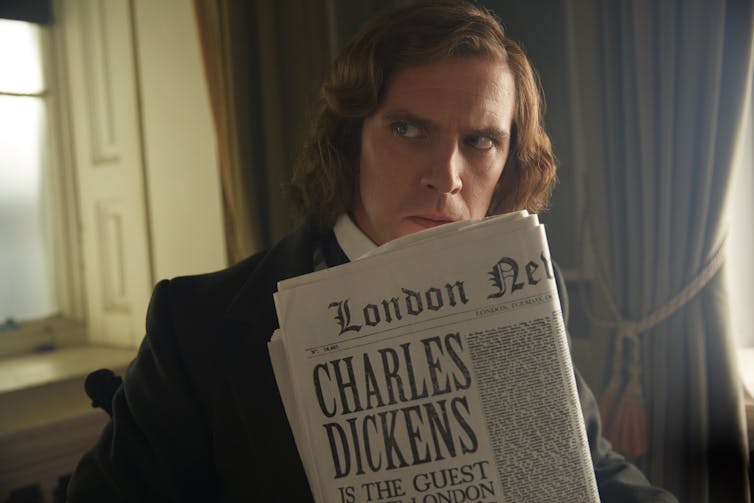
Many believe Dicken’s version of Christmas isn’t religious. Bleeker Street Media/Elevation Pictures)
Whatever your opinion, the prevailing wisdom is that A Christmas Carol isn’t particularly religious. As a professor of biblical studies at Concordia University and also a Lutheran minister, I have a different reading.
It’s true that the celebration of the season which Scrooge discovers has much more to do with generosity, family gatherings and large cooked birds, than the Nativity. But maybe those seeking explicit scriptural references in Dickens’ story are underestimating the Victorian novelist’s skill — and his audacity. Perhaps A Christmas Carol contains an alternative to the Bible rather than a simple borrowing from it. And perhaps that’s the point.
Jesus was a master story-teller
Jesus, by all accounts another master story-teller, told a parable that, stripped of Dickens’ English waistcoats, ledgers, fog and shutters, could almost be a mirror to A Christmas Carol:
“There once was a rich man. A poor man named Lazarus lived at his gate, with nothing to eat. Lazarus died and was carried by the angels to Abraham’s side. The rich man also died.”
There follows, in Jesus’ tale, an exchange between the rich man, who is in torment, and Abraham, who acts as the guardian of paradise. It’s hard not to think of the innocent Lazarus as a precursor to Tiny Tim.
First the rich man asks for his own relief from hell. When that’s denied, he pleads: “I beg you, send Lazarus to my father’s house. I have five brothers. Let him warn them so they don’t come to this place of agony.” Abraham replies: “They have Moses and the prophets. They must listen to them.”
“No, Father Abraham!” cries the rich man, “But if someone from the dead goes to them, they will change” (Luke 16:19-31).
One can almost hear the chains of Morley’s ghost rattling. What would have happened if Father Abraham had said yes? Something very like a first-century version of A Christmas Carol.
Let’s not forget that the people of our western English-speaking past, especially artists and writers, were imbued with Biblical references and ideas. As Northrop Frye, among others, has argued, they lived and created in a world shaped by the rhythms, narratives, images and conceptions (or misconceptions) of the King James Bible.
Was Dickens familiar with Christian scriptures? All evidence points to the fact that he was more acquainted than most. Despite an antipathy to organized religion, from 1846 to 1849 Dickens wrote a short biography of Jesus for his children, titled The Life of our Lord.
He forbade that his small retelling of Jesus’ life should be published, until not only he, but also his children, had died. The “Parable of Lazarus and the Rich Man” was one of eight stories of Jesus that Dickens chose to include in that volume. But in his story of Scrooge, Dickens was too much of a writer to leave Jesus’ parable as is, and his age too suspicious of scripture to leave it “unbroken.”
A Christmas Carol unites the deliciously horrific sensibility of the Gothic movement with the powerfully simple narrative style, joined to moral concern, typical of parables.
A Christmas Carol may be heavily influenced by The Parable of Lazarus.
Was Dickens perhaps dozing off some Sunday while the rector droned on about Lazarus, until he wakened with a start dreaming of Scrooge? We will never know. But it’s an intriguing possibility.
Happy endings for the rich
Surprisingly, the Sunday after Dickens was buried in Westminster Abbey, Dean Arthur Penrhyn Stanley, preaching on exactly this text, spoke of Dickens as the “parabler” of his age. Stanley said that “By [Dickens] that veil was rent asunder which parts the various classes of society. Through his genius the rich man…was made to see and feel the presence of Lazarus at his gate.”
I would go further: Dickens took the parable, and then retold and changed it, so that the rich man gets a second chance. As a privileged societal figure who had gone through financial difficulties and who cared about the poor himself, Dickens freely adapted Jesus to come up with a story that’s ultimately more about love than judgement.
When confronted with Marley’s spectre, Scrooge, unnerved but unrepentant, addresses the apparition: “You may be an undigested bit of beef, a blot of mustard, a crumb of cheese, a fragment of underdone potato.”
The perceptive reader (or viewer) of A Christmas Carol can point a finger at Marley’s ghost and add: “Or maybe you’re an ironic but hope-filled riff on Jesus, by a famous nineteenth-century author who wanted to write his own story of redemption.”
Dickens not only invented this Christmas genre, but imagined a happy ending for himself in it. He penned an enduring story about the second chance even a rich person can receive, if haunted by persistent-enough ghosts.
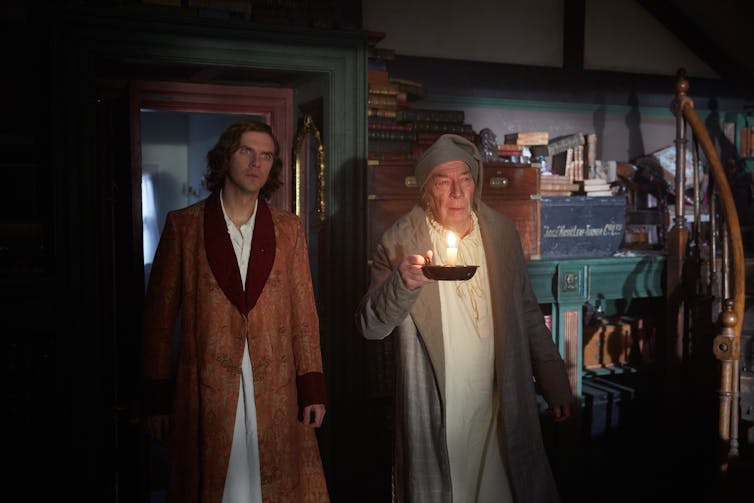
The Man Who Invented Christmas (Bleeker Street Media/Elevation Pictures)
The teacher stands in front of her Grade 4 class. The 45 nine and ten-year olds are crammed together at desks, huddled over shared books. Some are sitting on the floor. “Now, class, read from the top of the page,” the teacher says. They comply in a slow sing-song drawl.
“Stop,” says the teacher. “It is not ‘Wed-nes-day’, you say it ‘Wensday’. It is what?” “Wensday,” the class responds. “Again.” “Wensday.” The reading resumes, the teacher frequently stopping to correct her pupils’ pronunciation.
Sometimes the children read aloud in groups. At other times, she calls a child to come to the front and read aloud. Not once does she ask a question about what the story means. Nor do the children discuss or write about what they have read.
This is the typical approach to how teaching is read in most South African primary schools. Reading is largely understood as an oral performance. In our research, my colleague Sandra Land and I describe this as “oratorical reading”. The emphasis is on reading aloud, fluency, accuracy and correct pronunciation. There is very little emphasis on reading comprehension and actually making sense of the written word. If you were to stop the children and ask them what the story is about, many would look at you blankly.
Pronunciation, accuracy and fluency are important in reading. But they have no value without comprehension. Countries around the world are paying increasing attention to reading comprehension, as indicated by improving results in international literacy tests.
The problem with the oratorical reading approach is evident in the results of the recent Progress in International Reading Literacy Study (PIRLS) 2016 tests. PIRLS’ purpose is to assess reading comprehension and to monitor trends in literacy at five-year intervals. Countries participate voluntarily. Learners write the test in the language of learning and teaching used in Grades 1 to 3 in their school.
The tests revealed that 78% of grade 4 pupils in South Africa fell below the lowest level on the PIRLS scale: meaning, in effect, that they cannot understanding what they’re reading. There was some improvement from learners writing in Sesotho, isiNdebele, Xitsonga, Tshivenda and Sepedi from a very low base in 2011, but no overall improvement in South Africa’s performance.
South Africa was last out of 50 countries surveyed. It came in just behind Egypt and Morocco. The Russian Federation came first followed by Singapore, Hong Kong and Ireland.
South Africa also performs poorly in the Southern and Eastern Africa Consortium for Monitoring Educational Quality surveys. These show that in reading and numeracy South Africa is lagging behind much poorer African countries such as Tanzania and Zimbabwe.
Our research on reading at a rural primary school and an adult centre in the KwaZulu-Natal province showed that the oratorical approach to teaching reading was dominant both in the school and adult classes. Both adults and children were not learning to read with meaning, and so were not achieving literacy despite attending classes. Our findings confirmed the results of other South African studies.
So where does the problem lie and how can South Africa address it?
Rote learning
To understand the situation more deeply we interviewed teachers and explored how they had learned to read. We found that they teach as they were taught; an indication that oratorical reading is a cycle repeated from one generation to the next unless it is broken.
Teachers told us they assessed pupils’ reading ability just as they were assessed by their teachers: by having them read aloud. Marks were allocated for individual oral reading performance. This was based not on understanding the passage, but on fluency and pronunciation. There was no written assessment of reading comprehension. Reading was about memorising sounds and decoding words.
This suggests that the problem in learners’ performance lies in how reading is taught in most South African schools. Learners are taught to read aloud and pronounce correctly, but not to understand the written word and make sense of it for themselves. Another consequence is that the pleasure and joy of discovery and meaning-making are divorced from school reading.
New approaches
There are no quick fixes, but there certainly are slow and sure ones. The first is to get reading education in pre-service teacher training right. A report by JET Education Services, an independent non-profit organisation that works to improve education, found that universities don’t give enough attention to reading pedagogies.
Universities need to teach reading as a process that involves decoding and understanding text in its context, not just as a “mechanical skill”. Countries such as India, with its great diversity and disadvantaged populations, have begun to address the need for this change in how reading is taught.
The second “fix” concerns in-service training. The Department of Basic Education has a crucial role to play here. Teachers need to reflect on how they themselves were taught to read and to understand the shortcomings of an oratorical approach.
Effective reading instruction, such as the “Read to Learn” and “scaffolding” approaches, should be modelled and reinforced. In a multi-lingual African context, strategies that allow teachers and learners to use all their language resources in making meaning should be encouraged. Teachers’ own reading is vital, and can be developed through book clubs and reading groups.
The school environment is also crucial. According to the PIRLS interviews with principals, 62% of South African primary schools do not have school libraries. These are central to promoting a reading culture, as work in New Zealand shows.
Schools should develop strategies such as Drop Everything and Read slots in the timetable, library corners in classrooms, prizes for reading a target number of books and writing about them, and creating learners’ reading clubs. Learners can draw on local oral traditions by gathering stories from elders, writing them and reading them to others.
Finally, the home environment is vital. The PIRLS research showed that children with parents who read, and especially read to them, do better at reading. Our research found that children with parents who attended adult classes were highly motivated to learn and read with their parents. Even if parents are illiterate, older siblings can read to younger children. The Family Literacy Project, a non-profit organisation in KwaZulu-Natal, has done excellent work in creating literate family and community environments in deep rural areas, showing what is possible.
Developing families as reading assets rather than viewing them as deficits can help to strengthen schools and build a reading nation.
Recent revelations about Hollywood’s culture of sexual harassment and violence might come as a surprise to many Americans.
After all, Los Angeles – home of what some call “the American image factory” – has long carried the allure of glamour, wealth and fame. Beckoned by the iconic Hollywood sign in the Santa Monica Mountains, the city, in many regards, has become synonymous with the American dream.
People familiar with the industry might tell a more complicated story. That group includes writers who have made Los Angeles and Hollywood their subjects: F. Scott Fitzgerald, Nathanael West, Evelyn Waugh, Gore Vidal, Joan Didion and Bret Easton Ellis. All have chronicled a seamier side of the California dream, a world awash with drugs, sex, violence and abuses of power.
So how did so many of us miss this? Could it have anything to do with the fact Americans who read literature recently fell to a three-decade low?
At the very least, the works of these writers show that literature can play an imperative role in our culture – that novels can give us a means of facing difficult issues that many of us may prefer to ignore, or don’t want to believe exist.
A city of vampires
In numerous novels since the 1930s, Hollywood’s underbelly has been revealed as a landscape rife with peril. And while many writers have explored the vice, corruption and disillusionment at the heart of Hollywood, few have gone deeper into the shadows than Nathanael West and Bret Easton Ellis.
West’s 1939 novel, “The Day of the Locust,” depicts the struggles of Faye Greener, an aspiring actress in pursuit of Hollywood fame and fortune – a dream laid waste by the men she meets along the way, who see her as little more than an object of their desires.
Pursued and stalked throughout the novel, Greener eventually turns to prostitution to make a living. Worse yet, to the novel’s protagonist, she’s the subject of disturbing rape fantasies. The story ends in a frenzy of violence at a Hollywood movie premiere – West’s ultimate denunciation of a culture and a city.
More than 40 years later, the characters of Bret Easton Ellis’s fiction are subjected to almost unspeakable forms of trauma and sexualized violence in “Less Than Zero” and “The Informers.”
In “Less Than Zero,” billboards emblazoned with the words “Disappear Here” loom over the landscape. They’re apparently advertisements that invite a blissful escape to some far-off resort. But for the novel’s main character, they become a menacing warning of a city that devours all who live and work there.
The novel’s main character, Clay, descends into the darkest recesses of this world – a journey to, as he puts it, “see the worst.” And indeed he does.
Although some of the horrors he witnesses occur in back alleys and basement clubs, the most shocking forms of violence – rapes, the viewing of snuff films – transpire at ritzy hotels and posh homes in Malibu, Bel Air and Beverly Hills. We are led to the realization that self-destruction, dehumanization and violence are built into the very fabric of Hollywood’s being.
Meanwhile, the young characters in “The Informers” live in a Los Angeles “swarming with vampires.” Many turn to alcohol, drugs and sex to cope with the depravity of lives that are hopelessly artificial and empty. For some, entertainment has devolved into watching videos of women being terrorized by “near-naked masked men.”
At one point, a main character, the son of a movie executive, meets a struggling actor.
“Unless you’re willing to do some pretty awful things,” the actor says, “it’s hard getting a job in this town.” The reader can almost anticipate the despairing surrender conveyed in his final words: “and I’m willing.”
Other novels, set outside of Hollywood, speak to what can be seen only as an epidemic of sexual violence: Toni Morrison’s “Beloved,” Louise Erdrich’s “The Round House,” Frances Washburn’s “Elsie’s Business,” Jessica Knoll’s “Luckiest Girl Alive.”
All hold a mirror to a world that many would prefer not to face.
Literature as ‘equipment for living’
Novels cannot replace the immediacy of the testimony offered by the courageous women who, in recent months, have publicly shared their experiences with sexual violence.
Nonetheless, such works can function as a vital corroboration for the heartbreaking truths that these women have revealed. They give a voice to perspectives that are marginalized and silenced.
The critic Kenneth Burke viewed literature not just as a form of amusement or intellectual reward, but as a way of addressing social problems by teaching, as he put it, “strategies for dealing with situations.”
An implicit element of all literature, he argued, is that it gives readers opportunities to imagine how they’d respond to complicated scenarios, from “what is promising” to “what is menacing” – all from the relative safety of our homes. He observed that readers can gain what he called an “equipment for living,” a means to help navigate our daily experiences.
Recent studies reveal other benefits. One found that deep reading makes us “smarter and nicer,” while another showed that reading literary fiction (as opposed to mass market fiction) helps people develop a greater sense of empathy.
In a country whose people have become increasingly isolated from and suspicious of one another, it’s something we need now more than ever.
In children’s literature, a small number of classics are remembered for their illustrations as much as they are for the author’s words. Sir John Tenniel’s original drawings for Lewis Carroll’s “Alice” books are, for many readers, impossible to disentangle from the text. Roald Dahl’s stories have become almost inseparable from Quentin Blake’s pictures, and Thomas Henry’s images of William defined him as succinctly as the writing of Richmal Crompton.
The relationship between author and artist can vary greatly. Tensions occasionally run high between the creators of verbal and visual versions of a narrative. It has been said that Tenniel was sometimes exasperated by the sheer volume of Carroll’s requested amendments to his drawings. This may have been a contributing factor to the artist’s apparent reluctance to commit to illustrating Through the Looking-Glass.
It can be difficult for authors to accept an illustrator’s interpretation of their creation. Many writers are reluctant to see their work illustrated at all, feeling that any imagery is an intrusion into the reader’s visual imagination.
Illustration itself is something of a hybrid art form, somehow straddling the worlds of graphic design and fine art, but traditionally always subservient to the written word. The UK has a particularly rich tradition of graphic art – from Hogarth, Rowlandson and Gillray through Randlolph Caldecott, Walter Crane, Beatrix Potter and on to Edward Ardizzone and Ronald Searle.
Yet compared to many nations, until recently it has never seemed entirely comfortable with according illustration and illustrators the highest status in its cultural institutions. Searle was honoured with a major retrospective at the Bibliothèque Nationale in Paris – but was never similarly celebrated in his home country.
So I welcome the opening of an exhibition which will shine a light on a great British illustrator whose drawings are known around the world. Winnie the Pooh: Exploring a Classic at the Victoria Albert Museum in London will offer visitors the chance to see much of the original art and preparatory sketches of E.H. Shepard, whose work surely stands alongside that of Tenniel in the pantheon of great book illustration.
The exhibition will explore the interesting working relationship between Shepard and Winnie the Pooh’s creator, A.A. Milne, and the way the visual identities of their characters evolved.
Many of the drawings from the museum’s own collection are so fragile that they have not been exhibited for over 40 years. Correspondence between the two men and recently discovered early Shepard sketches reveal a great deal about the gradual emergence of Pooh as we have come to know him.
In particular, the process of making connections between drawing directly from observation and drawing from imagination, will be on display. Shepard’s Pooh Bear was initially modelled on the real toy bear of Milne’s son, Christopher Robin. But author and artist felt that he was too harsh and gruff-looking – not quite appealing enough. Instead, Shepard made a sketch of his own son Graham’s teddy bear, who was named Growler. Growler turned out to be just right and it was he who gradually “became” Pooh.
Bear necessities
Shepard’s great-granddaughter is married to James Campbell, who has overseen the Shepard estate since 2010. He recently uncovered a hoard of early drawings the artist had filed away and labelled as being of little importance. But they include what must have been some of the very first iterations of Pooh. In one of them, the bear is holding what appears to be a barrel, which Campbell suggests may have evolved into the familiar jar of honey.
Shepard’s meticulous, exacting draughtsmanship meant that he produced thousands of working drawings, which are key to understanding his process. This draughtsmanship was honed from an early age. Initially encouraged by his mother, who died when he was ten years old, Shepard continued to draw compulsively and gained entry to the Royal Academy Schools at the age of 19.
It was after he had become a regular contributor to Punch magazine that Shepard was recommended to Milne. The writer was not immediately convinced that his style was suitable, but he was pleased by the drawings for his collection of verse, When We Were Very Young.
Over time, artist and illustrator became friends. They collaborated closely on the Pooh books, not just on how or what to illustrate, but on the actual interplay between word and image. The term “picturebook” is now used to describe the book for young children that tells its story through a synthesis of words and pictures, neither of which would make sense if “read” independently of the other.
Word-image game playing has since become increasingly sophisticated. Back in the early 1920s, Milne and Shepard were among the first to explore the potential of the page as a kind of stage – where words might be adjusted and adapted to coexist and harmonise with the pictures they accompany.
A place of spacious dimensions, and large population, with fine bazaars. It contains numerous mosques, and there is no wall around it.
To the modern reader, this is perhaps one of the more striking descriptions the medieval Moroccan traveller, Ibn Battutah, offered of the places he visited. Not because it contains anything shocking, but because of the town it portrays: Gaza.
For the city, and the war-torn strip of coastal land with which it shares a name, are today defined principally by the walls around it. Gaza has been held under siege for the best part of the last decade, since Hamas came to power in the territory.
Recent political developments, in the form of a unity government, mean that there may be more future movement through the southern border, with Egypt. Still, Gaza remains fenced in to the north and east by the Israeli Army, which vastly outguns any enemies it has in the territory. To the west lies the Mediterranean. Some shores of that sea are famous for tourism; stretches of its eastern edge are more readily associated with armed conflict, human suffering and wasted potential. Gaza definitely falls, along with Syria, into the latter category.
Without the beaches, life in Gaza would surely be immeasurably worse. The currents there make swimming hazardous; winter storms can be surprisingly violent. Yet the sky and the waves offer some relief in the form of light and air to a place where life can seem suffocating.
Flared, and died
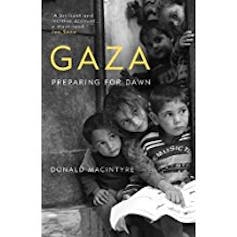
As Donald Macintyre observes in his important new book, Gaza: Preparing for Dawn, the sea might also offer economic salvation. The discovery offshore of a gas field, Gaza Marine – estimated to hold a trillion cubic feet of natural gas – promised the solution to many of Gaza’s economic and energy woes.
Perhaps predictably, politics and conflict have conspired to stop that happening. Gaza Marine remains unexploited. Like the “telegenic background of a huge gas flame shooting into the air” – against which Macintyre describes the late Palestinian leader, Yasser Arafat, announcing unfulfilled plans to draw the wealth from beneath the waves – it has flared, and died.
It was into that sea that I watched for the final time a bright orange sun set in the spring of 2004. Since 2002, I had been the BBC’s correspondent in Gaza. At the time, I was the only international journalist permanently based in the territory. The kidnapping of my successor, Alan Johnston, in 2007 just as he was due to finish his posting, means that while correspondents continue to visit, they do not live there.
Johnston’s experience reporting “the descent into anarchy of which he himself was now a victim” (as Macintyre puts it) was a journalistic challenge which Johnston took on admirably. His fate – thankfully he was released after 16 weeks – ensures, however, that managing editors have since been rightly nervous about basing their journalists in Gaza ever since.
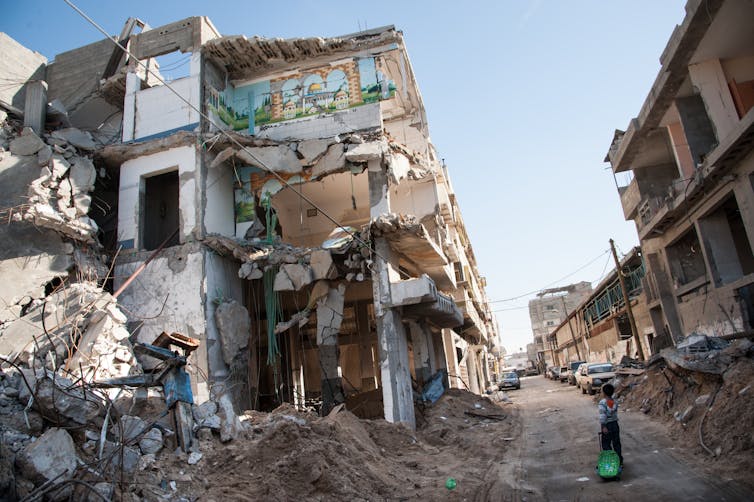
A child passes a bombed-out residential block in the Al-Zeitoun neighborhood of Gaza City. Shutterstock
Watching the sunset that evening, I reflected on another theme which Macintyre rightly raises. I knew I was leaving. I knew I had always been there only as long as I felt like being there. With the exception of days when fighting made it too dangerous to approach the border crossing – and there were a few – I was free to come and go as I wished.
The people among whom I was living were not. Macintyre makes this point, in all its complexity, not only in the book’s shortest chapter – “They will always miss home” – but throughout. It is a complex point because while Gazans long for the opportunities which life outside can bring: study, work, and, in the case of a would-be Olympian, sport – they do not want to abandon their home.
To do so might make them feel that they were turning their backs on their people, and leaving them to their suffering. Gazans with jobs or university places outside are sometimes nervous about returning home for visits. A deterioration in the conflict could leave them trapped and, in consequence, unemployed. Some just leave for good, but the “unresolvable contradiction”, as Macintyre succinctly puts it, remains: “Gaza as a prison to escape from, but also forever home.”
It is in telling these individual stories that Macintyre really excels. Many journalists have been fascinated by Gaza on short visits; few have bothered to try so hard to understand the story beyond the bloodshed. Macintyre’s meetings with the jeans and juice manufacturers; the music students; and that marathon runner bring the people of Gaza to life in a way that daily news reporting rarely can.
Their deaths are recorded too, of course – and, even to news audiences grimly accustomed to reading about violent deaths in the Middle East, some will shock. The Gazan mother who keeps Israeli soldiers waiting at the door – only to open it just as they have decided to blow it apart with explosives – is one that is hard to forget.
All the individual stories are in turn directed by the larger political ones. Macintyre proves himself a well-informed chronicler of the intra-Palestinian conflict: principally between Fatah and Hamas, but also between the latter and newer Islamist rivals. Gaza: Preparing for Dawn also offers wise analysis of the conflict with Israel – and international attempts to address it.
Lest we forget
Macintyre is perceptive about the gap between what even the most senior diplomats say in public, and what they seem really to think. John Kerry, the last US secretary of state to try, and fail, to solve the conflict, is reported here as saying ironically of an Israeli bombardment that killed 55 civilians in six hours, “That’s a hell of a pinpoint operation”.
Diplomatic dispatches I saw when researching my last book, Headlines from the Holy Land accused Israel of “taking measures that would not be acceptable in most societies in the 21st century”. Such phrases rarely grace the more mealy-mouthed official statements. They are all the more revealing when they come to light.
Because for now, for the people of Gaza, there is little prospect of change. As 2018 approaches, one is reminded of the UN report of 2012 which asked whether the territory would be liveable in 2020. Despite that, there is no meaningful diplomatic process which might end Gaza’s misery. John Kerry failed. President Trump has shown little personal interest. His son-in-law, Jared Kushner, has been touted as a possible player – but there are no signs of concrete progress so far.
Israel’s approach of recent years has concentrated on “mowing the grass” – a phrase designed to explain the policy of launching military operations every so often to strike at armed Palestinian groups. The euphemism also ignores the fact that the majority of deaths in major operations are civilian ones. As Macintyre points out, even if leaflets are dropped telling civilians to leave, they don’t instruct them “where to find safety after fleeing their homes”.
Journalists covering conflict will sometimes agonise over whether their work makes a difference. If airtime and column inches alone could bring peace, then the sheer scale of coverage would have guaranteed a settlement long ago. It cannot, of course – but books such as Gaza: Preparing for Dawn do a vital job in reminding the world what goes on there. One day that knowledge may just be part of a solution.


 This should not be the case for a child who has spent seven years at school. A literacy check in Year 1 could prevent many Australian children from falling through the cracks, and facing a lifetime of disadvantage.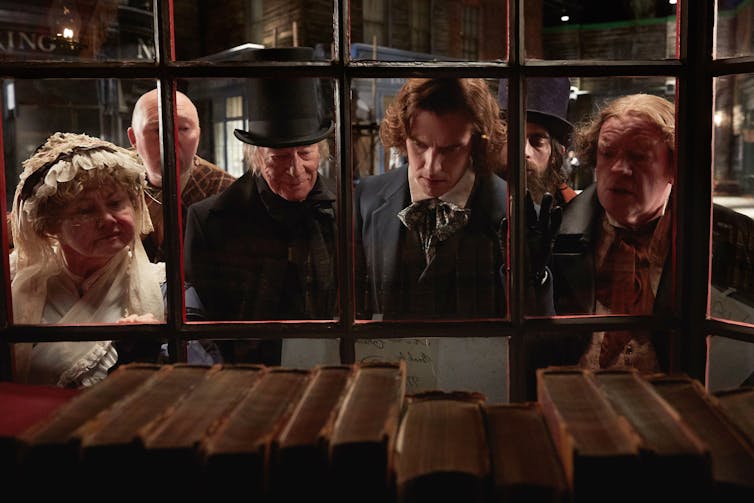
 Dickens not only invented this Christmas genre, but imagined a happy ending for himself in it. He penned an enduring story about the second chance even a rich person can receive, if haunted by persistent-enough ghosts.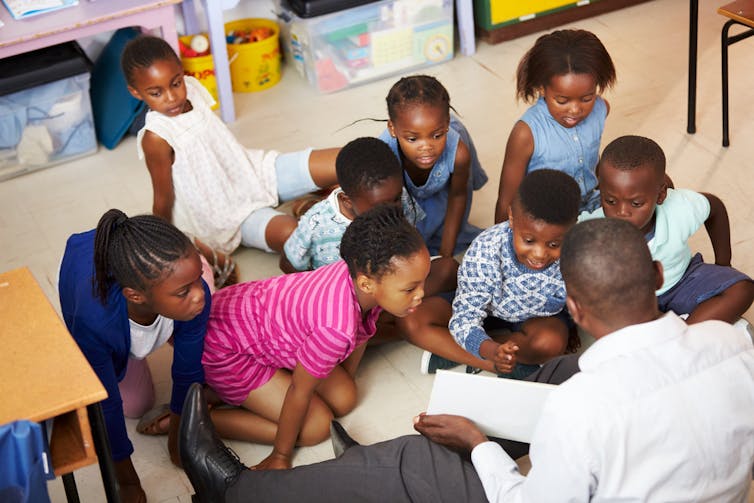
 Developing families as reading assets rather than viewing them as deficits can help to strengthen schools and build a reading nation.
 In a country whose people have become increasingly
  Word-image game playing has since become increasingly sophisticated. Back in the early 1920s, Milne and Shepard were among the first to explore the potential of the page as a kind of stage – where words might be adjusted and adapted to coexist and harmonise with the pictures they accompany.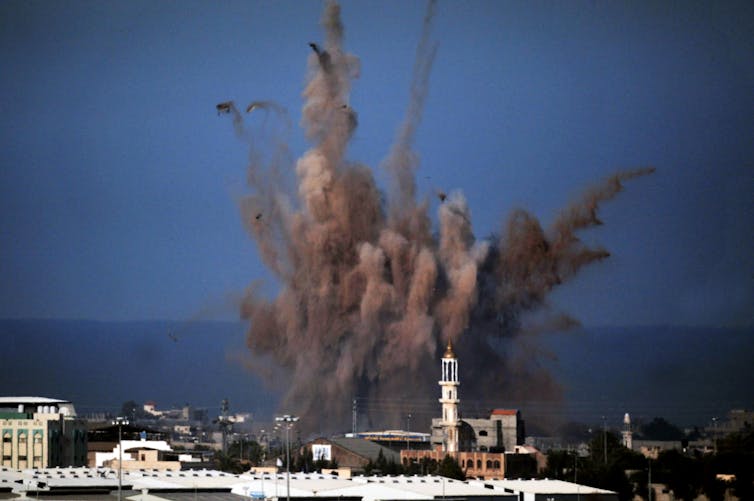

 Journalists covering conflict will sometimes agonise over whether their work makes a difference. If airtime and column inches alone could bring peace, then the sheer scale of coverage would have guaranteed a settlement long ago. It cannot, of course – but books such as Gaza: Preparing for Dawn do a vital job in reminding the world what goes on there. One day that knowledge may just be part of a solution.
 At the BookShelf
You must be logged in to post a comment.